





 Português
  Inglês
  Espanhol
  4 min de leitura
  63 comentários


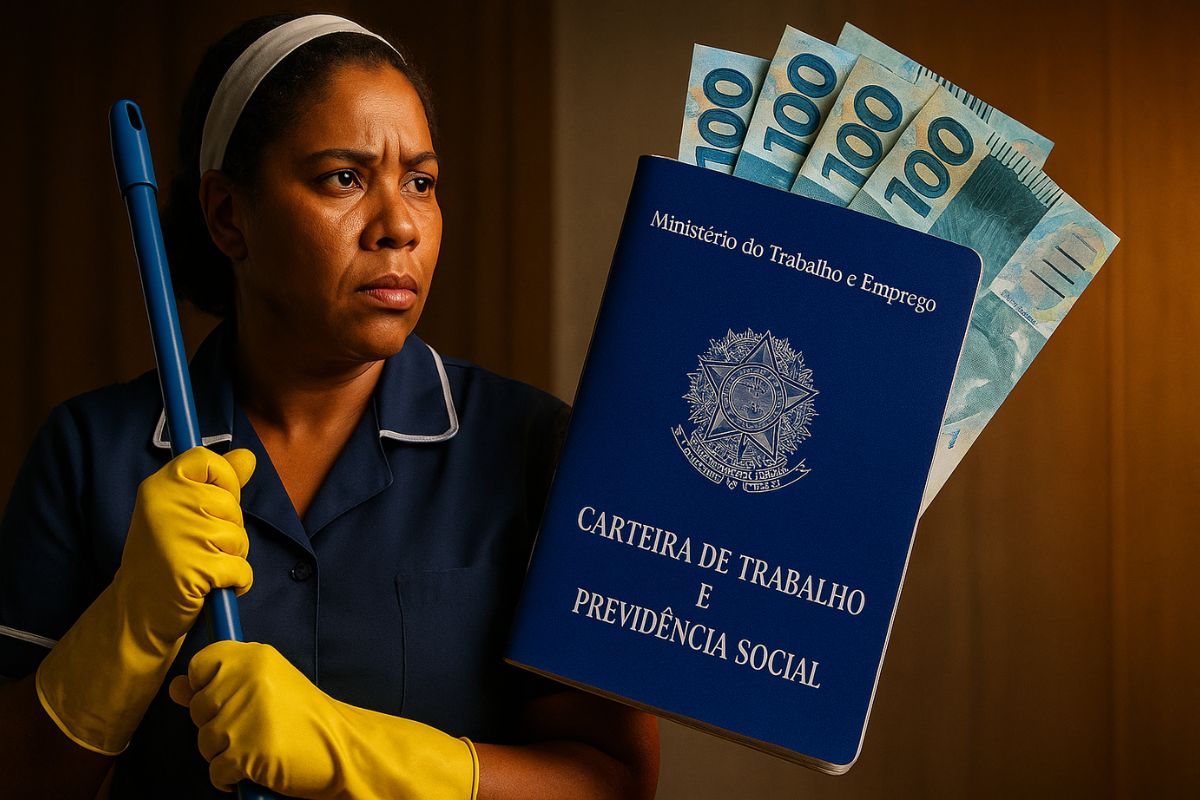


Domestic Workers Have 44-Hour Weeks, 8-Hour Days, Overtime +50%, Night Shift Premium, 30 Days of Vacation +1/3, Mandatory FGTS, and Unemployment Insurance: What EC 72 and LC 150 Changed.
The domestic worker has achieved a historic milestone in Brazilian legislation in recent years. According to lawyer Cíntia Brunelli, a specialist in labor law, changes brought by Constitutional Amendment 72 and Complementary Law 150 have placed this category on the same level of protection as the CLT (Consolidation of Labor Laws). This means that from now on, domestic workers are entitled to mandatory FGTS, a 44-hour workweek, payment for overtime, a night shift premium, 30 days of vacation with 1/3 constitutional pay, and unemployment insurance in case of dismissal without cause.
This advancement was the result of decades of struggle for equality. Previously, domestic workers had limited rights and often found themselves unprotected in situations of abuse or arbitrary dismissal.
Today, based on the new legislation, the employment relationship must be formalized, contributions must be made monthly through eSocial, and all labor rights must be respected.
-
Brazilian city gains industrial hub for 85 companies that is equivalent to 55 football fields.

-
Peugeot and Citroën factory in Argentina cuts production by half and opens a layoff program for more than 2,000 employees after Brazil drastically reduced purchases of Argentine vehicles.

-
A Brazilian city gains a factory worth R$ 300 million with the capacity to process 200 thousand tons of wheat per year, a mill of 660 tons/day, silos for 42 thousand tons, and an industrial area of 276 thousand m².

-
Havan will leave the shopping mall in Blumenau to inaugurate something that the chain has never done before: a megastore in half-timbered style in the Historic Center of the city, which is expected to be completed in May and change the landscape of local retail.


Who is Considered a Domestic Worker?


According to the legal definition provided by Cíntia Brunelli, a domestic worker is an individual over 18 years old who provides continuous, subordinate, paid, and personal services for at least three days a week in a non-profit residence.
Examples include: house cleaner who works regularly at a home, elderly caregiver, nanny, cook, and even gardener. Those who work one or two days a week are considered daily workers and have a different employment arrangement.
The central criterion is the minimum weekly continuity.
Work Hours, Overtime, and Night Shift Premium
With the alignment to the CLT, the domestic worker now has the right to a maximum workweek of 44 hours, up to 8 hours per day.
Any time beyond this limit must be compensated as overtime, with a 50% increase, or compensated through time off, as long as it is stipulated in a written contract.
Another important point is the night shift premium, which applies to work between 10 PM and 5 AM. In these cases, the domestic worker must receive at least 20% more than the daytime hourly rate.
A practical example is that of a nighttime elderly caregiver, who must have this additional payment mandatorily made.
Vacation, 13th Salary, and Mandatory FGTS
The domestic worker is entitled to 30 days of vacation plus 1/3 constitutional pay, full or proportional 13th salary, notice period, mandatory FGTS, and unemployment insurance.
According to Cíntia Brunelli, in case of dismissal without cause, the worker can withdraw the FGTS balance and access unemployment insurance, just like any formal worker.
The domestic eSocial system centralizes payments. It allows the employer to issue a single monthly guide with INSS, FGTS, social contribution, and, when applicable, income tax charges.
This measure simplifies the process for the employer and ensures that the worker’s rights are respected.
Additional Rights and Legal Guarantees
The Justice system also ensures that the domestic worker has paid weekly rest, meal breaks, job security during pregnancy, and access to free legal assistance if they need to claim unpaid wages.
It is prohibited to deduct amounts related to housing or food provided by the employer, except in specific situations stipulated by law.
The recommendation from Cíntia Brunelli is to always formalize the contract in writing, defining work hours, duties, payment, and rules for compensating hours.
If the employer does not correctly collect contributions, the domestic worker can resort to Labor Court and claim retroactively.
There are also penalties for those who delay the payment of vacation or severance.
The domestic worker has finally attained the same level of protection as other employees under the CLT.
Mandatory FGTS, vacation with premium, overtime, night shift premium, and unemployment insurance have become a reality, bringing dignity and legal security to millions of workers.
And you, do you believe that the equalization of rights for domestic workers is already a reality throughout Brazil? Do you know of cases where the law has still not been respected?
Leave your opinion in the comments — your account can help others in the category.










Qr saber sobre férias desde d mês 5 era pra mim ter tirado férias e já estamos n mês 9 e até agora nada d férias aí meu patrão falou pra mim q é pra mim tirar férias o ano q vem pra ficar um ano dentro d outro quero saber s possível isso?
Essa reportagem está meio atrasada hein. Esses direitos estão valendo faz tempo já, há uns 15 anos pelo menos.
Precisa acrescentar aí nessas leis o direito das doméstica receber o PIS PASEP
Concordo plenamente,pq aí sim seria uma novidade,pq essas aí já tínhamos faz muitos e muitos anos graças a Deus
Minha mãe trabalhou 25 anos em uma casa,13 em outra e saiu sempre com uma mão na frente e outra atrás 😔