





 Portuguese
  English
  Spanish
 2 min of reading


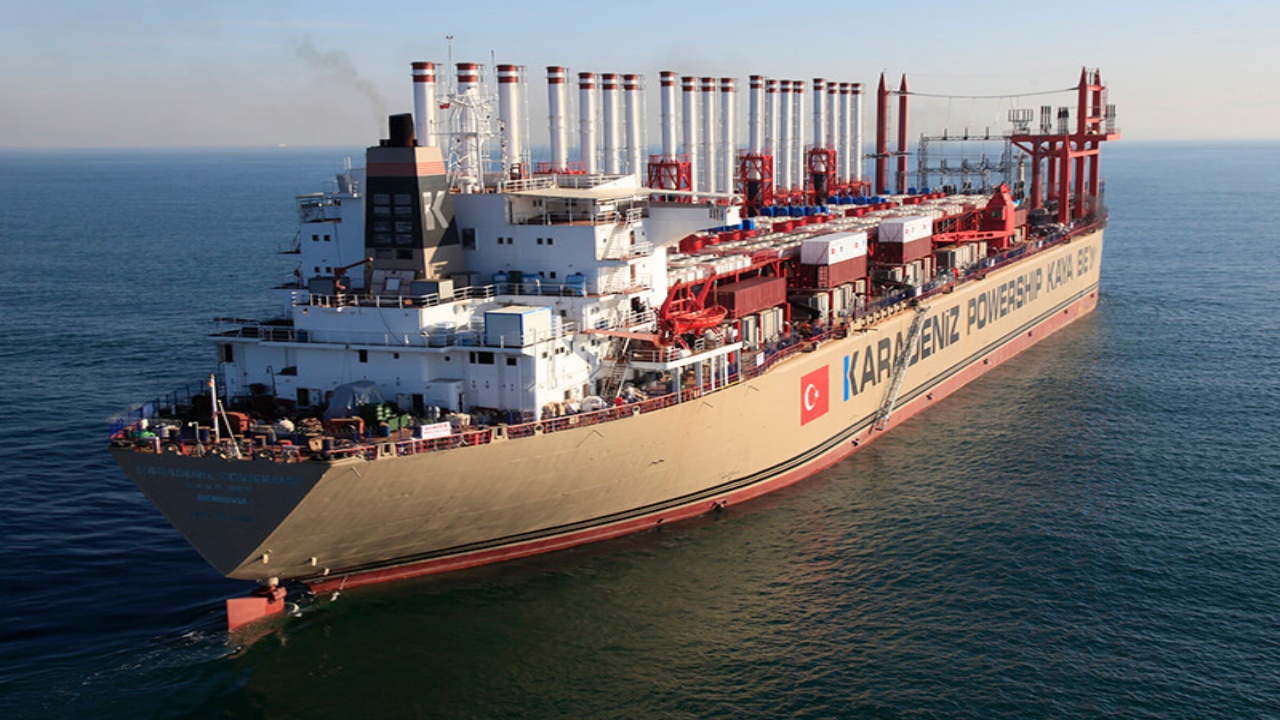
Rio Justice Suspends Installation of Floating Thermal Power Plants (UTEs) by Karpowership in Sepetiba Bay Due to Lack of Environmental Impact Documentation
The first arrival of the four floating natural gas power ships from Karpowership, called powerships, that were to be installed in the port area of Sepetiba Bay, occurred last Saturday, July 23, at the port of Itaguaí (RJ). However, not everything is smooth sailing, as the Rio de Janeiro Justice has determined the immediate suspension of the installation and operation of the floating thermal power plants (UTEs). The decision may be appealed.
The commissioning tests for the transmission lines are practically completed, meaning that with the ships’ presence, the Turkish company Karpowership expects the operation of 560 MW (enough to supply 2 million people) to start in the coming days.
The project details focused on the environment considering that the fuel for the ships, supplied by a Floating Storage and Regasification Unit, consists of 40% natural gas, reducing the amount of diesel or coal.
-
A rural producer from Urubici cries as he shows 50 tons of plums thrown on the ground because no one wanted to buy them, and in desperation, he records a video asking anyone to come to the property to pick the fruits before they rot.

-
Larger than entire cities in Brazil: BYD is building a 4.6 km² complex in Bahia with a capacity for 600,000 vehicles per year, but the discovery of 163 workers in conditions analogous to slavery has shaken the entire project.

-
Unable to pass through Hormuz, Brazil activated a plan B that uses Turkey as a gateway to the Middle East: the route through Gibraltar and the Mediterranean is longer and more expensive but ensures that chicken, beef, and corn continue to reach Arab markets.

-
You grew up hearing that the good coffee from Brazil goes all abroad and the bad coffee stays for Brazilians, but this story has completely changed, and the numbers show that in the 1980s, thirty percent of the coffee sold here was adulterated with corn and barley.


Additionally, the natural gas floating power plants also have energy efficiency, and due to the project duration of only 44 months, the structures are easily movable.
Suspension of the Floating Thermal Power Plants
In the decision, the judge of the 2nd Public Finance Court of Rio de Janeiro, Georgia Vasconcellos da Cruz, questions the deliberation of the State Environmental Control Commission that exempted the company from presenting environmental studies to obtain licenses from Inea, the state environmental agency.
“The case also serves as a warning regarding the investment risks in thermal power plants powered by fossil fuels — with high socio-environmental impact, expensive energy, and risk of legal disputes”, evaluates Juliano Bueno de Araújo, technical director of the Oil and Gas Observatory.
“Brazil needs low and clean energy tariffs. Unfortunately, the management of Brazilian energy policy is heading towards an excessive acceleration of a fossil and expensive energy matrix, making our tariff one of the highest in the world,” comments Juliano.
“The project has complied with all procedures of the environmental agency and all necessary environmental impact studies have been submitted. The company emphasizes that the project has a low environmental impact, especially when compared to other thermal plants, is quickly mobilized and demobilized, and uses natural gas for power generation, which is cleaner and considered a transitional fuel,” says Karpowership.
“The project will be allocated in a port area suitable for this type of operation and close to the Furnas substation, facilitating its connection to the system,” the company adds.









Seja o primeiro a reagir!