





 Portuguese
  English
  Spanish
  4 min of reading
  8 comments


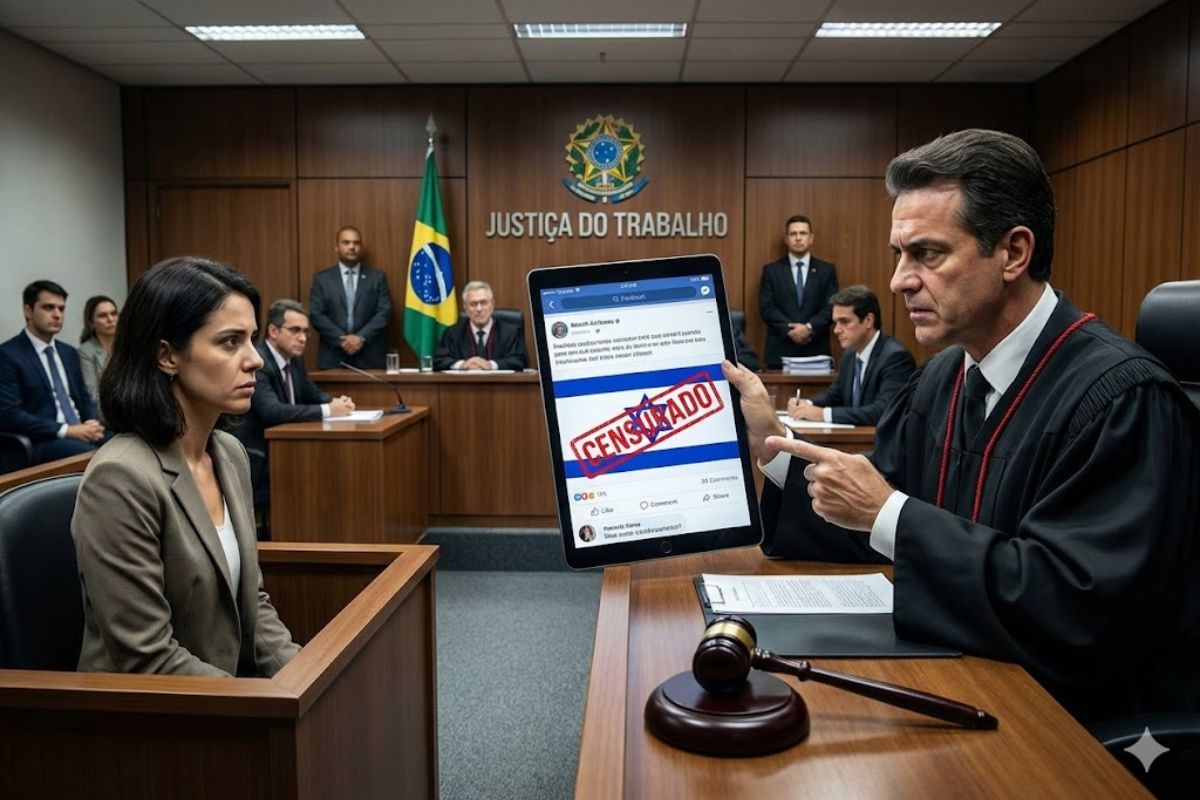


Labor Court Decision in São Paulo Condemns Technology Company to Pay R$ 30 Thousand for Dismissing Analyst Who Criticized Israel on Personal Profile, Violating Freedom of Expression and Threatening Political Monitoring on Employees’ Social Media.
On July 15, 2025, the Labor Court in São Paulo condemned a technology company to pay R$ 30 thousand in damages for dismissing an employee after political posts on her personal social media criticizing Israel’s actions in the Middle East. The ruling, issued by Judge Claudia Tejeda Costa of the 15th Labor Court of the capital, concluded that the termination was discriminatory and violated fundamental rights guaranteed by the Federal Constitution.
The process revealed that, after the posts, a colleague of Jewish descent reported the case internally, the company asked the employee not to comment further on the subject, and then notified her of the dismissal arguing that the posts created insecurity among other employees. The Labor Court found that, in addition to the dismissal, there was shameful exposure and veiled threat of systematic monitoring of other employees’ political opinions, which exceeds the employer’s directive power.
Criticism of Israel on Personal Profile Triggers Contract Termination
According to the initial petition, the plaintiff maintained a personal profile on social media where she posted critical opinions about the actions of the State of Israel in the Middle East conflict.
-
The Senate approves a bill that criminalizes misogyny, hatred, or aversion towards women, and includes the crime in the Racism Law with a penalty of up to 5 years.

-
Chamber Approves Bill That Allows Pepper Spray for Women Over 16 and Imposes Strict Rules for Purchase, Possession, and Use as Self-Defense

-
Chamber Approves Law to Combat Leucaena, Fast-Growing Plant That Dominates Land and Threatens Native Species in Various Regions of the Country

-
Asset Division: Know What Cannot Be Divided in Case of Divorce


She argued in court that the messages were motivated by her Arab heritage, contained political content, were respectful, and directed at the State, not the Jewish people.
After the internal fallout from the posts, a colleague of Jewish descent expressed discomfort and requested peace in a corporate channel.
From that point, the company called the employee, advised her not to comment further on the subject, and shortly thereafter notified her of the dismissal, attributing the posts as responsible for a supposed atmosphere of insecurity among other colleagues.
Witness Confirms Political Motivation and Threat of Surveillance
The only witness heard confirmed in court that the employer’s decision was made after the discomfort caused by the posts.
She reported being informed of the termination and the reasons by an HR employee in the presence of other colleagues, which exacerbated the plaintiff’s exposure.
The witness also stated that, after the dismissal, management held a meeting with all employees, during which the case was explained and it was announced that the company was “watching” the posts on social media.
According to the account, it was said that expressions contrary to the company’s guidelines could lead to new terminations, although there was no formal document establishing these political or conduct guidelines on digital platforms.
Freedom of Expression and Limits of Employers’ Directive Power
In her reasoning, the judge highlighted that the oral evidence demonstrated the link between the social media posts and the dismissal of the employee, as well as the company’s intention to inhibit future political expressions.
For the magistrate, this set of facts constitutes a direct violation of freedom of expression and human dignity.
The decision mentions that Brazilian legislation prohibits discriminatory practices in labor relations and that the legitimate exercise of freedom of expression cannot be arbitrarily limited, especially when there is no affront to public order, honor, or the dignity of third parties.
In the analyzed case, the Labor Court concluded that the posts had political content, did not constitute hate speech, and fell within the public debate about an international conflict.
Discriminatory Conduct and Recognized Compensable Moral Damage
For the magistrate, the company’s conduct exceeded its directive power by dismissing the employee for political reasons, internally disclosing the reasons for the termination, and linking the episode to a warning about monitoring the social media of other employees.
This set of acts reinforced the punitive and discriminatory nature of the termination, justifying the recognition of moral damages.
The ruling set the amount of R$ 30 thousand as compensation for moral damages, considering the seriousness of the violation, the internal reach of the exposure, and the need to discourage similar practices in the corporate environment.
The case is under number 1001349-57.2024.5.02.0015, linked to the Regional Labor Court of the 2nd Region, and can still be subject to appeal by the parties.
Social Media Monitoring and Warning to the Technology Sector
The case raises a warning signal, especially for technology companies and organizations with a strong digital communication culture.
In analyzing the defendant’s conduct, the Labor Court deemed it inappropriate to transform personal profiles into direct extensions of the corporate environment for disciplinary purposes, especially without objective criteria, formal policy, or prior transparency regarding any political expression guidelines.
For labor experts, the ruling indicates that generalized mechanisms for monitoring social media, associated with threats of dismissal based on political opinions, tend to be interpreted as discriminatory practices.
Case law reinforces that the employer can protect its image and curb illegal speeches, but cannot punish employees solely for differing politically from the company’s stance on their private profiles, provided the legal limits are respected.
In light of this decision, in your opinion can companies establish clear limits for employees’ political posts on personal social media, or should the Labor Court remove any punishment for political expressions outside the company environment?










Excelente, está na hora de acabar com esse tipo de opressão. Não gosto de extremismos nem radicalismos, a democracia e liberdade de expressão devem ser mantidas, o que não pode é danificar patrimônio público nem atacar a democracia, esses devem ser punidos com rigor. Toda calúnia e difamação deve ser punida, assim como a opressão, tanto faz se vem da direita ou da esquerda. Afinal, gosto de viver num país democrático, e espero que assim continue.
Engraçado quando se trata de algodão esquerda vale o direito de expressão. Agora quando se trata de direita. Ah isso não vale. Temos deputados presos por ter seu diretor de expressão negado. Ora o cara é parlamentar que o direito de falar. Parlamentar vem de parlamentar com direito de falar quaisquer coisa sem ser punidos e direito garantido pela constituição, mesmo assim para a nossa justiça não valeu. Agora a. **** pode criticar Israel e não, ela não pode ser punida não, ela tem direito de expressão que absurdo. Aos de direitas e contrário os desmandos do governo e is togados a lei severa sem direito de expressão, alguém é preso por opinar ao contrário dos seminários deuse, mas aos amigos e aliados, todos direitos e regalias inclusive de expressão. Dois pesos e duas medidas. Criticar Israel pode? Agora criticar o STF ah não! Se fizer isso será preso e cancelado. Estamos fritos sem segurança jurídica.
Se apoiasse o terrorismo do hamas e o comunismo chinês, seria promovida a gerente!!
Esse não entendeu o motivo da dispensa..Sob o meu critério a empresa deve tomar as medidas que quiser no âmbito de trabalho… petistas, esquerdistas, **** e seus apoiadores devem trabalhar nas empresas de caráter social e não nas de cunho capitalista.. Fora mm vom eles..