





 Portuguese
  English
  Spanish
  5 min of reading
  0 comments


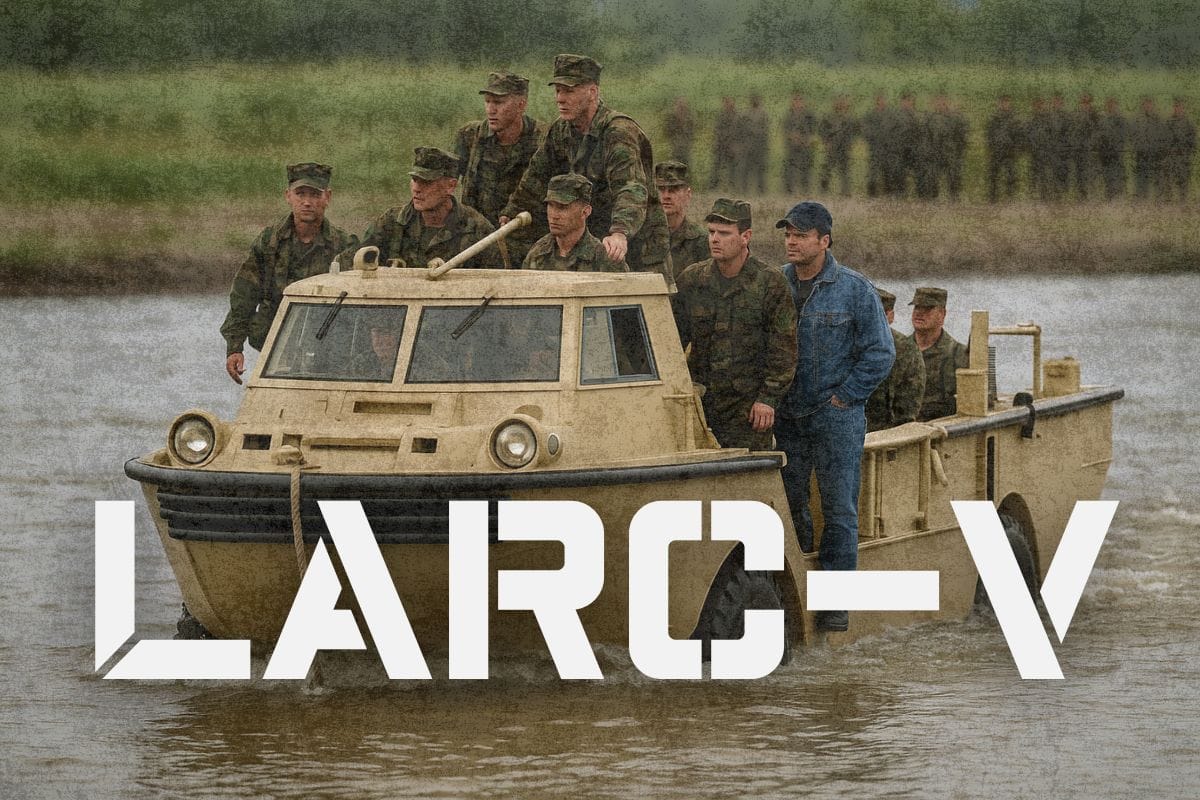
The LARC-V is one of those projects that arose amid the Cold War, shone in the heat of battle, and decades later, remains useful in civil and military scenarios.
Conceived in the United States in the 1950s, it needed to do something that no pure truck or boat could: leave the beach already loaded, push through the waves, and deliver supplies directly to the front line.
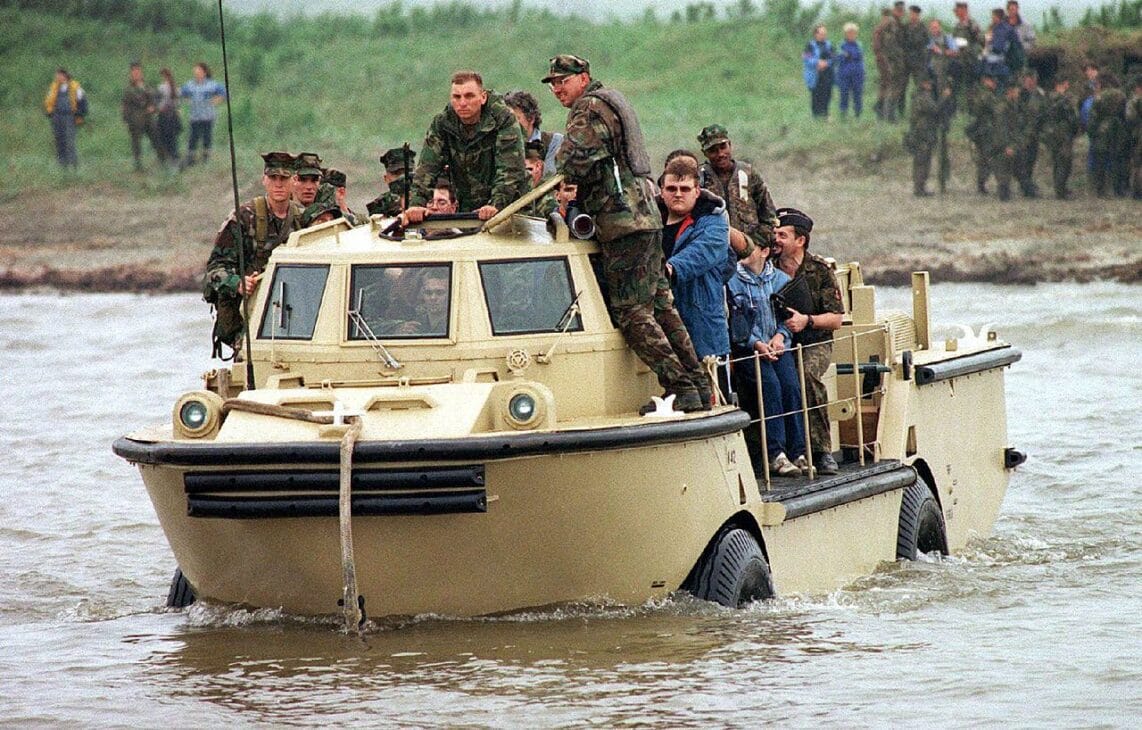
The result was an aluminum “truck-boat” capable of carrying five tons wherever there was mud, sand, or water in the way.
-
Friends have been building a small “town” for 30 years to grow old together, with compact houses, a common area, nature surrounding it, and a collective life project designed for friendship, coexistence, and simplicity.

-
This small town in Germany created its own currency 24 years ago, today it circulates millions per year, is accepted in over 300 stores, and the German government allowed all of this to happen under one condition.

-
Curitiba is shrinking and is expected to lose 97,000 residents by 2050, while inland cities in Paraná such as Sarandi, Araucária, and Toledo are experiencing accelerated growth that is changing the entire state’s map.

-
Tourists were poisoned on Everest in a million-dollar fraud scheme involving helicopters that diverted over $19 million and shocked international authorities.


In the Vietnam, the large amphibian became a key piece of U.S. logistics, with part of it intentionally sunk to avoid falling into enemy hands when U.S. forces withdrew in 1975. Still, hundreds survived.
Some underwent deep modernization in the U.S. Navy SLEP program, others traveled the world serving in allied armies, and many retired as tourist attractions in glacial lakes or historic ports.
Today, the LARC-V is remembered as an icon of versatility: it carries containers, troops, or visitors seeking adventure. Understanding its history, mechanics, and reincarnations helps explain why it still arouses the curiosity of enthusiasts, from model makers to naval engineers.
Origin and First Use
The project, initiated in 1952, originated from the acronym LARC (Lighter, Amphibious, Resupply, Cargo). The “V” indicated the version capable of moving up to 5 tons over any terrain. It officially entered service in 1963, at the height of the American escalation in Southeast Asia.
In Vietnam, two companies, the 344th and 347th Transportation, landed 34 vehicles in Da Nang and Cam Ranh Bay. The mission was simple and vital: unload anchored ships, cross the surf, and dump bombs, ammunition, and fuel directly on the USAF flight line. They operated 24 hours a day; if less than 15 units were operational, replacement parts flew in urgently from the U.S.
The robustness was impressive. Of the nearly 1,000 LARC-Vs built, about half were lost in the conflict, many deliberately sunk to prevent capture. Still, the vehicle sealed its reputation as a “floating tank” that needed neither port nor dock to deliver cargo.
After the ceasefire, the LARC-V proved useful in peacekeeping tasks: rebuilding bridges, supporting riverside communities, and transporting personnel in coastal bases. This versatility convinced other nations to order the amphibian.


Engineering and Performance
Built of marine aluminum, the hull measures 11 m long, 3 m wide, and just over 3 m tall. Empty, it weighs 8.6 t; loaded, it supports 5 t extra or 20 passengers in addition to the three crew members.
The original engine was a Cummins V8 with 300 hp paired with a mechanical transmission. On solid ground, the 4×4 reached 48 km/h; on water, propelled by a central propeller, it navigated at 15 km/h. Tanks of 144 gallons provided a range of up to 539 km on land and 110 nautical miles at sea.
The simple mechanics made maintenance in the field easier. Instead of complex suspension, the LARC-V relied on oversized low-pressure tires, which insulated the hull from impacts while still ensuring extra flotation.
Another advantage was its ability to climb ramps with a 60% gradient, something valuable on steep beaches or eroded riverbanks. For all these reasons, the vehicle became a logistical “jack-of-all-trades” in joint Army, Navy, and Air Force operations.
From Vietnam to SLEP: The Major Overhaul

Forty years after its debut, the U.S. Navy launched the Service Life Extension Program (SLEP) to keep the LARC-V relevant in the 21st century. The core of the overhaul is the John Deere turbo engine with 375 hp connected to a hydraulic transmission, smoother and more powerful than the old mechanical gearbox.
The upgrade doubled the “bollard pull” in water to 7600 lb and raised the towing capacity on land to 29000 lb. Electrical systems have been digitized, the cabin received new panels, and ergonomics improved. Of the nearly 200 units still in U.S. hands, 42 have already gone through SLEP and are working in Beach Master Units, Construction Teams, and pre-positioning ships.
Bollard Pull in Portuguese is known as static pull, which is the pulling force that a tugboat or vessel can exert when tied to a bollard without moving.
Interestingly, despite its almost unaltered appearance, the “new” LARC-V operates as a port tractor, coastal tug, and diving platform, a resume that no conventional tractor-truck accumulates.
Operators and Current Uses
In addition to the United States, Australia, Argentina, Portugal, the Philippines, and Singapore still maintain active fleets. The Australians have taken LARC-Vs on support missions in Antarctica, supplying bases on Macquarie Island over difficult beaches.
In the disaster of the Queensland floods in 2011, two examples were transported by C-17 to act as amphibious taxis between flooded urban areas. The ability to climb curbs, cross currents, and glide through submerged streets made a difference in rescues.
In the civil world, around 100 vehicles have become tourist attractions. This is the case with tours on the glacial lake Jökulsárlón in Iceland, and the “duck tours” in Halifax, Canada, where the LARC-V glides from the street to the harbor without changing gears.
The commercial survival is not mere folklore. The aluminum hull resists corrosion, parts come from industrial engines, and handling is similar to that of a tractor, which reduces the cost of driver licensing.
Modeling and Pop Culture
For those who prefer 1/35 scale, Gecko Models has released a kit praised by experts. The hull comes in one piece, the tires are molded “with weight,” and there is photo-etch for mirrors, wipers, and rope supports.
The manual includes three paint schemes: two olive-drab patterns from Da Nang, 1965, and an Argentine LARC-V from the Malvinas, 1982. Modelers have already reported that if the hull is sealed well, the miniature actually floats in the sink — a rare feat for plastic armored vehicles.
The kit’s success has rekindled interest in beach dioramas, featuring figures unloading ammunition boxes on wet mats. Some hope that strong sales will encourage the brand to produce the larger counterpart, the LARC-LX, weighing 60 t.
In the meantime, the LARC-V secures its place in pop culture. It features in tourism videos, makes cameos in war series, and mobilizes restoration communities, always ready to show that sometimes, the most efficient transport is the one that ignores the line between land and sea.










Seja o primeiro a reagir!