





 Portuguese
  English
  Spanish
  5 min of reading
  0 comments



BYD is raising in Camaçari, Bahia, one of the largest industrial complexes in Brazil, with 4.6 km² of area and capacity to produce up to 600 thousand vehicles per year. But inspections between 2024 and 2025 found 163 workers in conditions analogous to slavery on the construction site, exposing serious failures in the billion-dollar project.
The Chinese automaker BYD is building in Camaçari, in the metropolitan region of Salvador, an industrial complex that occupies 4.6 km², a larger area than entire municipalities in Brazil, such as Águas de São Pedro in São Paulo or Santa Cruz de Minas in Minas Gerais. The project foresees an investment of approximately R$ 5.5 billion and an initial capacity of 150 thousand vehicles per year, potentially reaching 600 thousand units annually in future phases, with a promise to generate up to 20 thousand direct and indirect jobs.
But what should have been just a story of reindustrialization took on much more complex contours. Inspections carried out between 2024 and 2025 identified 471 Chinese workers brought in irregularly, of which 163 were found in conditions classified as analogous to slavery with exhausting work hours, degrading living conditions, and restrictions on freedom. The episode shook public perception of BYD’s project and opened a debate that goes beyond engineering: about how large works should be executed and for whom their benefits are directed.
What BYD is building in the place of the former Ford
The BYD complex occupies exactly the space where the former Ford factory operated in Camaçari, a structure that sustained the local economy for decades and whose departure left a significant industrial void.
-
With an investment of R$ 612 million, a capacity to process 1.2 million liters of milk per day, Piracanjuba inaugurates a mega cheese factory that increases national production, reduces dependence on imports, and repositions Brazil on the global dairy map.

-
Brazilian city gains industrial hub for 85 companies that is equivalent to 55 football fields.

-
Peugeot and Citroën factory in Argentina cuts production by half and opens a layoff program for more than 2,000 employees after Brazil drastically reduced purchases of Argentine vehicles.

-
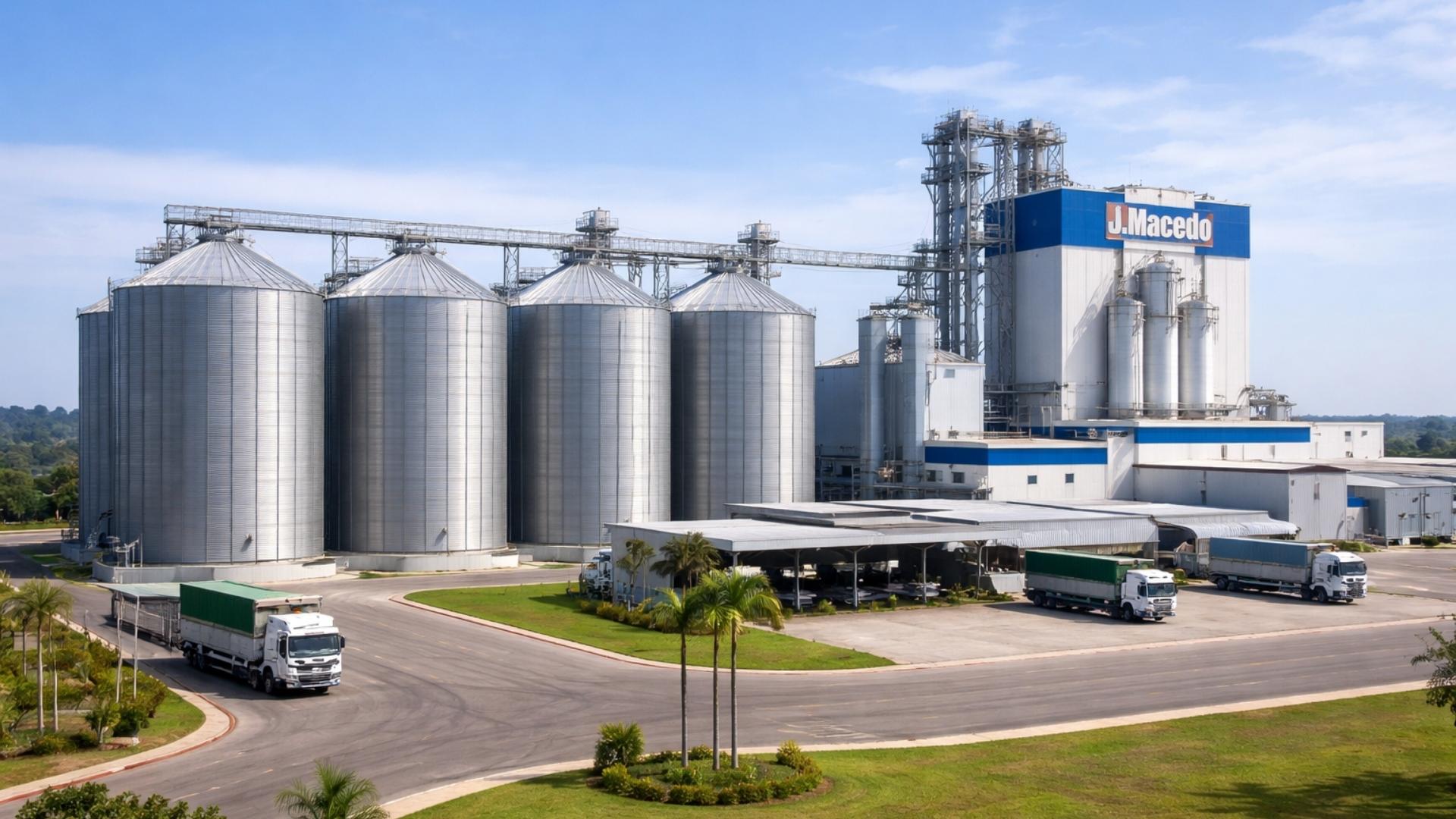
A Brazilian city gains a factory worth R$ 300 million with the capacity to process 200 thousand tons of wheat per year, a mill of 660 tons/day, silos for 42 thousand tons, and an industrial area of 276 thousand m².

The Chinese automaker entered this void with the promise of three pillars: reindustrialization of the region, inclusion of Bahia in the global electric vehicle chain, and repositioning the state in a high-tech sector.
The former Ford structure is being deeply reconfigured. Warehouses are being adapted for new assembly lines, logistical accesses are being reorganized, and the energy infrastructure is being recalibrated to support a production based on electrification and automation.
The initial phase of BYD’s operation was structured in an SKD regime, in which vehicles arrive partially assembled and undergo finalization in Brazil, a model that allows for an accelerated start of activities while more complex areas such as stamping, robotic welding, automotive painting, and battery assembly are prepared.
A BYD complex larger than Brazilian cities
To gauge the scale of the project, just compare: the 4.6 km² of the BYD complex exceeds the total area of municipalities such as Águas de São Pedro, in São Paulo, with approximately 3.6 km², and Santa Cruz de Minas, in Minas Gerais, with about 3.5 km².
This is not a conventional factory, but an industrial structure of territorial scale, with internal road systems, loading and unloading areas, electrical power networks, industrial water, and telecommunications.
When fully operational, the BYD plant could reach up to 600 thousand vehicles per year — more than 1,600 units produced per day. The estimated investment of R$ 5.5 billion would be enough to acquire approximately 73 thousand popular cars.
The project also incorporates an internal industrial ecosystem, with structures inherited from Ford being allocated to suppliers that begin to operate within the same productive perimeter, reducing logistical costs and accelerating the pace of production.
The “Chinese city” that generated controversy in Camaçari
During the construction phase, BYD structured living areas within the complex to house workers directly involved in the works.
Housing modules, dining areas, internal logistics, and routines organized in shifts created a dynamic that part of the local population interpreted as something beyond a conventional construction site, giving rise to the expression “Chinese city of Camaçari”.
On social media, the claim circulated widely that around 10 thousand Chinese would be brought in to fill positions in the project information later refuted by official data showing a predominance of Brazilian workers and a contractual requirement for a majority local workforce.
Still, the concentration of accommodations within the same perimeter, associated with the presence of foreign workers and the lack of clear communication from BYD, fueled the perception of an isolated nucleus within the city.
The 163 workers in conditions analogous to slavery
The most serious point of the project came to light with the inspections. Between 2024 and 2025, 471 Chinese workers were identified as having been brought irregularly to the BYD construction site in Camaçari, of which 163 were in conditions classified as analogous to slavery.
The reports pointed to exhausting work hours, degrading living conditions, and restrictions on freedom.
The episode was directly linked to the pressure for deadlines in the implementation fronts of the work, where the need for specialized labor contributed to governance failures.
More than 60 notices of infraction were issued, part of the activities was temporarily halted, and contracts with involved companies were terminated.
Corrective measures were adopted by BYD, but the case exposed a fragility that goes beyond the project itself: the speed of execution of large works can increase risks when not accompanied by robust labor control mechanisms.
What is at stake for Camaçari and Bahia
Despite the controversies, BYD’s project remains strategic for the region. The expectation is that the complex will reposition Camaçari as a relevant hub in the production of electrified vehicles, attracting suppliers, expanding the regional production chain, and reactivating an industrial structure that had lost prominence after Ford’s departure. This could mean economic recovery and the generation of thousands of jobs.
But progress does not happen in a straight line. The case of workers in conditions analogous to slavery, the perception of an isolated nucleus within the city, and doubts about the real distribution of benefits have created a scenario of expectation mixed with caution among the local population.
The so-called “Chinese city of Camaçari” is not actually a city, but a large-scale industrial complex with strong international influence.
What will define the legacy of this BYD project in Bahia is not only what is being built but how and for whom it is being built.
With information from the Channel Construction Time
What do you think of BYD’s project in Camaçari? Do you believe it represents real development for the region, or do the labor issues reveal a model that needs to be rethought? Leave your opinion in the comments.






Seja o primeiro a reagir!