





 Portuguese
  English
  Spanish
  4 min of reading
  0 comments


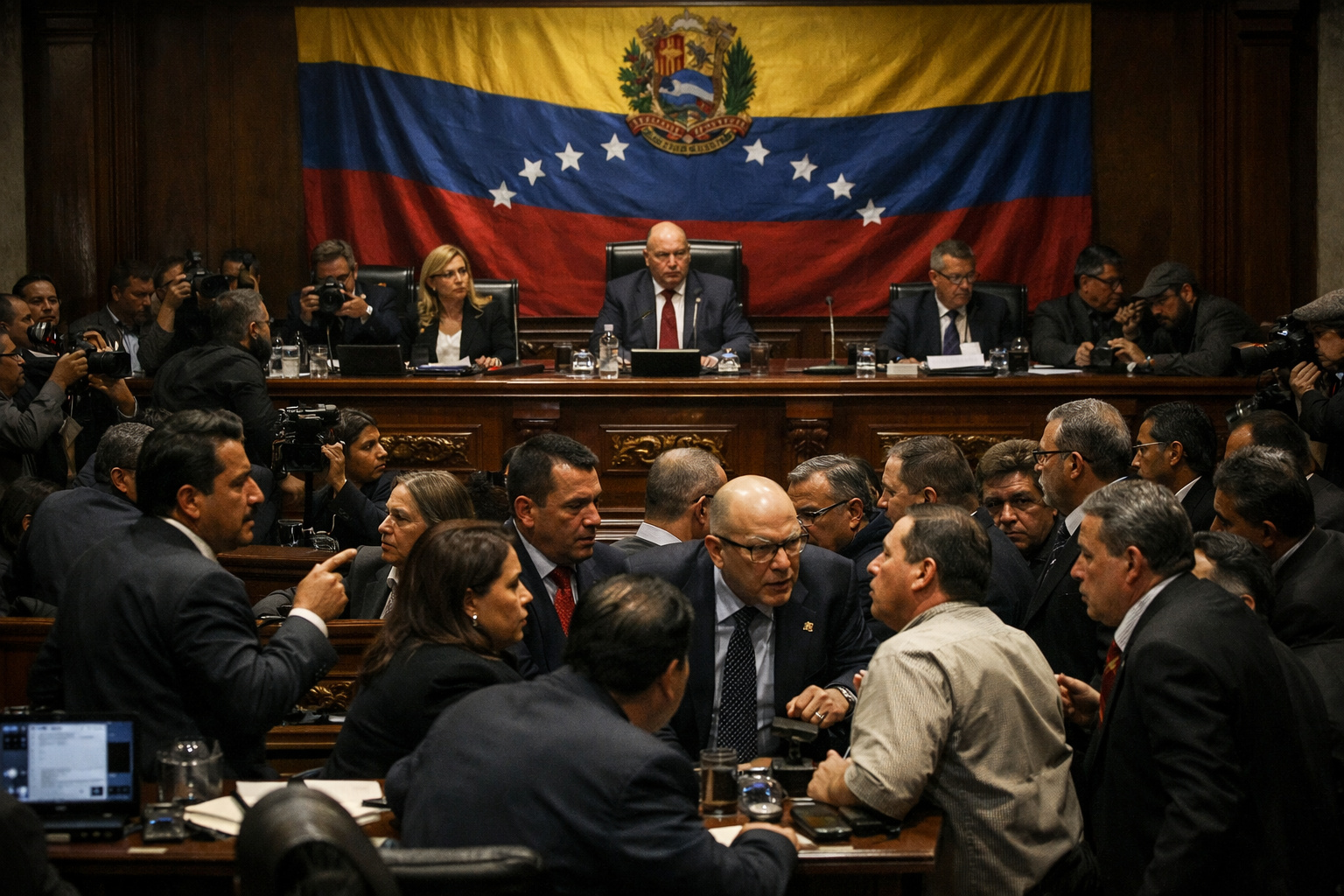
Venezuela Approves Law Against Piracy And Blockades With Sentences Of Up To 20 Years Amid International Tension

New Legislation Toughens Penalties, Advances In Parliament And Emerges During US Offensive Against Venezuelan Oil Shipments In The Caribbean
Venezuela has advanced in toughening its criminal legislation amidst significant international pressure. This week, the country approved a law that provides prison sentences of up to 20 years for those promoting, financing, or participating in acts classified as piracy, blockades, and other international crimes.
The information was disclosed by international media and confirmed by official records from the National Assembly of Venezuela, controlled by the president’s party Nicolás Maduro. Soon after the unanimous approval, the Parliament forwarded the text to the Executive, which is expected to sanction the measure. As soon as the government publishes the law in the Official Gazette, it will come into effect.
The project is named “Law to Guarantee Freedom of Navigation and Trade Against Piracy, Blockades And Other International Illicit Acts”. Thus, the government expands the legal scope to classify external actions considered hostile to the country.
-
The Senate approves a bill that criminalizes misogyny, hatred, or aversion towards women, and includes the crime in the Racism Law with a penalty of up to 5 years.

-
Chamber Approves Bill That Allows Pepper Spray for Women Over 16 and Imposes Strict Rules for Purchase, Possession, and Use as Self-Defense

-
Chamber Approves Law to Combat Leucaena, Fast-Growing Plant That Dominates Land and Threatens Native Species in Various Regions of the Country

-
Asset Division: Know What Cannot Be Divided in Case of Divorce


Law Emerges Amid US Offensive In The Caribbean
The approval of the legislation occurs, therefore, in a context of rising tension with the United States. In recent months, American authorities have intensified operations in the Caribbean Sea. As a result, agents intercepted and seized tankers carrying Venezuelan oil.
Meanwhile, the American government claims that the actions aim to combat drug trafficking and prevent drugs from entering US territory. Still, Venezuelan authorities reject this justification. For Caracas, the operations constitute economic blockades and acts of international piracy.
According to analyses published by international politics experts, the new law arises precisely to strengthen Venezuela’s legal narrative. In this way, the country seeks to create internal mechanisms to respond to external actions considered illegal.
Additionally, the Trump administration even released images and details of operations that resulted in the seizure of more than one ship coming from Venezuela. According to Washington, these actions also serve as a direct message to the government of Nicolás Maduro.
Exchange Of Statements Escalates Diplomatic Crisis
Alongside military actions, the political discourse has heightened the tone of the crisis. The president of the National Assembly of Venezuela, Jorge Rodríguez, harshly criticized the American operations. According to him, the United States promotes looting and bows to what he termed imperialism.
On the other hand, members of the American government reinforced the confrontational rhetoric. Authorities stated that they not only intercept ships but also send a clear message to the world. According to these statements, Washington will not tolerate illegal activities associated with the Maduro government.
In this context, the exchange of barbs between Donald Trump and Nicolás Maduro gained international attention. Trump stated that Maduro should relinquish power and suggested that persisting in confrontation would bring harsher consequences.
Maduro reacted publicly. During a fair for Venezuelan producers, he stated that Trump should focus on internal problems in the United States. Moreover, he questioned the fact that a large part of the American president’s speeches address Venezuela.
International Reactions And Criticism Of American Actions

Despite the aggressive tone, the Trump administration has never officially confirmed that its actions aimed for a regime change in Venezuela. Since August, when the offensive in the Caribbean began, Washington has maintained that the focus remains on combating drug trafficking.
Still, the actions of the United States have generated international criticism. Russia and China expressed opposition to American operations. According to these countries, the actions could destabilize the geopolitical balance of the region.
In this context, the new Venezuelan law emerges as a political and legal response. By toughening penalties and broadening the definition of international crimes, the government seeks to reinforce its sovereignty and signal resistance to external pressure.
Finally, the legislation also reinforces the narrative that the country will not accept blockades or interference in its trade and energy routes.
Will this new law be able to curb piracy and international blockades or is it likely to escalate tension between Venezuela and other global powers?










Seja o primeiro a reagir!