





 Portuguese
  English
  Spanish
  5 min of reading
  0 comments


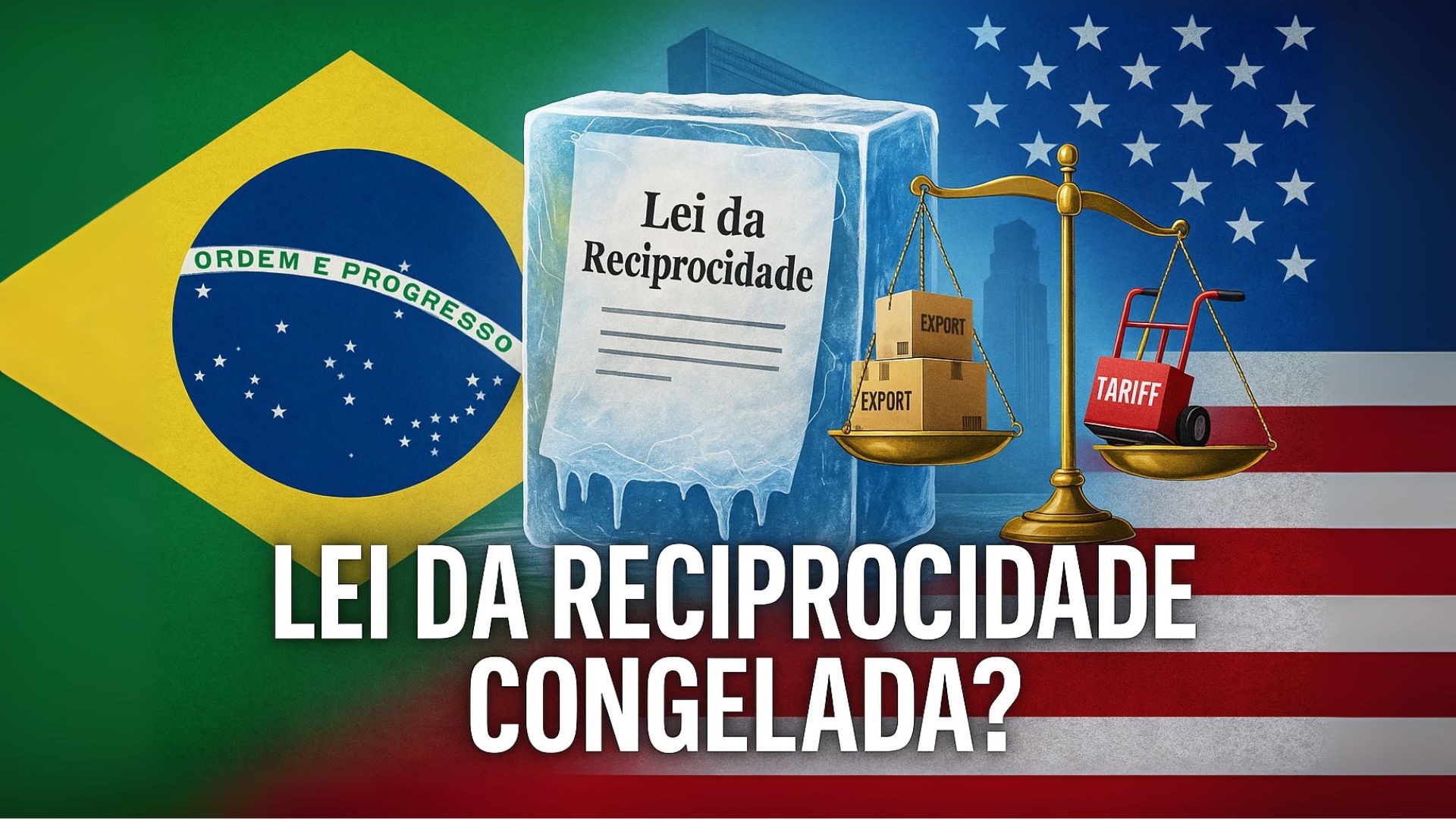
Brazilian Government Delays Decision on Retaliation to US Tariffs as Lula and Trump Indicate Diplomatic Approach at UN. The Future of Reciprocity Measures Depends on the Outcome of Conversations Between the Two Presidents.
The Brazilian government interrupted the progress of the process to apply the Reciprocity Law against the United States on the same day Donald Trump acknowledged Luiz Inácio Lula da Silva at the UN General Assembly and signaled a conversation with the Brazilian president for the following week.
The decision suspended the deliberation that could have officially allowed the use of the legal instrument and opened the door for measures such as restrictions on patents, investments, and concessions.
Deliberation Delayed in Gecex
The vote on the admissibility of the law was scheduled for the 229th meeting of Gecex, the body of Camex responsible for assessing the case. The session began around 10:30 AM on Tuesday, September 23, but the item was not reviewed.
-
Unemployment rises again to 5.8% at the beginning of 2026, raising alarms about the end of temporary positions and its impact on the Brazilian job market.

-
Document organization can cut invisible costs in small businesses, a simple step that prevents waste, rework, and losses in daily operations.

-
Chinese giant worth nearly R$ 4 billion that manufactures cables for electric cars, solar energy, and robotics wants to open a factory in SC.
-
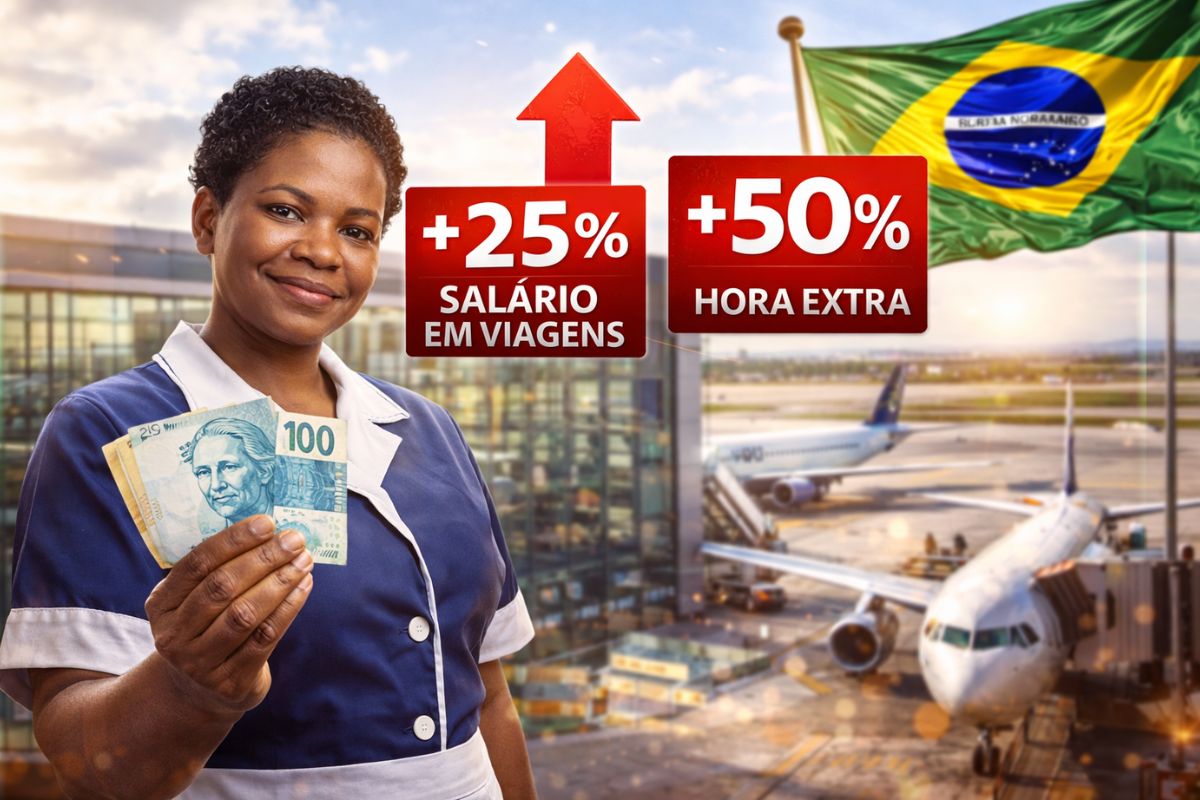
Many employers do not know, but the law guarantees domestic workers a 25% increase in salary during trips, 50% for overtime, 20% for night shifts, and 17 additional benefits that can lead to labor lawsuits if not paid.

According to a report published by Folha de S.Paulo, the delay was requested before the meeting opened, and the analysis was postponed for at least a week.
While the board met in Brasília, Trump was speaking in New York at the UN, mentioning Lula positively.
The coincidence in agendas reinforced, within the government, the reading that a direct conversation between the two leaders could affect the pace of the Brazilian response to tariffs imposed by Washington.
Political Signal After Trump’s Speech
In the General Assembly hall, Trump stated he had “excellent chemistry” with Lula during a brief encounter before the speech.
He added: “I only do business with people I like.”
And, in a humorous tone, he said that for “at least 39 seconds” the chemistry between the two was positive.
The gesture was interpreted by factions of the government as an invitation to reopen channels of dialogue on trade.
Lula, in a press conference before returning to Brazil, did not rule out an in-person meeting with the Republican.
Meanwhile, Foreign Minister Mauro Vieira declared to journalist Christiane Amanpour that the conversation should occur by phone or videoconference.
For advisors from the Planalto Palace and Itamaraty, it is crucial that this interaction occurs as expected, without noises that compromise the negotiation.
Internal Divergence and Risk Assessment
Before the Gecex meeting, there was divergence among government members about the best strategy.
One faction advocated proceeding with the retaliation process, given the difficulty of progress in negotiations with the Americans.
Another faction feared escalation of tensions and the possibility of Brazil becoming a target of new sanctions, which is why they recommended waiting for the conversation between the presidents.
According to investigations by the newspaper Folha de S.Paulo, technicians involved in the topic believe that, in scenarios of trade war, reciprocity measures tend to gain or lose traction depending on the signals coming from the adversary.
By this reasoning, Trump’s declared willingness to open real negotiations temporarily diminishes the urgency of activating the Brazilian legal framework.
If the dialogue channels do not prosper, the expectation is that the discussion on retaliations will return to the table.
What the Reciprocity Law Provides
The Reciprocity Law provides for the possibility of Brazil adopting, in response to unilateral measures by another country, actions such as restrictions on patents, investments, and concessions, among other hypotheses provided for in the legal framework of foreign trade.
The goal is to rebalance competition conditions when partners impose tariffs or barriers without the backing of international commitments.
At the end of August, the Camex executive secretariat reported having received from the Itamaraty the request to initiate the process of applying these measures against the United States due to the tariffs announced by Washington on Brazilian exports.
With the admissibility, Gecex could establish a working group to draft proposals, submit them for public consultation, and then forward them to the Camex Strategic Council for a final decision.
Technical Report Under Development
For this week’s meeting, the initial plan was to present a report analyzing the economic and sectoral impact of US tariffs, based on technical input from various ministries.
This document would also evaluate whether Washington’s measures constitute violations of international trade rules, which would strengthen the legal basis for activating reciprocity.
The item was not removed from the agenda, but there was no decision on next steps.
In summary, Gecex acknowledged the progress of the report and the applicable deadlines for the next stages.
According to the Ministry of Development, Industry, Commerce and Services (MDIC), there has been no change to these deadlines: the Camex executive secretariat has 30 days, extendable by another 30, to complete the report and deliver it to the board.
The newspaper Folha de S.Paulo also pointed out that this timeline remains in effect despite the suspension of the deliberation.
Business Mediation and Commercial Approach
The rapprochement between Brasília and Washington has involved the actions of large business groups.
Embraer and JBS participated in discussions that favored the pro-negotiation line.
About three weeks ago, Joesley Batista was at the White House discussing the 50% surcharge applied to Brazilian products and argued that trade differences can be resolved through dialogue.
According to Folha de S.Paulo, this type of initiative from the private sector has helped pave channels between the governments and strengthen the faction advocating negotiation as an alternative to escalating sanctions.
Next Steps Under Observation
With the deliberation delayed, the government is monitoring the agenda of the conversation between Lula and Trump and its developments.
The Camex report continues to be developed within the legal deadlines.
If there is a green light for negotiations with a defined timeline and scope, the trend is to slow the progress of reciprocity.
If the channels prove insufficient, the retaliation strategy will regain strength.
In this context, interlocutors consider it essential to calibrate the timing: advancing with the legal instrument without consolidating bridges could harden the environment, while waiting for indefinite conversations could prolong uncertainty for Brazilian exporters.
The priority, for now, is to maintain maneuvering room, with technical work ongoing and the diplomatic front open.
What Should Be the Balance Between Regulatory Pressure and Dialogue with Washington to Protect Brazilian Industry Without Escalating Tariff Disputes?









-

Uma pessoa reagiu a isso.