





 Portuguese
  English
  Spanish
  4 min of reading


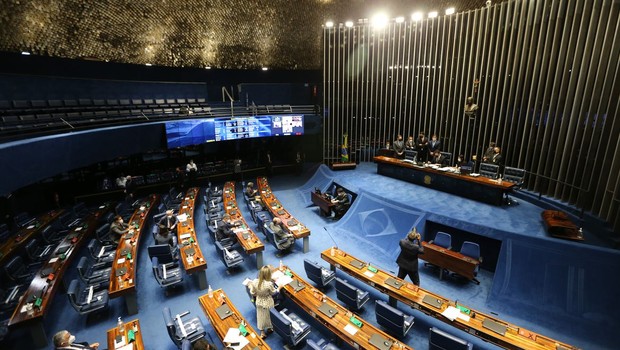
The Export Taxation Law on Crude Oil Is Making Significant Progress in the Senate. Law Would Help Keep Fuel Prices Stable.
The taxation of oil exports, currently under consideration in the Senate, has been pointed out as a solution to curb the rising fuel prices, which has been a constant in the Brazilian’s life since Petrobras changed its pricing policy in 2016, linking Brazilian fuel prices to the international oil barrel. This worsened significantly in 2021 with the increase in barrel prices.
The consequences for the economy are numerous. Experts point to this increase in fuel prices as one of the main reasons for inflation, as it is known that rising fuel prices create a ripple effect of increases in practically all products that Brazilians need, since they are transported via road freight.
- Petrobras President Criticizes Possible Taxation on Crude Oil Exports as State-Owned Company Sells Its Refineries
- World’s Largest Appliance Company, Owner of Brands Brastemp and Consul, Opens Job Vacancies in Factories in São Paulo, Santa Catarina, and Other Regions
- Another Record from the Brazilian Oil Giant: With 104 Operations in November, Petrobras’ LNG Regasification Terminals Hit Annual Transshipment Record
- Rise in Petrobras Fuel Prices Does Not Prevent Repar from Setting Monthly Gasoline Sales Record in Paraná and Santa Catarina; State Refinery Delivered 3.7 Million m³ of the Product to Distributors
In this sense, the purpose of this bill is to create a tax on crude oil exports and, with the resources generated by this new tax, establish a fund to control fuel prices.
-
Larger than entire cities in Brazil: BYD is building a 4.6 km² complex in Bahia with a capacity for 600,000 vehicles per year, but the discovery of 163 workers in conditions analogous to slavery has shaken the entire project.

-
With an investment of R$ 612 million, a capacity to process 1.2 million liters of milk per day, Piracanjuba inaugurates a mega cheese factory that increases national production, reduces dependence on imports, and repositions Brazil on the global dairy map.

-
Offshore industrial demand in Macaé skyrockets with the recovery of oil and gas and could grow by up to 396% by 2026 in the Campos Basin.
-
Brazilian city gains industrial hub for 85 companies that is equivalent to 55 football fields.


This way, the senators argue, it would be possible to create some control over the final price of fuels at the pump for Brazilians without necessarily causing any changes in Petrobras’ sales policy.
What Is the Status of the Crude Oil Export Taxation Law in the Senate?
Initially presented in April of last year by Senator Rogério Carvalho (PT-SE), the proposal was approved by the Economic Affairs Committee in December 2001, under the rapporteurship of Senator Jean Paul Prates (PT-RN).
Currently, the Senate President, Rodrigo Pacheco (PSD-MG), is seeking support among Senate leaders to put the new law to a vote as early as February.
If the law is approved in the Senate, it will still need approval from the Chamber and will finally be presented for the President’s consideration, who can request changes to the text or even veto the law in its entirety.
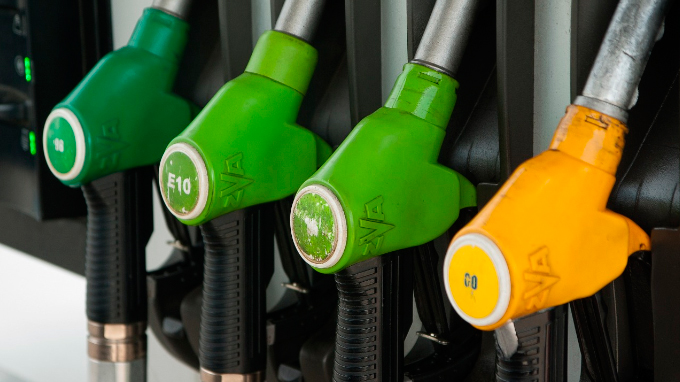
What’s most interesting about the proposal offered to the Senate at this time is that there is no state intervention in pricing policies, merely the creation of mechanisms so that, in the case of international price hikes, the regulatory fund can soften this increase for the final consumer. This aims to avoid constant price increases in fuels, such as those we had in 2021, allowing for a more efficient economic recovery.
The Other Side of the Coin: What Is the Market Opinion?
Despite the advanced progress of the Senate proposal, there are many voices in the oil market stating since last year that this measure is not a good idea.
Many argue that this could considerably reduce international investors’ interest in Brazil.
The director of the Fuels Department of the Ministry of Mines and Energy (MME), Marisa Barros, stated last November during the Energy Talks:
“We must analyze to what extent this will affect companies’ investments in upstream projects that have already been acquired and the upcoming auctions.”
At the same opportunity, professor and researcher at FGV Energia, Fernanda Delgado, recalled that Argentina implemented a similar measure and ended up hindering investments in the oil and gas sector in the country.
The concern is not unfounded. Since the entry of international companies into Brazil for oil field exploration was facilitated, there has been considerable growth both in production and job creation in the market, as well as in generating resources for public coffers.
An excellent example of this resource generation was the auction of pre-salt surplus conducted last month, which resulted in a surplus of R$11 billion for public coffers.
Despite this, some specialists argue that, without a conducive investment scenario, the situation may change drastically.
As commented last month to CNN Brasil by the President of the Oil and Gas Institute, Eberaldo Almeida, stability is crucial for investments to continue being made, as all business in the oil and gas sector are long-term investments.










Seja o primeiro a reagir!