





 Portuguese
  English
  Spanish
  4 min of reading
  7 comments


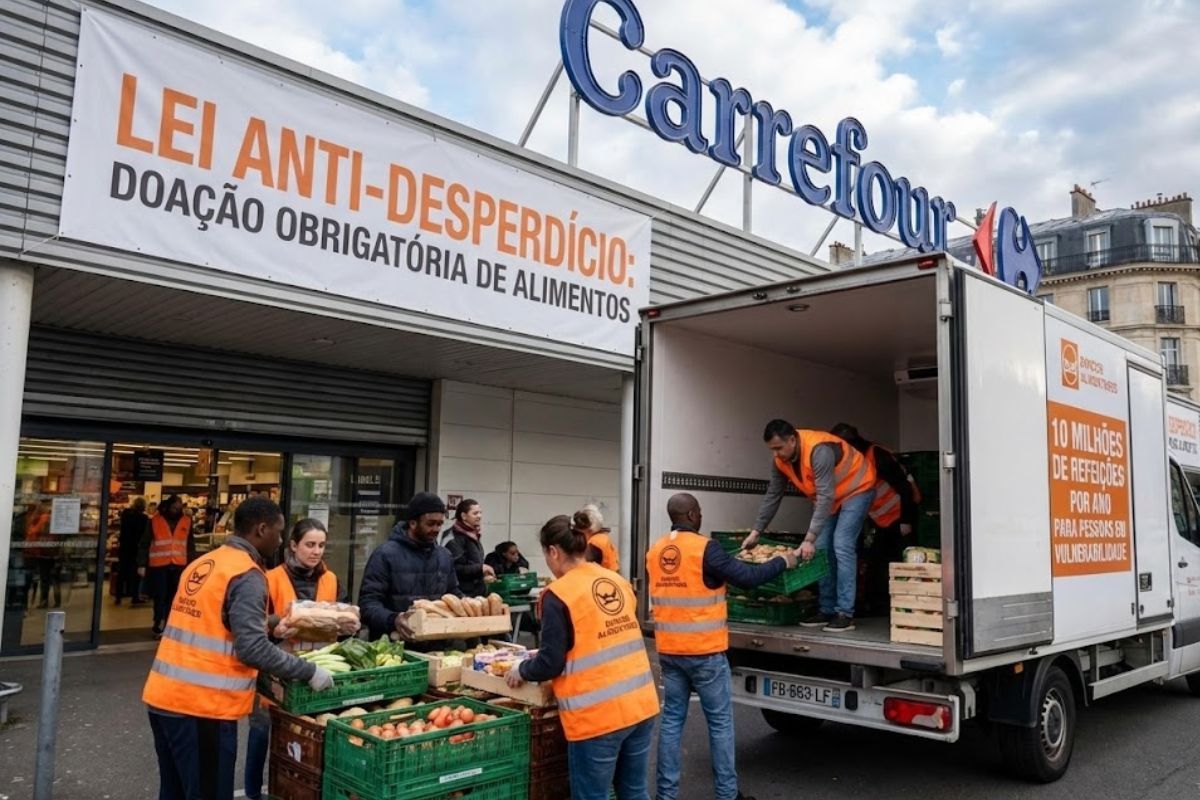


In Effect Since 2016, The French Law That Mandates Large Supermarkets To Donate Edible Food Connects Surplus Stocks To Charities, Reduces Waste Sent To Landfills, Strengthens Food Security, And Can Generate About 10 Million Extra Meals Per Year For Vulnerable People In France.
France has transformed its fight against food waste since 2016, when it passed a law that requires large supermarkets to donate food that is still fit for consumption to charities, connecting surplus stocks directly to those in need. The rule applies to stores larger than 400 square meters, which includes the largest food retail chains in the country.
Nine years after the law came into effect, the results are visible: less waste in landfills, a boost in food security, and an estimated additional 10 million meals per year for people in vulnerable situations across France. The experience shows how a public policy focused on donating food can simultaneously reduce waste and strengthen a continuous solidarity network.
How The Law That Requires Supermarkets To Donate Food Works
The French legislation stipulates that large supermarkets must establish partnerships with charitable organizations, food banks, and shelters to ensure that surplus products, but still suitable for consumption, are safely collected and redistributed.
-
The Senate approves a bill that criminalizes misogyny, hatred, or aversion towards women, and includes the crime in the Racism Law with a penalty of up to 5 years.

-
Chamber Approves Bill That Allows Pepper Spray for Women Over 16 and Imposes Strict Rules for Purchase, Possession, and Use as Self-Defense

-
Chamber Approves Law to Combat Leucaena, Fast-Growing Plant That Dominates Land and Threatens Native Species in Various Regions of the Country

-
Asset Division: Know What Cannot Be Divided in Case of Divorce


Instead of allowing the disposal of items nearing their expiration date, the government mandates that they be directed to those in need.
In practice, food items such as very ripe fruits, day-old bread, and other products that would be taken off the shelves now follow an organized flow.
The establishments are responsible for separating and making these items available, while the partner institutions handle collection and distribution. Thus, the obligation to donate food becomes part of the routine of the supermarket sector rather than merely a voluntary action.
Environmental And Social Impacts: From Trash To Table
Before the law, a significant portion of this food ended up in landfills. With the change, products that would have gone directly to waste now reach the tables of families in vulnerable situations.
Shelters, food banks, and social support organizations are the main beneficiaries of the new distribution logic.
From an environmental perspective, the effect is direct. The reduction in the volume of organic waste sent to landfills helps decrease pollution and the impacts of the decomposition of these materials, such as gas emissions.
At the same time, the policy strengthens food security by expanding access to ready meals or basic ingredients for people who rely on donations to eat.
The combination of less waste and increased access to food creates a structured solidarity network. Rather than being just a one-time gesture, donating food has become part of a public policy that connects supermarkets, institutions, and vulnerable populations in a continuous chain of social supply.
Economic Benefits For The Supermarket Sector
In addition to the environmental and social gains, the law also brings economic benefits to retail. By donating surpluses, supermarkets reduce costs related to managing and disposing of waste, like transportation and landfill fees.
Estimates related to the implementation of the measure indicate that the French initiative could increase the annual volume of donations by about 15%, helping to secure approximately 10 million additional meals per year.
This impact reinforces the strategic role of large chains as partners of the government in hunger-fighting policies, without compromising commercial operations and also relieving part of the operational expenses with waste.
For the sector, the obligation to donate food also contributes to the institutional image.
Supermarkets that comply with the legislation and maintain active partnerships with charitable institutions are seen as important agents in the agenda of social responsibility and sustainability, which can strengthen their relationship with consumers who are more attuned to these issues.
Model Of Inspiration For Other Countries
The success of the French legislation has already crossed the country’s borders. The experience of mandating large supermarkets to donate edible food has become a cited example in international discussions about food waste and food security.
While other European countries have yet to adopt identical laws, the idea of redistributing food that would be thrown away is gaining traction in various public discussions and local initiatives, either through proposed laws or voluntary partnership programs between retail and social organizations.
By demonstrating that it is possible to reduce waste, strengthen food security, generate millions of meals, and simultaneously lower waste costs, France has established a model that places the obligation to donate food at the center of the fight against hunger and waste.
And you, do you think Brazil should also pass a law mandating large supermarkets to donate surplus food to reduce waste and help those living in vulnerable situations?










Com certeza, assim como outros países
Quantas pessoas seriam beneficiadas
Sim. O Brasil precisa fazer uma lei assim. No Brasil se desperdiça muito alimento, enquanto muita gente passa fome
Aqui é ao contrário, se fizerem doações desses alimentos, são multados … preferem pessoas com fome e desperdício de comida 🙄🙄🙄