





 Portuguese
  English
  Spanish
  4 min of reading
  0 comments


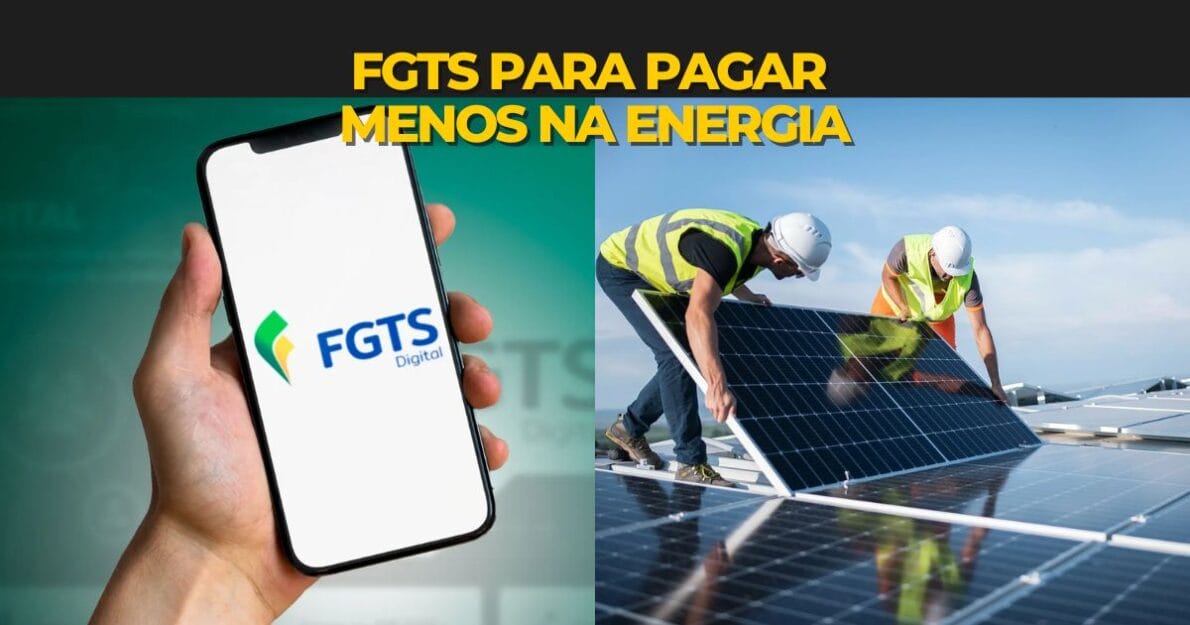
Proposal to Use FGTS to Install Solar Energy in Homes Could Be a Milestone for Renewable Energy Use in Brazil. Is This Investment Worth It?
A new possibility could transform your relationship with your electricity bill!
A bill that promises to change the lives of many Brazilians is under analysis and may open doors for workers to use a resource they already have the right to in a completely different way.
But is it worth using FGTS to invest in solar energy? Understand how this news could affect your wallet and the environment!
-
The government requests the Federal Revenue Service for a new system to automate the income tax declaration, reducing errors, time, and bureaucracy for millions of Brazilians.

-
Pix in installments, international Pix, and contactless payment without internet: the Central Bank revealed the new features coming to the tool that is already used by almost every adult in Brazil.

-
Mercado Livre has just started selling medications with delivery in up to three hours to your door, and this move could completely change the way Brazilians buy medicines on a daily basis.

-
In Dubai, rising tensions from the war in the Middle East are causing super-rich individuals to leave the Gulf and direct their fortunes to a new financial refuge in Asia.


The Bill 2554/24, which is being processed in the Chamber of Deputies, allows workers to use a portion of their Guarantee Fund for Time of Service (FGTS) to purchase and install photovoltaic solar energy systems in their homes.
This proposal seeks to encourage the use of renewable energy while also bringing economic benefits to citizens.
The question is: is it worth using the guarantee fund for this type of investment?
Project Details
According to the project, the worker may use up to 50% of the FGTS balance every five years for this purchase.
The withdrawal limit will be defined by the Executive Power, which will still need to establish specific regulations.
The proposal, authored by Deputy Marcos Tavares (PDT-RJ), aims to expand access to renewable energies by utilizing FGTS resources, which are usually blocked for long periods.
According to Tavares, “solar energy is a sustainable way to save money, and we want to ensure that more Brazilians have access to this technology, reducing environmental impact and providing long-term financial returns”.
How Will Regulation Be Done?
The text also specifies that the FGTS Curator Council will be responsible for defining the conditions for the operation of the law.
This includes everything from the withdrawal procedures to the eligibility criteria for the solar energy systems that can be purchased, as well as the necessary certifications from supplier companies.
In other words, there will be a series of regulations to ensure that only qualified systems and companies can be part of this program.
According to the project, the government will play a fundamental role in regulation, ensuring the safety of operations and protecting workers.
What Are the Next Steps?
The bill still needs to go through a series of approvals before becoming law.
Currently, it is being analyzed by three committees in the Chamber of Deputies: the Labor Committee, the Finance and Taxation Committee, and the Constitution, Justice and Citizenship Committee.
If approved by these committees, it will proceed to the Senate. If approved in both houses, the next step is presidential sanction.
Despite all the optimism, there are still issues to be discussed, such as the impact of this withdrawal on other uses of FGTS, in addition to the government needing to define the withdrawal limits.
Is It Worth Using FGTS to Install Solar Energy?
This is the big question that may be on your mind. Solar energy is undoubtedly an excellent way to save on your electricity bill.
In addition, it helps preserve the environment by reducing dependence on polluting energy sources.
On the other hand, FGTS is a resource intended for specific situations, such as purchasing real estate or retirement, and many people may hesitate to use it for other purposes.
However, the possibility of using a fund that often goes unused for long periods could be an interesting incentive.
In the long run, investing in solar energy could mean a significant reduction in monthly energy expenses, as well as increasing property value.
Therefore, using part of the FGTS for this purpose can indeed be advantageous for those looking to save and also contribute to the environment.
Future Perspectives for the Project
If approved, the law could be a milestone in the expansion of renewable energy use in Brazil.
Solar energy, which is already a global trend, gains even more strength with public policies that encourage its adoption.
For workers, the possibility of using FGTS for this purpose could be an excellent opportunity to make an investment with guaranteed returns.
However, it is important to pay attention to the regulations and limits that will be established.
It is still unknown, for example, what the maximum withdrawal amount will be or what the requirements will be for companies providing solar energy systems.
Now, the question is: do you think using FGTS to install solar energy is a good idea, or should this resource be allocated for other purposes?








Seja o primeiro a reagir!