





 Português
  Inglês
  Espanhol
 5 min de leitura
  0 comentários


Experts Comment On The Necessary Care To Take This Option
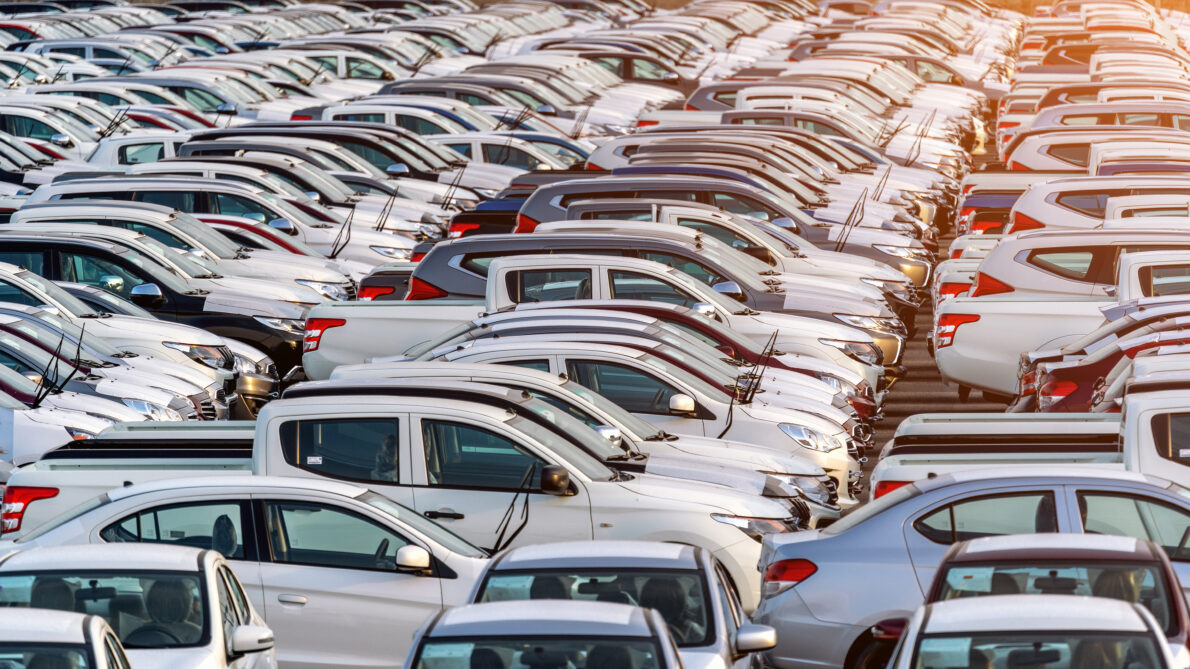
A topic that is on everyone’s lips is car auctions. However, many times consumers are unsure if this business model is really worth it and how to participate without getting into trouble. In the end, the advantages and disadvantages of buying a car at auction depend a lot on each buyer’s goal.
According to Gilmar Rocha, CEO of Grupo Gilcar, a specialist in automotive sales, buying a car at auction can initially be an option for those who want to spend little, but he advises paying attention to some points before taking the initiative, such as knowing the auction environment. “Many are unaware, but there are fees for withdrawal, which applies when the bid is not finalized. In other words, the participant leaves without the asset and still owes the auctioneer,” explains Rocha.
-
OMODA & JAECOO grows in Europe in 2026 with an integrated strategy of sales, innovation, local production, and technological advancement in the United Kingdom, Italy, and Spain.

-
OMODA & JAECOO expands after-sales service in Brazil with competitive maintenance, a 7-year warranty, and high availability of parts for technological SUVs.

-
OMODA & JAECOO appoints Alessandra Souza as executive marketing director in Brazil and accelerates brand expansion with a focus on innovation, networking, and hybrid portfolio.

-
Jaecoo 7 with super hybrid SHS system exceeds 1,200 km of combined range with a 1.5 turbo engine, high-density battery, and intelligent energy management.
Another important warning is that major dealerships or multi-brand stores typically do not accept cars from auctions in trade-ins, thus significantly reducing the market for these used cars. “Depreciation usually ranges from 30% to 50% less at the time of resale,” explains the CEO.
Therefore, it can be said that this is a universe that facilitates the buying process but complicates the selling process. “In other words, it is important to keep in mind that when choosing a car from an auction, you end up deciding to acquire a car for many years, without thinking about selling it or, in some cases, holding onto it,” he concludes.
Gladiston Azevedo, an auction specialist for over 14 years and owner of the profile Louco por Leilões (@loucoporleiloes), with over 1.3 million followers, explains that the auction dynamics occur through whoever offers the highest price, with this competition being conducted in person or online, through the auctioneer or responsible party. In general, any individual or legal entity can buy a car at auction, as long as they comply with the rules set out in the notice, which defines the entire structure of the bidding process.
He often states on social media that “at auction, the car is always cheaper than on the street.” But that does not mean that the path is easier. Above all, to make a good deal, the influencer advises the buyer to be on an official website. After that, it is important to choose the lot and organize to visit it or even ask someone to visit it for you. List all expenses for transportation, documentation, parts, towing, and set a maximum investment price.
“It is very important to have other options in mind in case the desired vehicle does not sell for the expected price. By doing this homework, it’s hard not to leave satisfied,” explains Gladiston.
Sérgio Villa Nova de Freitas, an auctioneer from one of the largest auction houses in Brazil, located in Santa Bárbara do Oeste, suggests a “tasting” before closing any deal: “Attend one or two physical auctions and watch others online, without any commitment, just to understand how the dynamics of an automotive auction works.”
He also reinforces that haste is the enemy of perfection. “Go to the auction, look at the car up close, check its value, calculate all the fees, and how much you intend to pay, and do not exceed that amount. If it doesn’t work out, look for another one, as sometimes people get excited and end up paying even more than the market price.”
The Commandments To Avoid Falling Into The Temptation
1st Recognize the territory, do the “tasting.” Visit a couple of physical auctions and observe others online. This way, you get to understand the dynamics.
2nd Know that there are different auctions. There are auctions from financial institutions, mostly with models repossessed due to non-payment, and those from insurance companies. In the latter case, they are vehicles recovered or with damages from accidents, as well as those resulting from theft and burglary. It is worth noting that caution should be doubled, especially to understand the extent of the damage to the vehicle. In judicial auctions, there are cars seized in criminal investigations or models seized by labor or civil courts for settling debts.
3rd It is very important to always check if the website ends with “.com.br,” as it can only be registered in a national domain if it is in Brazil. Another task is to always check with the commercial registry of the state to know if that auctioneer exists. Look up the alleged address listed on the website in Google Maps. Many scammers provide a fictitious address pointing to lots of companies or public agencies that have no relation to auctions. Every vehicle auction must have a notice. Read it carefully and observe the rules and deadlines for the auction.
4th Remember to do the math: bids should start at least 30% of the car’s value. Do not forget the transportation costs, documentation, and possible repairs.
5th Payment, in most cases, must be made upfront, on the spot. Some places have banks with credit lines, but with specific rates for auction cars. In other words, savings that may not be worth it. The deadline for honoring the commitment is 48 hours. Otherwise, there is a fine of up to 20% of the bid amount.
6th Documentation may delay the transfer a bit, as in certain cases there may be fines or liens awaiting clearance that may be necessary before the transfer, but this is explicitly stated in the notice. Ideally, rely on a good broker who can assist you in this process.
7th If possible, bring a mechanic or an expert to assess the extent of the vehicle’s damage. Most auctions do not allow the vehicle to be operated on-site but indicate in the notices whether the car is functioning or not.
Be Aware That Damaged Vehicles Have Degrees Of Loss, And That When Reselling Or Insuring The Vehicle, The Levels May Be Impeditive:
Minor Damage: the vehicle going to auction suffered light damage, without affecting the monocoque or main structure.
Moderate Damage: more significant damage that may render the car unfit for circulation on the roads. In these cases, the new owner will need to tow the vehicle, perform the necessary repairs, and submit it for inspection at the traffic department to obtain the report, which will be recorded in the document with a restriction.
Major Damage: vehicles that have suffered total loss. Generally, they are acquired only as scrap or to be dismantled in licensed junkyards.
Theft and Burglary: these are cars recovered after theft or burglary and that have been indemnified to the former owners. They usually do not present collision claims.








Seja o primeiro a reagir!