





 Portuguese
  English
  Spanish
  4 min of reading
  0 comments


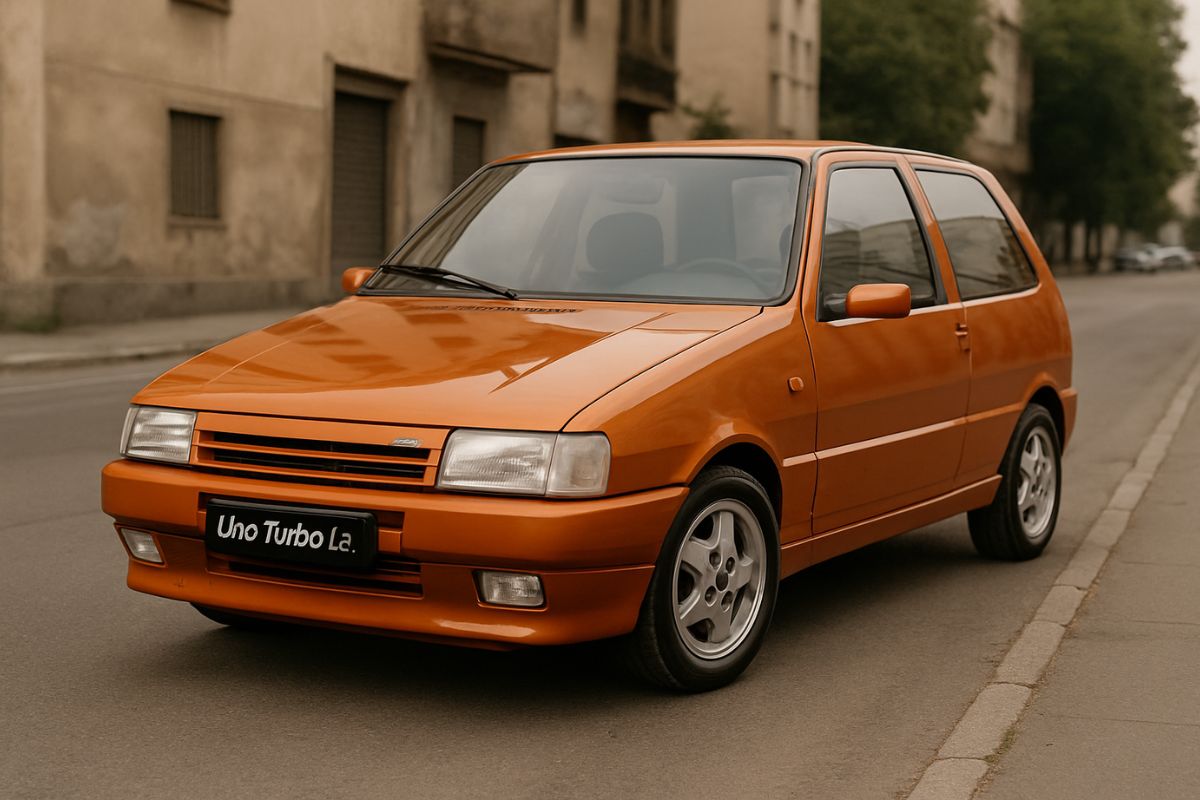
Known in Brazil as Sevel, the Fiat SOHC (Single OverHead Camshaft) engine has a rich history, from its creation in Italy to its reputation for durability and high RPM capability. Discover everything about the legendary Fiat Sevel Engine.
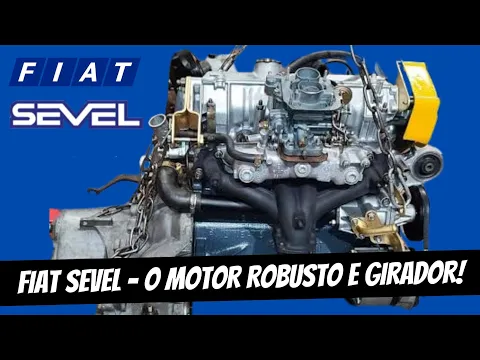
The Fiat Sevel engine, as it became popularly known in Brazil, is actually part of the Fiat SOHC engine family, an Italian project that made its mark on the streets and tracks of Europe, Argentina, and also in Brazil. Launched in the late 1960s, this engine family quickly gained a reputation for its robustness, simple construction, and especially its remarkable ability to reach high RPMs, a characteristic appreciated by enthusiasts.
Imported from Argentina, where they were produced by the company Sevel (Sociedad Europea de Vehículos para América Latina), these engines equipped iconic Fiat models in Brazil during the 1980s and 1990s. Let’s uncover the history, characteristics, and legacy of this fabulous Fiat Sevel Engine.
The Birth of the Fiat SOHC Engine by Aurelio Lampredi
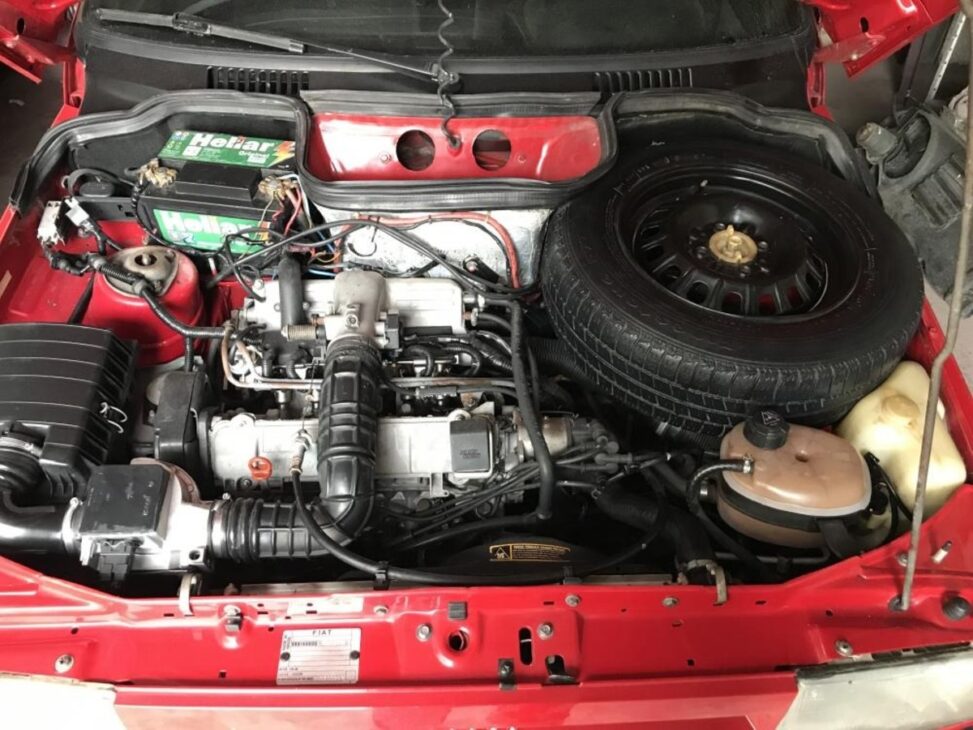
The story of the Fiat Sevel Engine begins in Italy, in the late 1960s. Fiat developed the SOHC engine family, which was launched in 1969, under the direction of the renowned engineer Aurelio Lampredi – who also designed engines for Ferrari and the Fiasa family for Fiat in Brazil. Initially, the SOHC was designed for the compact Fiat 128.
-
For R$ 32,000, a brand new Hyundai car is a rival to the Kwid with a 1.2 engine producing 82 hp, 6 airbags as standard, multimedia with wireless Android Auto, up to 391 liters in the trunk, and a refreshed look for 2026 in India.
-
He bought a new car in 1983, locked it in the barn in 1988, and no one opened the door for 38 years until the family discovered what was stored inside and realized it looked like something out of a movie.
-
A 250cc motorcycle that can reach 560 km with a 14-liter tank, features disc brakes on both wheels and is among the most well-known in Brazil.
-
Man finds over 200 rare cars abandoned on a lot and tries to do the impossible in 8 hours with a surprise at the end.


This engine was very modern for its time: four inline cylinders, aluminum cylinder head, cast iron block, overhead camshaft driven by a timing belt, and two valves per cylinder. Its first versions, 1.1L and 1.3L, were “super-square” (piston diameter greater than stroke), designed to reach high RPMs, catering to Italian public preferences.
Arrival in Argentina and the Origin of the Name “Sevel” for the Popular Fiat SOHC Engine
In the early 1970s, SOHC engines arrived in Argentina, produced by Fiat Concord to equip the local Fiat 128. They quickly gained an excellent reputation for being simple, robust, reliable, and performing well. In 1981, a restructuring in the Argentine industry led to the merger of Fiat Concord with the Safrar group (representative of Peugeot), founding Sevel Sud (Sociedad Europea de Vehículos para América Latina).
Interestingly, a European group with the same name (Sevel Nord) already existed as a joint venture between Peugeot, Citroën, and Fiat for commercial vehicles. The Argentine Sevel Sud, bought in 1982 by businessman Franco Macri, began producing standard automobiles and even Chevrolet C10 pickups. It was due to production at this factory that the Fiat SOHC engine became known in Brazil as the Fiat Sevel Engine.
The Fiat Sevel Engine in Brazil: From Uno 1.5R and 1.6R to the Desired Uno Turbo i.e.
In the late 1980s, the 1.5L version of the Fiat Sevel Engine, already produced in Argentina, began to be exported to Brazil. It equipped models such as the Fiat Uno 1.5R, Prêmio, and Elba, and its ethanol version developed 86 horsepower. The Uno 1.5R, with this engine, was considered agile for its time. Soon in 1990, the 1.6L version, also from Argentina, was introduced, which equipped the Uno 1.6R (with up to 88 horsepower on ethanol), Prêmio, Elba, and the Fiorino pickup. In 1993, the 1.6 engine received electronic injection (Uno 1.6R MPI with 94 horsepower).
The peak of sportiness came with the Uno Turbo i.e., launched in 1994. Its 1.4L turbo engine with 118 horsepower, although imported from Italy, belonged to the same SOHC family and transformed the compact into an icon, surpassing rivals of the time.
Why the Fiat Sevel Engine Is Considered So Robust and Reliable?
The simplicity of the original SOHC design, combined with the quality of its construction, ensured the Fiat Sevel Engine a solid reputation for durability and reliability. In Argentina, it is comparable to the Volkswagen AP in Brazil in terms of popularity for modifications, being known for withstanding high RPMs (up to 10,000 RPM in extreme projects) and having a reinforced block that accepts displacement increases (“stroker” kits).
One way to visually differentiate the Fiat Sevel Engine from the Fiasa engine (another popular Fiat family at the time) is to observe the position of the collectors: in the Sevel, intake and exhaust are located near the cabin, while in the Fiasa, they are at the front, near the radiator.
From the “Corsa Lunga” (Torque) Engines to the End of the Sevel Era in Brazil

In the second half of the 1990s, Fiat developed engines known as “Corsa Lunga” (long stroke) or “Torque,” which used the SOHC design as a basis. These engines were DOHC (dual overhead cam) with four valves per cylinder and aimed for greater torque and fuel economy, equipping models such as Palio and Brava in Brazil.
A 1.9L 16V version of the “Corsa Lunga,” again super-square and developed for the Brazilian market, equipped the Fiat Linea from 2008, developing 132 horsepower on ethanol. However, its production was short-lived, as it was replaced in 2010 by the E.torQ 1.8L 16V engine. Counting from the first SOHC of the 1960s, the engine family had over 40 years of production, being one of the major contributors to popularize Fiat models, especially in Argentina, and leaving its mark in Brazil with the name Fiat Sevel Engine.









-

Uma pessoa reagiu a isso.