





 Portuguese
  English
  Spanish
  4 min of reading
  0 comments


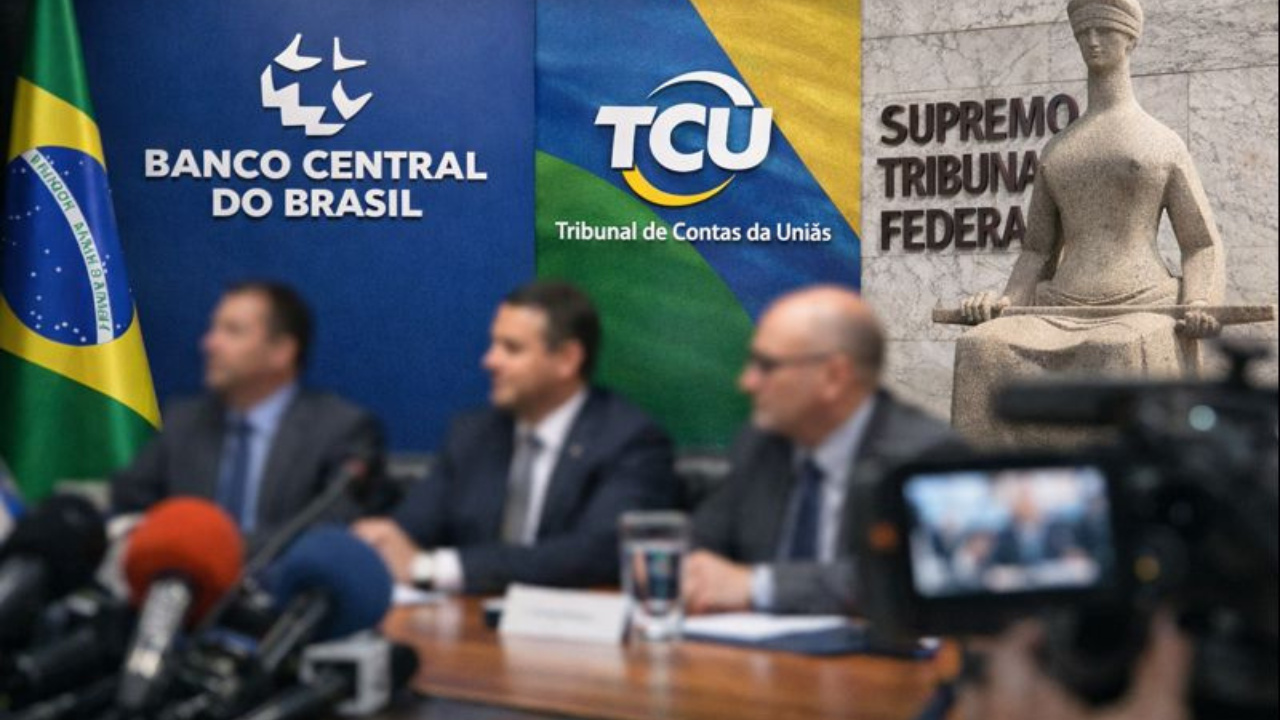
Central Bank Presents Defense to TCU About the Liquidation of Banco Master, While STF Schedules Hearing in the Case.
The Central Bank must present its defense regarding the liquidation of Banco Master by 12 PM this Friday (26) in response
To a determination from the TCU (Court of Accounts of the Union), which set a 72-hour deadline for the agency to explain the grounds of the process.
The request comes amid rising institutional questioning and the advancement of parallel investigations, including a hearing at the STF.
-
The Senate approves a bill that criminalizes misogyny, hatred, or aversion towards women, and includes the crime in the Racism Law with a penalty of up to 5 years.

-
Chamber Approves Bill That Allows Pepper Spray for Women Over 16 and Imposes Strict Rules for Purchase, Possession, and Use as Self-Defense

-
Chamber Approves Law to Combat Leucaena, Fast-Growing Plant That Dominates Land and Threatens Native Species in Various Regions of the Country

-
Asset Division: Know What Cannot Be Divided in Case of Divorce


Set for next Tuesday (30), involving executives and a director from the Central Bank itself.
Behind the scenes, the case broadens the debate on regulatory governance and how authorities make decisions considered sensitive, such as extrajudicial liquidation.
Documented and justified when they affect the financial system and its protective mechanisms.
Central Bank and TCU: Deadline, Demand, and the Expression “Extreme Measure”
The determination from TCU Minister Jhonatan de Jesus increased pressure on the CB.
In the order, the minister refers to the liquidation as an “extreme measure” and points to signs of atypical chronology in the decision-making process that led to the intervention.
In practice, the demands from the Central Bank and TCU focus on making public, in an organized manner, the technical and legal milestones
Used to support the decision, as well as clarifying whether there were alternative paths that were less disruptive.
This stage is relevant because, in decisions of this nature, the robustness of the justification is often as crucial as the timing.
In other words, it is not enough to explain “why” it happened; it is necessary to demonstrate “why at that moment.”
What the TCU Wants to Know: Foundations, Alternatives, and Timeline with the FGC
The Court of Accounts requested that the Central Bank provide objective clarifications on four fronts.
The first concerns the foundation and motivation, demanding the technical-legal grounds for the decree of extrajudicial liquidation
With “synthetic indication of the main decision-making milestones and the determining rationale for adopting the extreme measure at that moment.”
Next, the TCU wants to know about less burdensome alternatives: whether and how the CB evaluated lighter resolution solutions, including reasons for adopting or dismissing “market solutions” and “reorganization instruments.”
The third point targets the heart of the debate: negotiations and chronology.
The court requests a detailed history of institutional conversations and a timeline of the initiatives considered
Including market options and a potential private Solution with the Credit Guarantee Fund (FGC).
Here, the focus is on the role of the Credit Guarantee Fund (FGC) as a possible alternative in banking stress contexts and how each proposal was handled in the decision-making flow.
Finally, the TCU demands information on internal coherence and decision-making governance, asking whether there were relevant divergences or reservations among the technical areas of the CB and how they were “processed and overcome,” indicating the internal instances of consolidation and deliberation.
Hearing at the STF Expands the Case’s Reach and Puts Characters Face to Face
While the CB prepares its response to the TCU, another front gains traction.
This week, STF Minister Dias Toffoli ordered a hearing at the STF, scheduled for Tuesday (30), between Daniel Vorcaro, owner of Banco Master, Paulo Henrique Costa, former president of BRB (Banco de Brasília), and Ailton de Aquino, director of the Central Bank.
The hearing is a tool used to confront versions directly when there are relevant discrepancies in the accounts.
Therefore, the act tends to increase the pressure for narrative and documentary consistency, including regarding the sequence of events and decisions.
Why the Central Bank’s Defense Is Crucial at This Moment
The Central Bank’s defense to the TCU is not just a bureaucratic rite. It serves as a central piece to clarify:
(1) the rationale for the liquidation of the Banco Master, (2) whether alternatives involving the Credit Guarantee Fund (FGC) were effectively considered, and (3) how internal governance supported the decision.
Moreover, since there is mention of “atypical chronology” in the TCU’s order, the temporal detailing could become the most sensitive point of the document, alongside the record of internal technical evaluations and any divergences.
What to Observe From Now On
With the delivery of the manifestation scheduled for this Friday (26), the next practical milestone is the hearing at the STF on Tuesday (30).
Thus, Between one event and another, the case should continue to be under the scrutiny of authorities and the market, especially for its potential reputational and regulatory impact surrounding the liquidation of Banco Master.
In summary, the combination of the Central Bank and TCU on one side and the agenda at the Supreme Court on the other consolidates the topic
As a highly visible institutional episode and the quality of technical explanations, as well as the clarity of the timeline, will set the tone for the next developments.










-

-

-

3 pessoas reagiram a isso.