





 English
  Francês
  Alemão
  Italiano
  Japonês
  Norueguês
  Portuguese
  Spanish
  5 min of reading
  0 comments


Technical Investigation Evaluates Substance Found on Rural Property in Tabuleiro do Norte While Experts Analyze the Real Potential of the Find
A suspicion of oil found in the backyard of a farmer in Tabuleiro do Norte, Ceará, has started to mobilize researchers, authorities, and energy sector specialists. The dark and viscous substance emerged in November 2024, when farmer Sidrônio Moreira drilled the ground in search of water for his animals. Since then, the case has piqued curiosity in the region and also caught the attention of specialists in the oil and gas sector.
Subsequently, it was verified that the material appeared in two different drillings conducted on the property, which increased the technical interest in the case. Still, experts point out that even if the substance is confirmed as oil, exploitation may face significant economic limitations, mainly due to the costs involved in drilling and production in the region.
Technical Investigation Enters New Phase with ANP’s Involvement
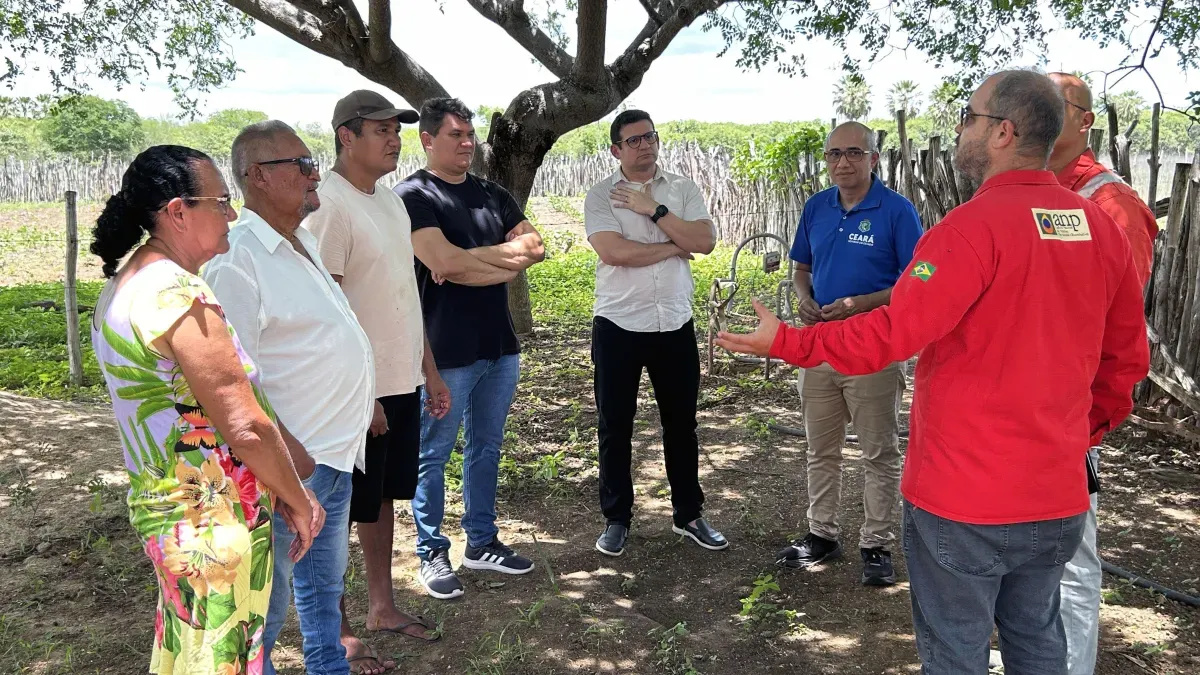
Initially, the National Agency of Petroleum, Natural Gas and Biofuels (ANP) formalized the investigation of the case on March 3, 2025, when it opened a specific administrative process to analyze the material found. Subsequently, the agency informed that a technical team would visit the property on March 12 to collect samples and conduct an initial assessment.
-
Government unlocks R$ 554 million for a highway that has been requested for decades and accelerates the duplication of BR.
-
Without bricks, without cement, and without endless construction: the cardboard house that is assembled in modules and can be moved.

-
Billions of barrels on the equatorial margin could lead Amapá to double its oil production in Brazil — the state aims to enter the route of companies in the Campos Basin, attract investments, and boost jobs and businesses in the oil and gas sector.
-
Without bricks, without cement, and without endless construction: the cardboard house that is assembled in modules and can be moved.

According to the ANP, the process follows a technical protocol consisting of different scientific stages. Initially, a preliminary identification of the substance occurs, determining whether the material is aqueous or organic. Later, chromatography analyses are conducted, capable of comparing the chemical composition with crude oil or fuel derivatives.
Additionally, if there are indications of oil, the process advances to geological and seismic evaluations, which function as a kind of examination of the subsurface through sound waves, allowing the mapping of possible rock structures that store hydrocarbons.
Researchers Conduct Scientific Analyses of the Substance
Alongside the official investigation, researchers from the Federal Institute of Education, Science and Technology of Ceará (IFCE), Tabuleiro do Norte Campus, have begun technical studies on the found substance. According to chemical engineer Adriano Lima, the initial analyses involved fundamental laboratory tests to identify the characteristics of the material.
Among the exams performed are density analysis, API Gravity determination, kinematic viscosity tests, and infrared spectroscopy (FTIR). These procedures help to identify whether the material has properties similar to hydrocarbons.
Subsequently, the investigation progressed to more complex studies conducted at the Federal University of Ceará (UFC). At this stage, researchers are performing analyses known as SARA (Saturates, Aromatics, Resins, and Asphaltenes), as well as biomarker tests by gas chromatography, considered essential to determine the geological origin of the substance.
According to Lima, these tests function as a kind of “chemical DNA” of the oil, allowing confirmation of whether the material is of fossil origin or if it may result from some type of external contamination.
Discovery Started During Search for Water on the Property
The discovery occurred in a completely unexpected way. In November 2024, Sidrônio Moreira decided to drill the soil of his rural property to find water for his animals.
During the drilling, which reached about 40 meters deep, a dark and viscous liquid emerged, different from the expected water. Surprised by the result, the farmer decided to conduct a second drilling approximately 50 meters away from the first, but the same material reappeared.
Today, the situation creates a curious contrast. Despite the possibility of a substance similar to oil beneath the land, the family continues to depend on water trucks to ensure their water supply.
According to researcher Adriano Lima, this difficulty seems to be a specific characteristic of the property, as other residents of the community managed to find water in shallow and deep drillings.
Drilling Costs Raise Questions About Exploration
Even amidst the curiosity generated by the case, experts caution that turning this discovery into commercial production could be a complex process.
Oil and gas consultant Bruno Iughetti explains that the case is still in the initial phase and that, even with confirmation of the substance, detailed studies of reserve potential and exploration feasibility would be necessary.
Moreover, petroleum engineer Ricardo Pinheiro, who worked for about 30 years in fields in the Potiguar Basin, states that the region where Tabuleiro do Norte is located is at one end of the oil basin, an area that has been extensively studied by Petrobras.
According to him, new projects would depend on the interest of private companies in investing in exploration.
Another important factor involves drilling costs. According to estimates presented by the specialist, a shallow well of about 250 meters can cost between R$ 700 thousand and R$ 1.2 million. Deep drillings, which can reach 3,500 meters, may require investments close to R$ 6 million.
For a project of this type to be viable, production must reach minimum levels. According to Pinheiro, a shallow well would need to produce around 5 thousand liters of oil per day, while deep wells would require approximately 20 thousand liters daily to offset the investment.
Property Owner’s Rights in Case of Discovery
Another point that raises curiosity involves the potential financial gains of the farmer if the material is confirmed to be oil.
Under Brazilian law, oil and other mineral resources belong to the Union, even when found on private land. However, the landowner has the right to participate in the production results through royalties from exploration.
According to Ricardo Pinheiro, this percentage usually varies between 0.5% and 1% of commercial production, depending on the size of the reserve and the productive capacity of the field.
Additionally, the farmer would not need to leave his property. Only the area directly occupied by the well, about one hectare, would be allocated for production, while the remainder of the land would remain available for the family’s use.
Still, experts emphasize that the entire process of investigation, geological assessment, and potential exploration can take years, in addition to depending on various technical studies and economic decisions.
In light of this scenario, the curiosity that mobilizes the region remains: Can the liquid found in the farmer’s backyard in Ceará truly reveal oil, or is it merely an unusual geological occurrence in the subsurface of the Potiguar Basin?








Seja o primeiro a reagir!