





 Portuguese
  English
  Spanish
  4 min of reading
  0 comments


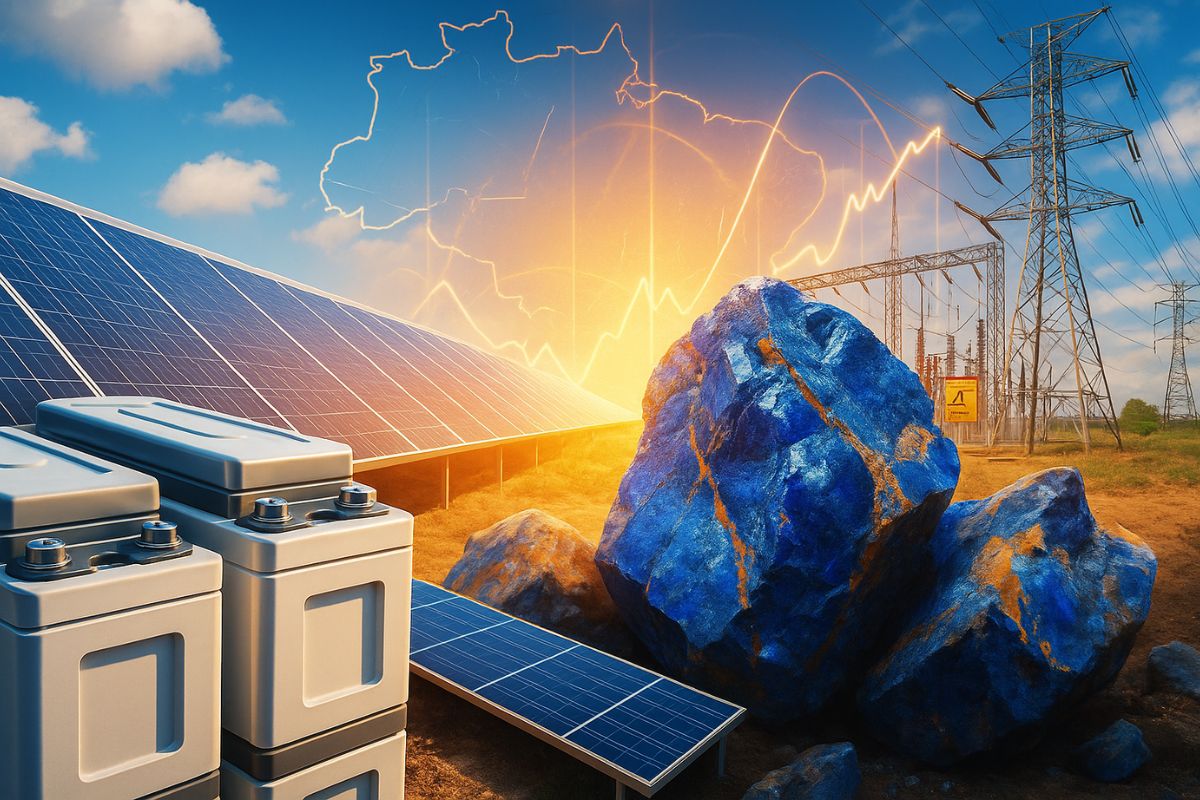
New Regulation from the Ministry of Mines and Energy Creates Rules for the Issuance of Debentures in Lithium, Cobalt, Copper, Nickel and Rare Earth Projects, with Expected Capital Raising of R$ 5.2 Billion Per Year and Boosting Batteries, Solar Energy and the Mineral Transformation Industry in SP, PA and MG.
According to the G1 portal, the Ministry of Mines and Energy published on Friday, November 14, a regulation defining how companies in the sector can issue debentures to finance projects related to strategic minerals of the energy transition, including rare earths, lithium, cobalt, copper, and nickel. The official estimate suggests that the regulatory framework could mobilize R$ 5.2 billion per year in investments, of which R$ 3.7 billion will be allocated to mineral transformation, the stage responsible for adding value to what often leaves the country as raw material.
The regulation outlines which projects can access this type of financing and how the funds can be applied. Beneficiaries include initiatives for nickel and cobalt sulfate in São Paulo and Pará, as well as lithium carbonate plants in Minas Gerais. The government’s idea is to use debentures to attract private capital, strengthen the industry of transformation and consolidate battery, energy storage, and rare earth-based electronic component supply chains.
What the New Regulation Says About Rare Earths
The MME regulation creates a specific framework for exploration and transformation projects of strategic minerals, including rare earths, which will now have clear rules for fundraising via debentures.
-
Brazilian city gains industrial hub for 85 companies that is equivalent to 55 football fields.

-
Peugeot and Citroën factory in Argentina cuts production by half and opens a layoff program for more than 2,000 employees after Brazil drastically reduced purchases of Argentine vehicles.

-
A Brazilian city gains a factory worth R$ 300 million with the capacity to process 200 thousand tons of wheat per year, a mill of 660 tons/day, silos for 42 thousand tons, and an industrial area of 276 thousand m².

-
Havan will leave the shopping mall in Blumenau to inaugurate something that the chain has never done before: a megastore in half-timbered style in the Historic Center of the city, which is expected to be completed in May and change the landscape of local retail.


Debentures are debt securities issued by companies to finance investments, generally for the long-term, allowing private investors to lend funds in exchange for future remuneration.
In the announced framework, the ministry projects R$ 5.2 billion per year in investments, with emphasis on mineral transformation, which should absorb R$ 3.7 billion of this total. Under the regulation, up to 49% of the raised funds can be used for mining and development stages, provided that these projects are linked to mineral transformation.
The logic is to direct new money not only to extract the ore from underground but to ensure that a significant part of the value chain of critical minerals and rare earths stays in the country.
Debentures, Critical Minerals and the Role of Rare Earths in the Energy Transition
The minerals covered in the regulation are classified as critical minerals, inputs considered strategic for the economy and the energy transition.
They are essential for batteries, wind turbines, solar panels, and various electronic devices, the physical foundations of any large-scale decarbonization agenda.
Within this group, rare earths occupy a particular space. They represent a set of 17 chemical elements with special magnetic and optical properties, widely used in high-performance magnets, electric motors, screens, and advanced devices.
By including rare earths in the debenture rules, the MME signals that it’s not just about extracting ore, but ensuring local supply and processing of a globally contested input, directly impacting clean energy and technology chains.
Projects in SP, PA and MG and the Bet on Batteries and Energy Storage
The regulation highlights specific projects in three states. In São Paulo and Pará, the focus is on strategic nickel and cobalt sulfate projects, essential inputs for manufacturing modern batteries.
In Minas Gerais, the spotlight is on lithium carbonate plants, another central component of batteries used in electric vehicles and energy storage systems.
The combination of these projects with the new debenture framework aims to create an environment where battery and energy storage supply chains can develop connected to local mineral resources, rather than depending solely on the export of concentrates or raw ores.
By placing rare earths alongside lithium, nickel, copper, and cobalt in the same regulatory package, the government seeks to align the Brazilian geological map with the growing demand for clean technology and high-value electronics.
Challenge of Transforming Rare Earth Reserves into Industry
The MME’s strategy is to use debentures as a tool to attract investors for projects that combine mining, processing, and mineral transformation, avoiding the risk that the country remains limited to the initial stage of the value chain.
The fact that up to 49% of the raised funds can be directed to mining, as long as linked to transformation projects, shows concern for balancing production expansion and value addition.
In this context, rare earths are an important test for the policy. If the combination of clear rules, debentures, and projects in SP, PA, and MG can indeed boost batteries, solar energy, and advanced manufacturing, the country could reduce its dependence on imported inputs in strategic sectors.
Otherwise, it risks witnessing another wave of investments limited to extraction, without consolidating a robust industrial base in critical minerals and rare earths.
Quick Question for You: In your opinion, is Brazil managing to transform its rare earth reserves into technology and industry, or is it still too stuck in the role of raw material exporter?







Seja o primeiro a reagir!