





 Portuguese
  English
  Spanish
  3 min of reading
  0 comments


British Company Transforms Plastic Waste into Hydrogen and Aims to Produce 35 Tons Daily for Clean Energy
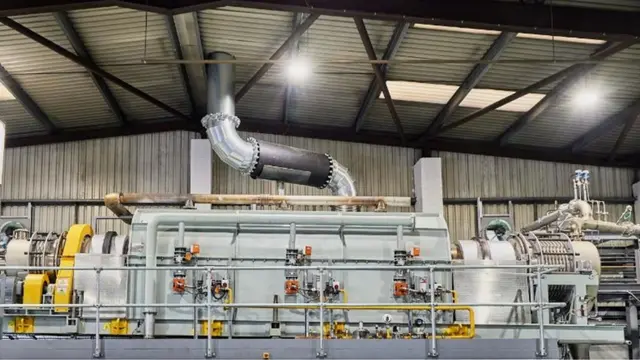
Powerhouse Energy Group, a UK-based company, announced the start of operations at its Feedstock Testing Unit (FTU), a system designed to convert plastic waste into hydrogen. The technology is part of an innovative approach to solid waste management.
The unit, located at the company’s Technology Center in Bridgend, Wales, was recently showcased to a group of 50 investors during a private event.
The project is a smaller-scale representation of the Distributed Modular Generation (DMG) technology developed by Powerhouse.
-
A “silent skill” is allowing Brazilians to earn up to R$ 22,000 per month without a degree and become indispensable for companies that rely on millions of data to survive.

-
Researchers at the Toyota Research Institute found that if a human uses robotic arms to flip a pancake 300 times in an afternoon, the robot learns to do it on its own the next morning, and this is currently the most promising method to solve the biggest bottleneck in modern robotics.

-
Goodbye iron: a common item in households is starting to lose space to technology that smooths clothes in minutes without an ironing board and with less energy consumption.

-
Antarctica reveals an unusual clue high in the Hudson Mountains, and what appeared to be just an isolated rock began to expose a secret hidden under the ice for ages.


Paul Emmitt, CEO of Powerhouse Energy Group, highlighted that the company is studying the challenges of pyrolysis and gasification of waste. According to him, the FTU is the result of extensive research and development aimed at improving the efficiency and viability of converting plastic waste into clean fuels.
“Powerhouse is aware of the issues that have plagued the use of pyrolysis and gasification in waste, and therefore, up to this point, we have focused our efforts on research and development, culminating in this FTU“, said Paul.
Process Simulation in a Controlled Environment
The FTU has the capacity to process 2.5 tons of plastic waste per day. Although it is a reduced scale, the structure allows for simulating the main processes of a large commercial unit, which is expected to reach a capacity of 35 tons daily in the future.
The operation of the unit has been continuously tested. Reports indicate that the technology has shown positive results in extended tests. However, as this is an experimental project, continuous and full operation is not expected throughout the testing phase.
The system also allows for the optimization of parameters for future commercial units. With this, Powerhouse seeks to improve the efficiency of processes and ensure that its technology can be implemented on a larger scale.
Plastic Waste Conversion
The FTU provides a platform to test different types of plastic waste and evaluate their viability for conversion into hydrogen. The process occurs through pyrolysis, a thermochemical decomposition that happens in the absence of oxygen.
This method breaks plastics down into their original chemical components. The main product of this process is synthesis gas, a mixture rich in hydrogen, methane, and carbon monoxide.
The Powerhouse system was developed with a focus on maximizing the hydrogen proportion in the synthesis gas. This element is considered one of the most promising fuels for the energy transition, as it can be used as a clean energy source.
Purification and Utilization of Synthesis Gas
Before being utilized, the synthesis gas undergoes a purification process, removing acidic compounds and unwanted impurities. The result is a clean gas flow, ready for various applications.
This gas can be used for electricity generation through gas turbines or processed to obtain pure hydrogen. The versatility of this product allows the technology to be adapted for different energy market demands.
Plastic Waste Conversion: Adjustments and Customization
The system also allows for adjustments to optimize the performance of plastic waste conversion. The introduction of steam or oxygen into the process enables gasification, an alternative for treating plastic waste.
With this flexibility, Powerhouse can test different types of waste and adapt its technology according to market needs. This adjustment capability is also an important factor for the commercial viability of future large-scale units.
Testing with Various Feedstocks
The company has already conducted tests with different samples of plastic waste. Results indicate that the technology performs more efficiently with plastics that cannot be recycled by other conventional methods.
The Powerhouse report confirms that the FTU demonstrated compatibility with a wide variety of materials. This factor broadens the technology’s potential to address the problem of hard-to-recycle plastics.
Expansion of Hydrogen Research
The search for efficient methods to produce hydrogen from waste has been the focus of various research efforts. Recently, scientists from Nanyang Technological University in Singapore succeeded in converting sewage sludge into green hydrogen.
The initiative by Powerhouse Energy Group adds to these global efforts, exploring sustainable alternatives for clean energy production.
With information from Interesting Engineering.






Seja o primeiro a reagir!