





 Portuguese
  English
  Spanish
  3 min of reading
  1 comment


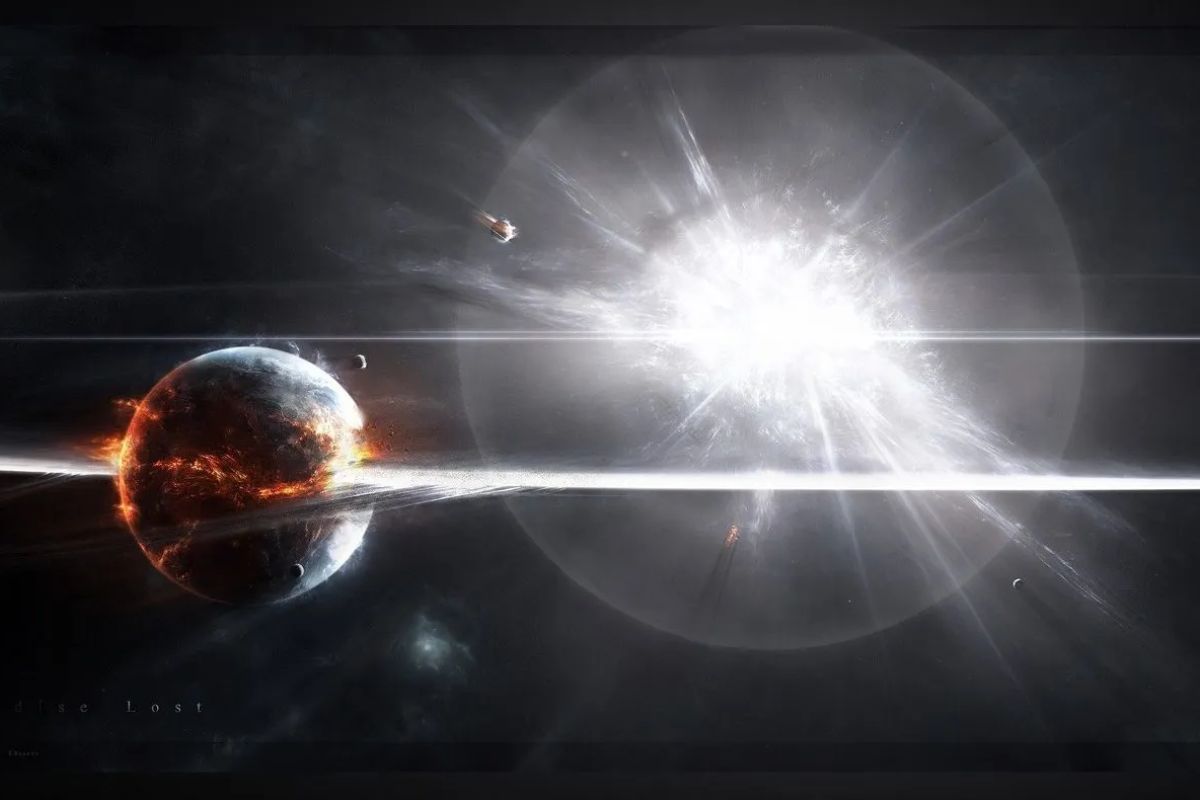

European Researchers Simulated the “Decay of False Vacuum,” a Theoretical Phenomenon That, If It Occurred, Would Annihilate Everything Instantaneously, Including the Laws of Physics.
Physicists in Europe achieved a remarkable feat: to simulate in the laboratory one of the most catastrophic scenarios for the cosmos, the “decay of false vacuum.” This theoretical phenomenon, if it occurred on a universal scale, could mean the instant destruction of everything that exists.
The research, led by Uppsala University in Sweden, reproduced the mechanism that, according to theories, would lead to the sudden end of the Universe. It is a hypothetical process where a bubble of more stable energy emerges and expands at the speed of light, erasing the phenomenon of existence as we know it.
Decay of False Vacuum: Understand the Dangerous Phenomenon

The “decay of false vacuum” occurs when a region of spacetime transitions to a lower and more fundamental energy state, the “true vacuum.” This transition would create a bubble that expands, altering the fundamental constants of nature and disintegrating all matter in its path.
-
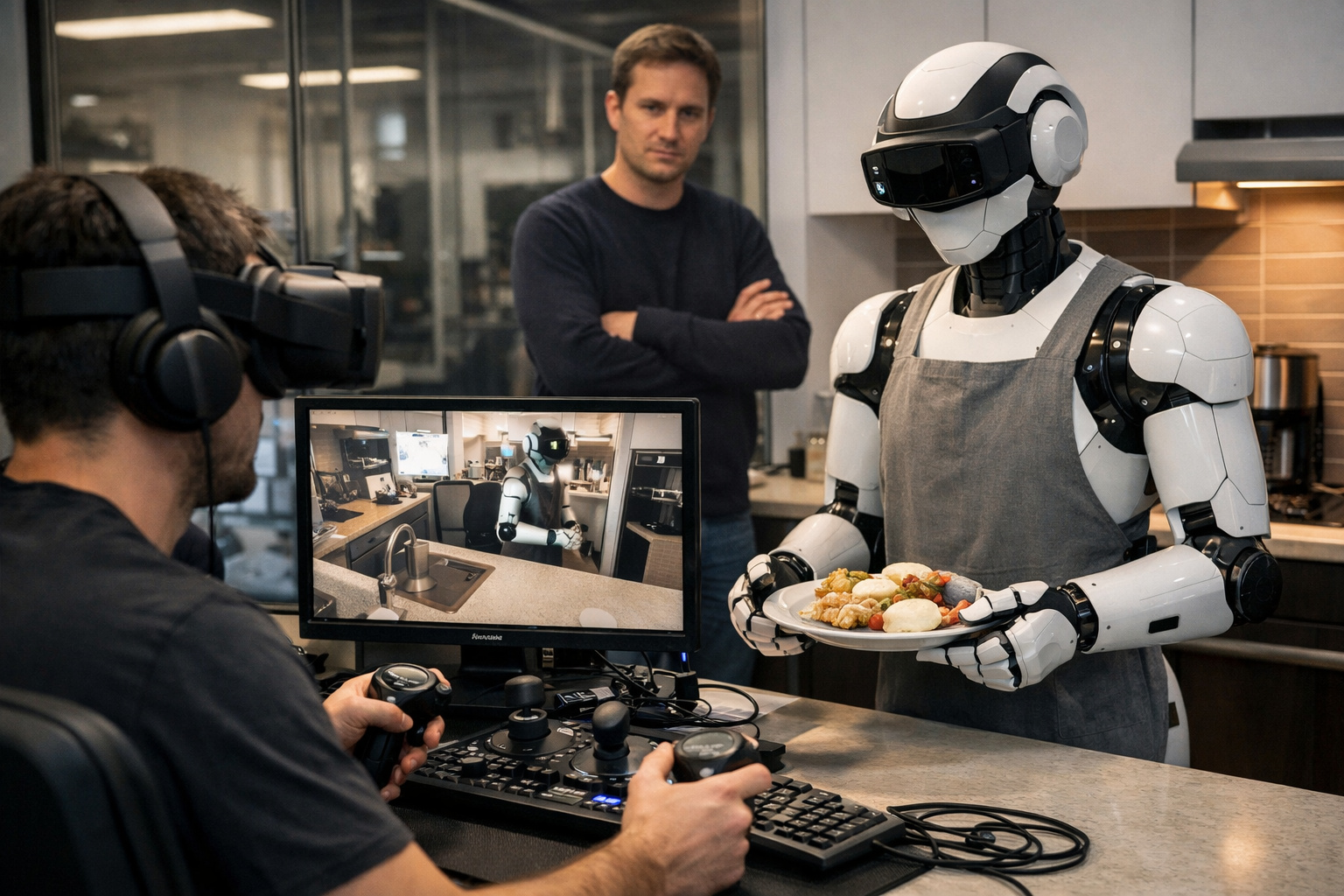
A startup backed by OpenAI has started selling a $20,000 robot to perform household tasks, but when the robot doesn’t know what to do, an employee puts on a virtual reality headset, sees the inside of the house through a camera, and operates each movement, and the CEO said that without this, he cannot improve the product.
-
The cell phone is present in 99.5% of Brazilian households and has already replaced the alarm clock, the camera, and the GPS; now it is starting to threaten the last device that resisted: the card machine, which is present in 19 million points of sale in the country.

-
A caliphate city a thousand years old may be hidden under a pasture in Spain where anyone would walk by without noticing anything, but LiDAR technology has revealed terraces, walls, and a planned urban layout beneath the surface.

-
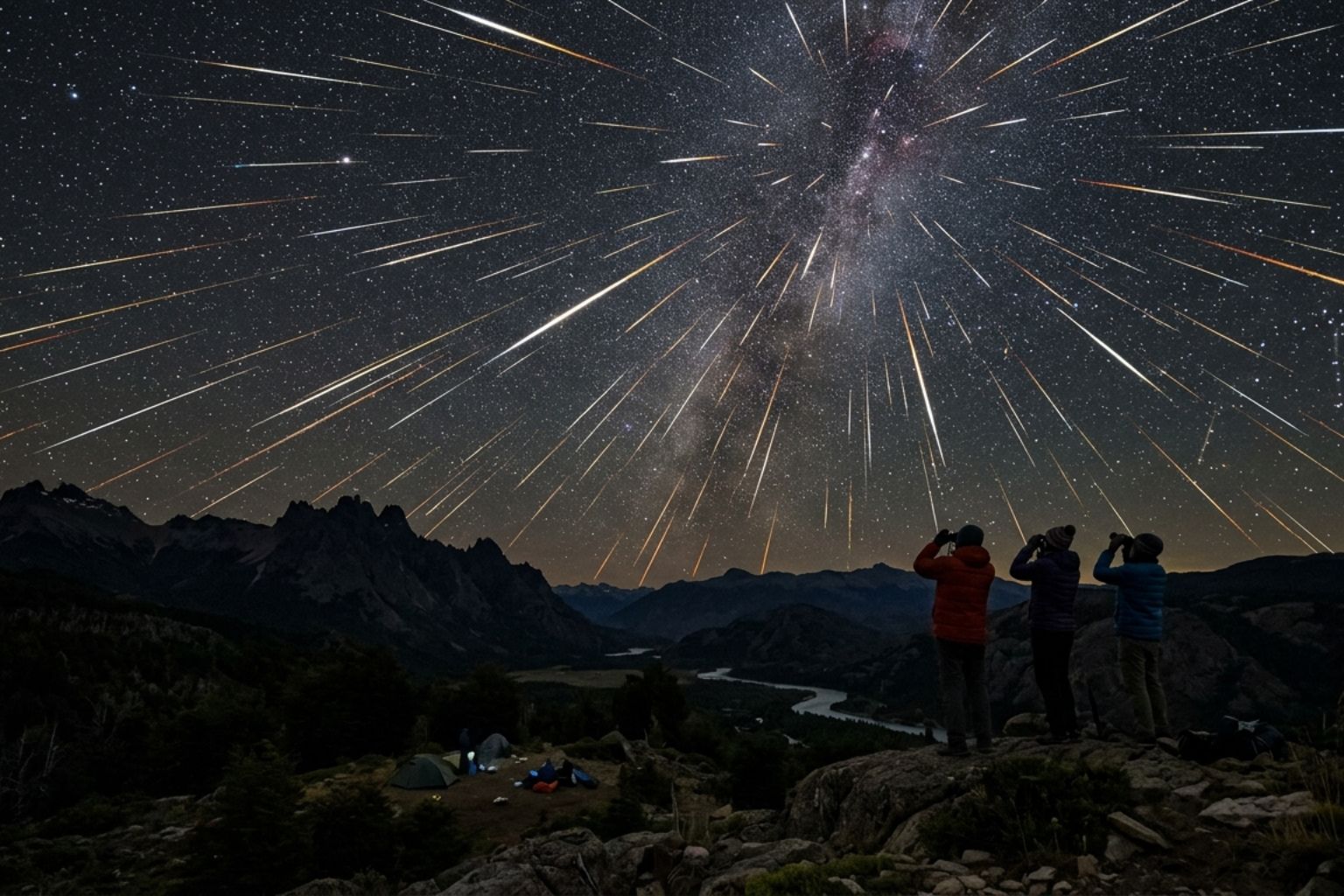
In 2028, Earth will cross debris that the Swift-Tuttle comet left in space in 1479, and the world’s most famous meteor shower could turn into a storm of hundreds of shooting stars per hour, a phenomenon that hasn’t occurred since before Columbus arrived in America.

Planets, stars, and galaxies would be swept away, as we see in various science fiction movies. This event, if initiated, would be unstoppable and unnoticeable until the moment of impact, as it would propagate at the speed of light.
How Physicists Simulated the End of the Cosmos on a Microscopic Scale
The scientists used a gas of ultracold atoms, trapped by lasers in an optical lattice. This created a simulation of the quantum behavior of an unstable vacuum, known as “false vacuum.”
They observed the emergence and propagation of a “new phase” that was more stable within this structure. This behavior is analogous to what is expected in the transition from a false vacuum to a true vacuum in the fabric of spacetime.
Scientific Advancement: What the Simulation of This Phenomenon Reveals
This simulation is considered a milestone. For the first time, it was possible to empirically observe a quantum phase transition under controlled conditions, something that previously existed only in theoretical calculations. By identifying patterns in the emergence of the new “vacuum phase” in the experiment, researchers can better understand the real behavior of the Universe.
The study of the phenomenon of false vacuum decay is linked to the stability of the Universe itself. Research suggests that the mass of the Higgs boson could place the cosmos in a zone of instability, making this transition theoretically possible.
Cosmic Risk: Are We in Imminent Danger?
Theoretical physicist Anders Tranberg, who reviewed the study data, warned that if the phenomenon occurred, “we would have no warning. The destruction would be immediate and absolute.”
The good news is that, although the experiment validates important theoretical foundations, it does not pose any real threat, being merely a physical analogy. The chances of a false vacuum decay occurring in our era are considered extremely remote. “There is no reason to panic,” one of the authors stated, highlighting that understanding these limits helps to better comprehend the Universe.






Yeah, don’t panic.