





 Português
  Inglês
  Espanhol
  4 min de leitura
  0 comentários


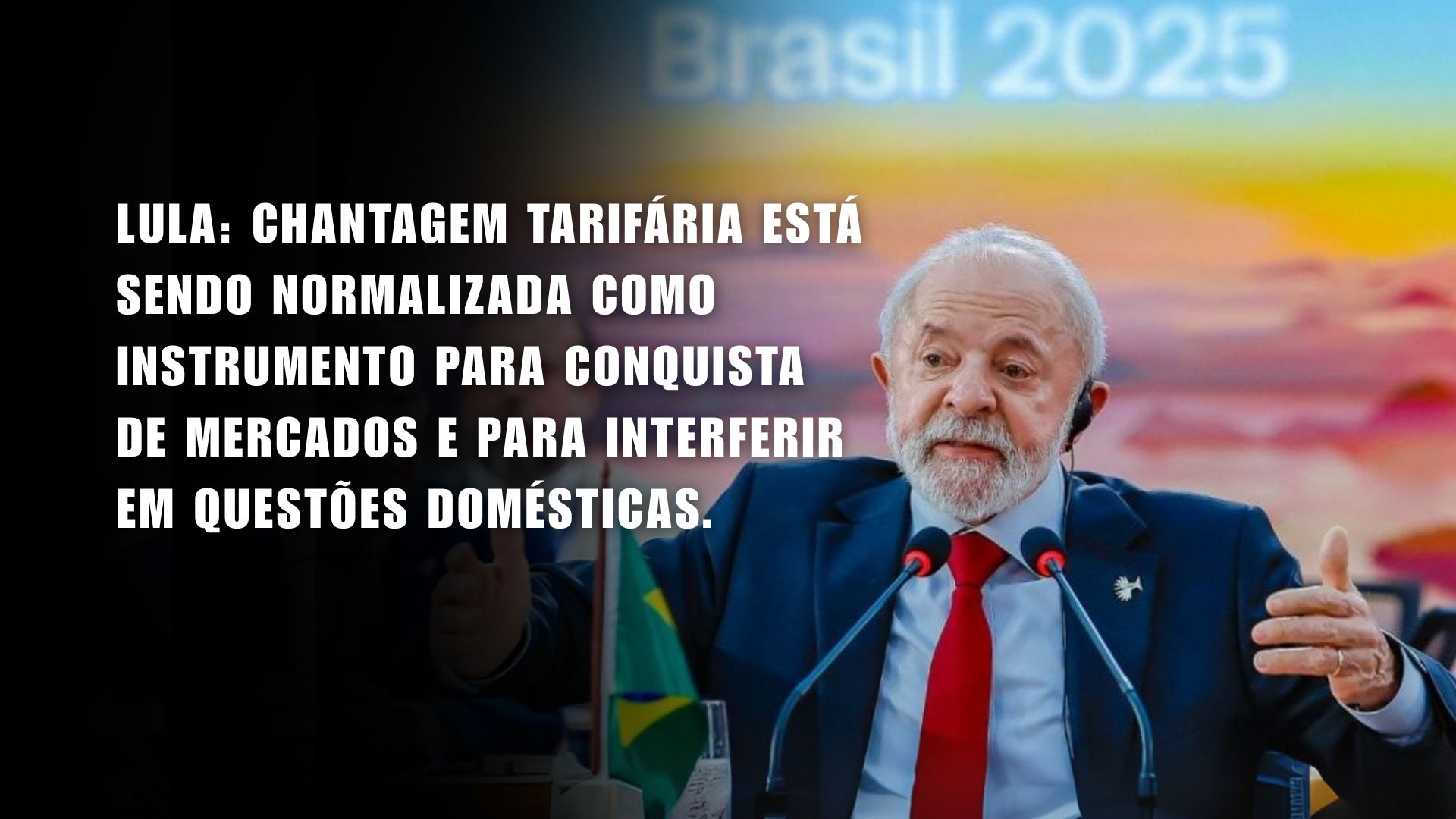
Lula Calls for BRICS Reaction Against American Tariffs, Proposes UN Reform, and Advocates for Greater Leadership of the Block on Issues Such as Trade, Climate, Artificial Intelligence, and International Security.
In a speech on Monday (8), President Luiz Inácio Lula da Silva urged BRICS countries to react in a coordinated manner to the rise of global protectionism, criticized tariffs imposed by the United States under Donald Trump, and called for reforms in the multilateral system, focusing on the UN and the WTO.
According to him, “tariff blackmail is being normalized as a tool for market conquest”, which would require a collective response from the block, which includes Brazil, China, India, Russia, South Africa, and the new members.
The tone echoes commitments made at the BRICS Summit in Rio (July 6 and 7), when leaders approved decisions on climate, health, artificial intelligence governance, and economic integration.
-
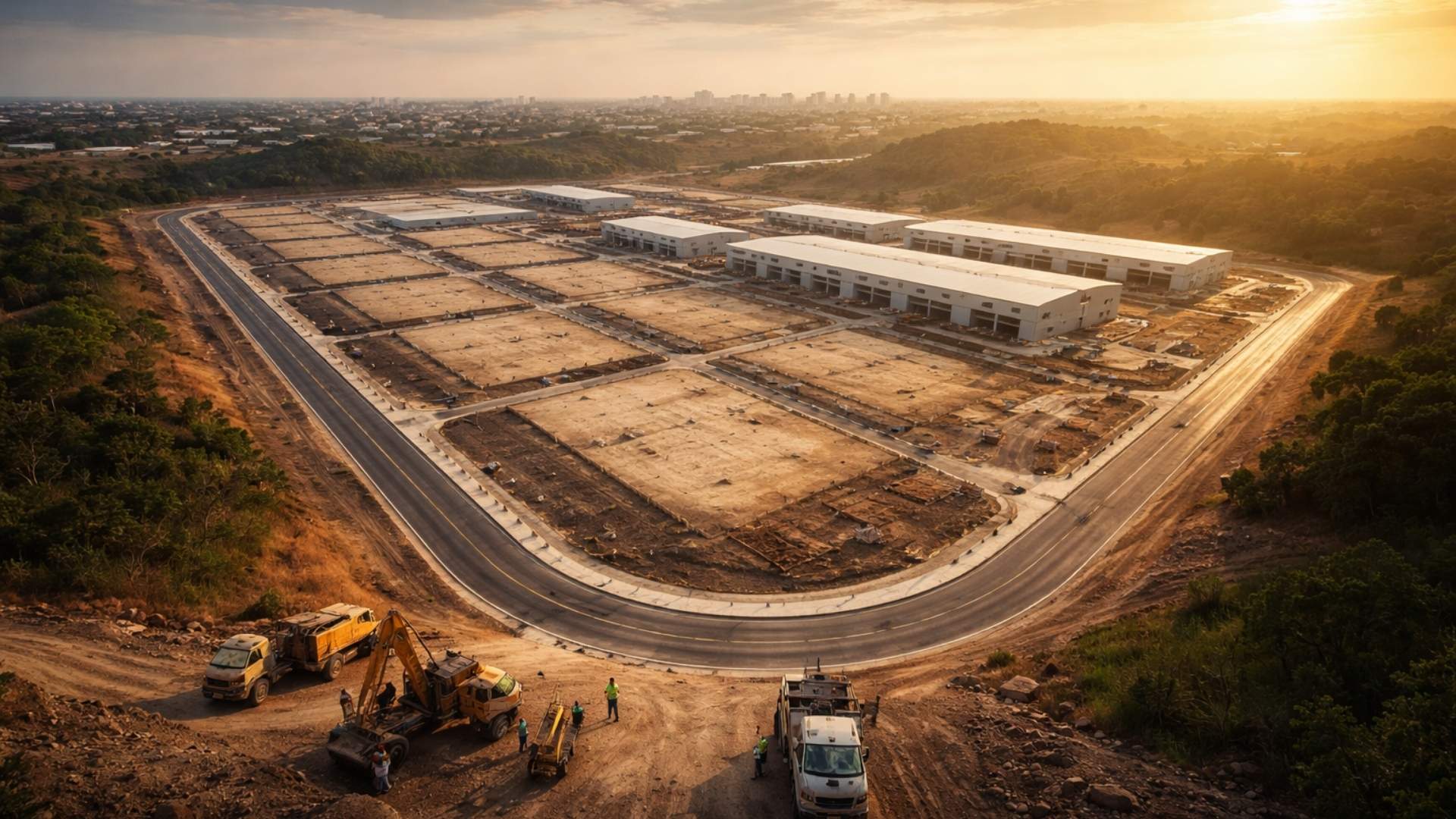
Brazilian city gains industrial hub for 85 companies that is equivalent to 55 football fields.

-
Peugeot and Citroën factory in Argentina cuts production by half and opens a layoff program for more than 2,000 employees after Brazil drastically reduced purchases of Argentine vehicles.

-
A Brazilian city gains a factory worth R$ 300 million with the capacity to process 200 thousand tons of wheat per year, a mill of 660 tons/day, silos for 42 thousand tons, and an industrial area of 276 thousand m².

-
Havan will leave the shopping mall in Blumenau to inaugurate something that the chain has never done before: a megastore in half-timbered style in the Historic Center of the city, which is expected to be completed in May and change the landscape of local retail.


U.S. Tariffs and WTO
Addressing recent unilateral measures, Lula stated that WTO principles such as most-favored nation and national treatment have been “turned into dead letters” by decisions made “in a few weeks.”
This statement comes in the context of a 10% base tariff on imports instituted by Trump in April and expanded through subsequent actions, which is now being challenged in court.
In the multilateral arena, the president insisted that BRICS enter the 14th WTO Ministerial Conference, scheduled for March 26 to 29, 2026, in Cameroon, “united” with an agenda for “refounding” trade on modern and flexible bases.
BRICS 2025: Climate, Health, and AI
Lula recalled that, in Rio, leaders “showed that BRICS is capable of providing concrete solutions” and approved decisions in sensitive areas.
The Rio de Janeiro Document and associated statements emphasized a global governance of AI anchored in the UN, with data protection and compensation for rights holders, and commitments to climate financing.
Official data from Brazil in the presidency of BRICS estimates that the expanded group encompasses about half of the world’s population and approximately 40% of the global economy (PPP).
War in Ukraine
When discussing security, the president advocated for “paving the way for a realistic solution” in the Ukraine war and cited the “meeting in Alaska and its developments in Washington” as steps “in the right direction.”
On August 15, Trump and Vladimir Putin met in Anchorage, without a concrete agreement. Days later, the White House hosted Zelensky and European leaders to discuss security guarantees and additional sanctions.
Gaza and the West Bank
Lula classified ending “the ongoing genocide” as “urgent” and condemned the Israeli announcement to take control of Gaza and the threat of annexing the West Bank.
In August, Israel’s political-military cabinet approved a plan to take Gaza City, while Minister Bezalel Smotrich presented a proposal to annex up to 82% of the West Bank.
On July 23, Brazil announced that it will intervene in the case brought by South Africa at the International Court of Justice, which accuses Israel of violating the Genocide Convention.
Digital Sovereignty and AI
On the digital front, the president argued that “without digital sovereignty,” countries will remain vulnerable to external manipulation.
He advocated for democratic governance and cooperation based on national ecosystems.
These positions align with the domestic agenda, which has been discussing digital policy, cybersecurity, and platform regulation.
Climate and COP30 in Belém
Lula outlined priorities for COP30, which will take place from November 10 to 21 in Belém.
He proposed creating a UN Climate Change Council to coordinate currently dispersed actors and mechanisms and mentioned the Tropical Forests Forever Fund, designed to reward ecosystem services of countries with tropical forests.
In addition to the financial plan, Belém will showcase Brazil’s strategy for ecological transformation, with capital mobilization targets and standardized rules.
Latin America and the Caribbean
In the regional overview, Lula reminded that Latin America and the Caribbean have been nuclear weapon-free since the Tlatelolco Treaty, signed in 1967 and in force since 1968.
He also cited the Zone of Peace and Cooperation of the South Atlantic (ZOPACAS), created in 1986, as a basis for dissipating external tensions.
BRICS Bank
In the financial sector, the president asserted that the New Development Bank helps to diversify productive bases and finance just transitions.
This point was reinforced by the reappointment of Dilma Rousseff for a new term at the helm of the institution and by the annual meetings in 2025.
Reform of the Security Council
Lula advocated for expanding the Security Council to include new permanent and non-permanent members from Latin America, Africa, and Asia.
He also stated that “the future Indian presidency of BRICS will have Brazil’s full support.” The rotation was confirmed: India takes over in 2026 and will host the 18th summit.
Multilateralism in Focus
In conclusion, the president stated that “BRICS is already the new name of the defense of multilateralism.”
Given this scenario, how do you assess BRICS’ real capacity to coordinate effective responses to U.S. tariffs while also unlocking reforms at the UN?








-

Uma pessoa reagiu a isso.