





 Português
  Inglês
  Espanhol
  4 min de leitura
  0 comentários


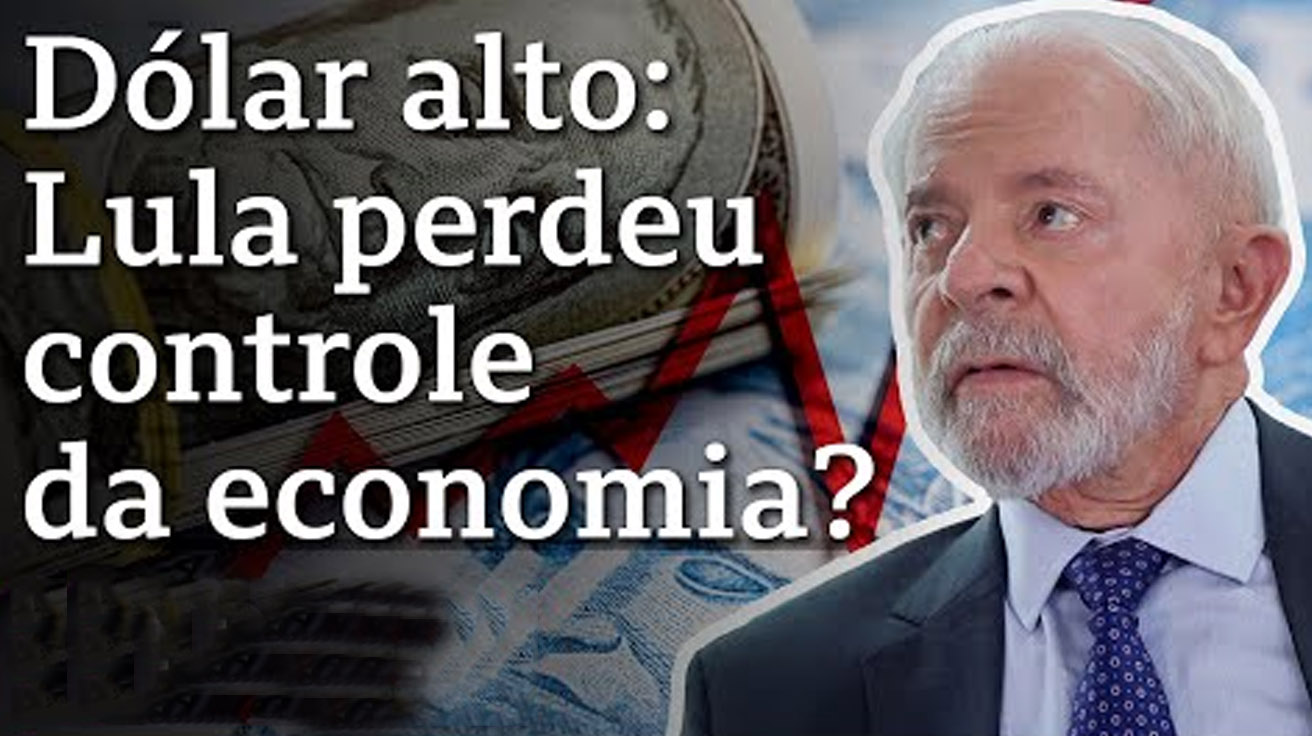
Brazil Ended 2024 with a Historic High of the Dollar, Exceeding R$ 6.30, Amid Fiscal Difficulties of the Lula Government. Experts Assess That the Delay in Adjusting Public Accounts Worsened the Economic Situation, Which Now Pressures the Central Bank to Maintain High Interest Rates. With Impacts on Inflation and Unemployment, the Scenario Could Compromise Stability and Prospects for 2026.
Brazil ended 2024 with an economic turbulence that left analysts and investors on alert.
While the government of Luiz Inácio Lula da Silva celebrated achievements such as higher than expected economic growth and the regulation of tax reform, the surge of the dollar to levels above R$ 6.30 overshadowed these advances and reignited concerns about the country’s fiscal health.
But is this the main indicator that the economy is out of control? Experts assess the causes and consequences of this scenario.
-
Brazilian city gains industrial hub for 85 companies that is equivalent to 55 football fields.

-
Peugeot and Citroën factory in Argentina cuts production by half and opens a layoff program for more than 2,000 employees after Brazil drastically reduced purchases of Argentine vehicles.

-
A Brazilian city gains a factory worth R$ 300 million with the capacity to process 200 thousand tons of wheat per year, a mill of 660 tons/day, silos for 42 thousand tons, and an industrial area of 276 thousand m².

-
Havan will leave the shopping mall in Blumenau to inaugurate something that the chain has never done before: a megastore in half-timbered style in the Historic Center of the city, which is expected to be completed in May and change the landscape of local retail.


The Surge of the Dollar and Fiscal Challenges
According to BBC News, the sharp depreciation of the real reflected the exit of foreign investors, concerned with the increasing perception of risk regarding the government’s ability to balance public accounts.
Financial market projections indicate that the net debt of the public sector may jump from 63% of GDP in 2024 to 74% in 2027, an increase that further pressures debt and raises country risk.
For Nelson Marconi from FGV, the government erred by postponing fiscal adjustments that could have stabilized the economy at the beginning of its term.
He criticizes the late introduction of a spending cuts package, announced alongside the increase of the Income Tax exemption for monthly incomes up to R$ 5,000, which generated distrust in the market.
“Everyone was expecting spending cuts, but the government did the opposite,” he emphasizes.
Impacts of the Dollar on Daily Life and Monetary Policy
Claudia Moreno, an economist at C6 Bank, highlights that the high exchange rate hinders the fight against inflation and forces the Central Bank to maintain high interest rates.
This aggravates debt, creating a vicious cycle that could compromise the economy in the long run.
“The high dollar impacts not only inflation but also increases the cost of the necessary fiscal adjustment,” she explains.
The basic interest rate, Selic, rose to 12.25% in December and is expected to reach 14.25% in March 2025.
Marconi from FGV criticizes the current inflation target, considering it unrealistic. According to him, the combination of strict targets and high interest rates worsens the fiscal situation, making the government’s task even harder.
Haddad and the Debate on Tax Benefits
In a recent interview, Fernando Haddad, Minister of Finance, stated that the Union could close 2024 with a fiscal surplus if Congress approves the revision of tax benefits.
According to estimates from the Federal Revenue Service, these exemptions will total R$ 544 billion in 2025.
Haddad criticized Congress’s resistance to cutting these incentives, labeling them as “undue benefits.”
The minister also justified the high spending of the current government as an attempt to correct distortions inherited from the previous administration, including the postponement of court orders and compensation to states for the reduction of ICMS on fuels.
“There was an accumulation of liabilities that needed to be addressed, and the government is doing so responsibly,” Haddad defended.
The Political and Institutional Reflections
Analysts consulted by BBC News point out that fiscal difficulties are not exclusive to the Executive.
The Judiciary, pressured to contain excessive salaries, and Congress, which resists reducing parliamentary amendments and tax benefits, also contribute to the institutional disarray.
“The Congress problem is solved: they have party funds, electoral funds, and amendments. The fiscal crisis is not a priority for them,” criticizes Creomar de Souza from the consulting firm Dharma.
The Relationship Between Market and International Confidence
Another crucial point is the confidence of international investors in Brazil.
Since the beginning of 2024, the perception of political instability, coupled with the slow pace of reforms, has reduced capital flows to the country.
The loss of investment grade by two of the main rating agencies in November intensified the exit of foreign resources, exacerbating pressure on the exchange rate.
Experts emphasize that the government will need to adopt a clearer and firmer agenda to regain credibility with global markets.
Prospects for 2026
The impact of the current economic scenario on Lula’s re-election remains uncertain.
While some experts believe the president will maintain his electoral strength due to popular support, others highlight that inflation and unemployment rates will be crucial.
Political scientist Creomar de Souza warns that growing polarization and dissatisfaction could limit the government’s capacity for fiscal expansion in 2026.
What’s Coming Next?
With a weakened economy and an adverse political scenario, the Lula government faces significant challenges in stabilizing public accounts and regaining market confidence.
But will the solutions be enough to prevent an economic collapse? Share your opinion in the comments!









-

-

2 pessoas reagiram a isso.