





 Portuguese
  English
  Spanish
  6 min of reading
  0 comments


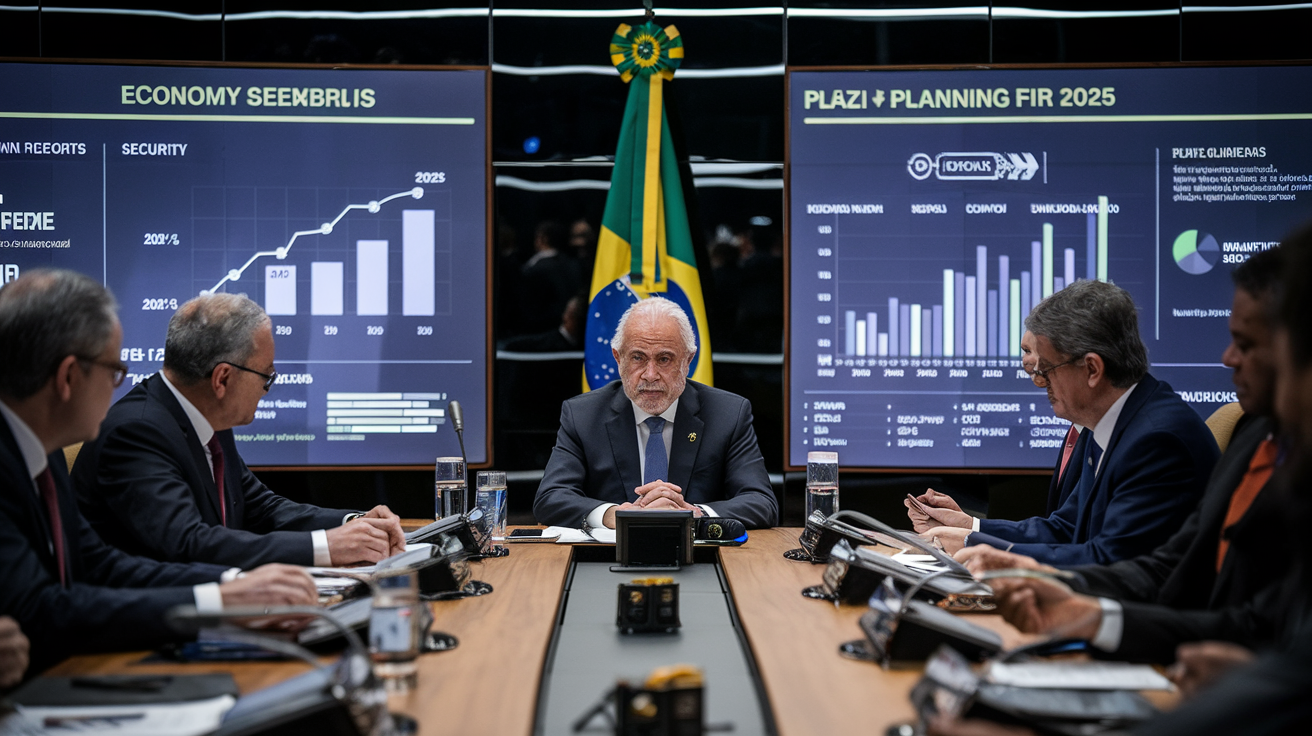
President Lula Is Ready To Make Brazil A New Country In 2025, With Packages Of Economic And Security Reforms That Promise To Change Everything! From Spending Cuts To The Restructuring Of Police Forces, These Plans Have The Potential
The hope of many Brazilians is high for the coming years, especially with the definition of central strategies that promise to transform the reality of the country.
Lula, the elected president once again, plans a 2025 focused on deep changes, with economy and security as the major flags of the government.
But what is being done to make these promises a reality? How will these key areas be addressed by the government? Get ready, because the behind-the-scenes reveals intentions that could change the face of Brazil.
-
With an investment of R$ 612 million, a capacity to process 1.2 million liters of milk per day, Piracanjuba inaugurates a mega cheese factory that increases national production, reduces dependence on imports, and repositions Brazil on the global dairy map.

-
Brazilian city gains industrial hub for 85 companies that is equivalent to 55 football fields.

-
Peugeot and Citroën factory in Argentina cuts production by half and opens a layoff program for more than 2,000 employees after Brazil drastically reduced purchases of Argentine vehicles.

-
A Brazilian city gains a factory worth R$ 300 million with the capacity to process 200 thousand tons of wheat per year, a mill of 660 tons/day, silos for 42 thousand tons, and an industrial area of 276 thousand m².


Lula Draws Transformation Plans: Economy And Security As Main Pillars
In Brazil, where political instability and economic difficulties seem to always be at play, the administration of Luiz Inácio Lula da Silva is preparing for a 2025 filled with transformations.
The goals outlined by Lula for the coming year have a clear focus: economy and security. These are the priorities of his government, with packages of measures being prepared and detailed to involve not only the authorities of the Executive but also the National Congress.
According to sources close to the Palácio do Planalto, the president has made it clear that economy and public security will be the central areas of the reforms he wants to implement in 2025.
The proposal is bold and necessary. Both areas directly impact the lives of Brazilians, whether through the tax burden, which involves complex fiscal changes, or through the restructuring of security forces, which still face major challenges in various regions of the country.
Economy: Packages Of Cuts And Reforms
One of the greatest challenges faced by Lula’s government is the fiscal issue. The economic crisis that left deep marks over the past years demands quick and decisive actions.
Among the main strategies that the president has discussed with his team, the spending cuts package stands out. Its goal is to bring more fiscal balance to the country, without compromising essential areas like health and education.
This package will be one of the government’s biggest challenges, as public debt and fiscal surplus are sensitive topics.
The expectation is that measures involving cuts in public spending will be presented gradually, aiming not to cause a negative shock in the economy but to create conditions for sustainable growth.
In addition, another fundamental point will be the tax reform. Lula’s government has been working to present a new tax structure that seeks to simplify the current system and reduce fiscal inequalities, especially regarding income taxation.
The central idea is to create a fairer system, where wealthier individuals pay more taxes, and the low-income population is less impacted.
However, the tax reform is a thorny topic. Many politicians from the centrão and the right have already shown opposition to this proposal, as it could generate significant changes in the economic sector.
According to sources from the Palácio do Planalto, the idea is to structure a project that can gain support in both the Chamber of Deputies and the Senate, so that the government can move forward in the approval of this reform.
Security: Restructuring Of Police Forces
Besides the fiscal issue, Lula’s government will also give special attention to public security. This topic, which has historically been treated more strongly by center-right governments, will now be a priority for the Workers’ Party administration.
The restructuring of security forces is at the center of discussions, with packages that include both modernization and strengthening of police forces in the country.
Lula’s government has already defined that the first step will be to create a plan to reform military police. Among the proposals is the implementation of new technologies to combat cybercrime and increasing investments in security in major Brazilian metropolises.
To that end, a PEC for the Military is also being debated, with the aim of restricting military participation in politics and focusing on their role in combating crime.
Public security, although not a traditionally linked agenda with the Workers’ Party, has become a priority due to the rising violence and structural challenges faced by police forces in Brazil.
Experts point out that a reformulation of police forces could result in greater efficiency in combating violence and improving working conditions for police officers.
Additionally, the federal government is also evaluating the creation of public security programs in partnership with state governments, since many of the major problems regarding security in Brazil are in states like São Paulo, Rio de Janeiro, and Pernambuco, where violence rates remain alarming.
The Role Of Congress And Political Articulation
One of the biggest concerns of Lula’s government is how to articulate the approval of these proposals in the National Congress.
Luiz Inácio Lula da Silva has been very involved in the discussions, seeking support among lawmakers to ensure the approval of the reforms. However, he faces a fragmented Congress, where lawmakers from the centrão hold great power of influence.
According to information from political aides, the Lula government is working to present clear and well-structured proposals so that Congress understands the importance of these reforms.
To that end, it has already been announced that the Palácio do Planalto is preparing a series of explanatory materials that will be distributed to senators and deputies, detailing the impact of each reform on the future of Brazil.
Among the ministers who stand out in the effort for political articulation are Fernando Haddad, from the Finance, and Ricardo Lewandowski, from the Supreme Court (STF), who are expected to work directly with the more resistant lawmakers to the government’s proposals.
They are seen as key players in the political articulation, which can ensure the progress of the reforms, both in the Chamber of Deputies and the Senate.
Challenges For The Approval Of Proposals
The Lula government knows that approving these reforms will be a difficult and possibly lengthy process. The tax reform package and the restructuring of police forces are topics that, although necessary, face opposition from political sectors that believe that the reforms could be harmful to the economy or to the power structure of the military.
It is important to highlight that, as is common in legislative processes, the opposition may use the reforms to create an environment of political dispute.
However, the articulations being made by the government seek to ensure that the changes are approved swiftly, without the need for long negotiation periods.
The Impact Of Economy And Security On The Political Scenario
The proposals for economic reform and security reform could have a significant impact on the popularity of Lula’s government.
These reforms, although initially treated as flags of right-wing parties, are now being adopted by a left-wing government, which generates an interesting debate about political transition in the country.
According to CNN Brasil, many political analysts believe that Lula seeks to advance reforms to guarantee his political legitimacy within the international scenario, in addition to strengthening his discourse for the Brazilian electorate.
The government also recognizes that improving security and the economy are essential to increase its approval ratings among citizens who suffer the most from violence and the fiscal crisis.
The restructuring of the tax system and the reorganization of security forces are seen as fundamental steps to reduce inequalities and strengthen the country, especially in times of crisis.
A 2025 Of Changes And Challenges
The year 2025 will be one of the most challenging and transformative for the administration of Luiz Inácio Lula da Silva.
With economy and security as priorities, the government will seek to implement reforms and packages of measures that promise to transform the reality of many Brazilians.
However, the path to the approval of these reforms will be filled with obstacles, especially due to opposition in Congress and the fragmented political scenario.
The reforms will have the power to change the structure of Brazil, but it will be necessary to ensure that political articulation and support from the bases in Congress are strong so that the country can move toward these major transformations.








Seja o primeiro a reagir!