





 Portuguese
  English
  Spanish
  6 min of reading
  0 comments


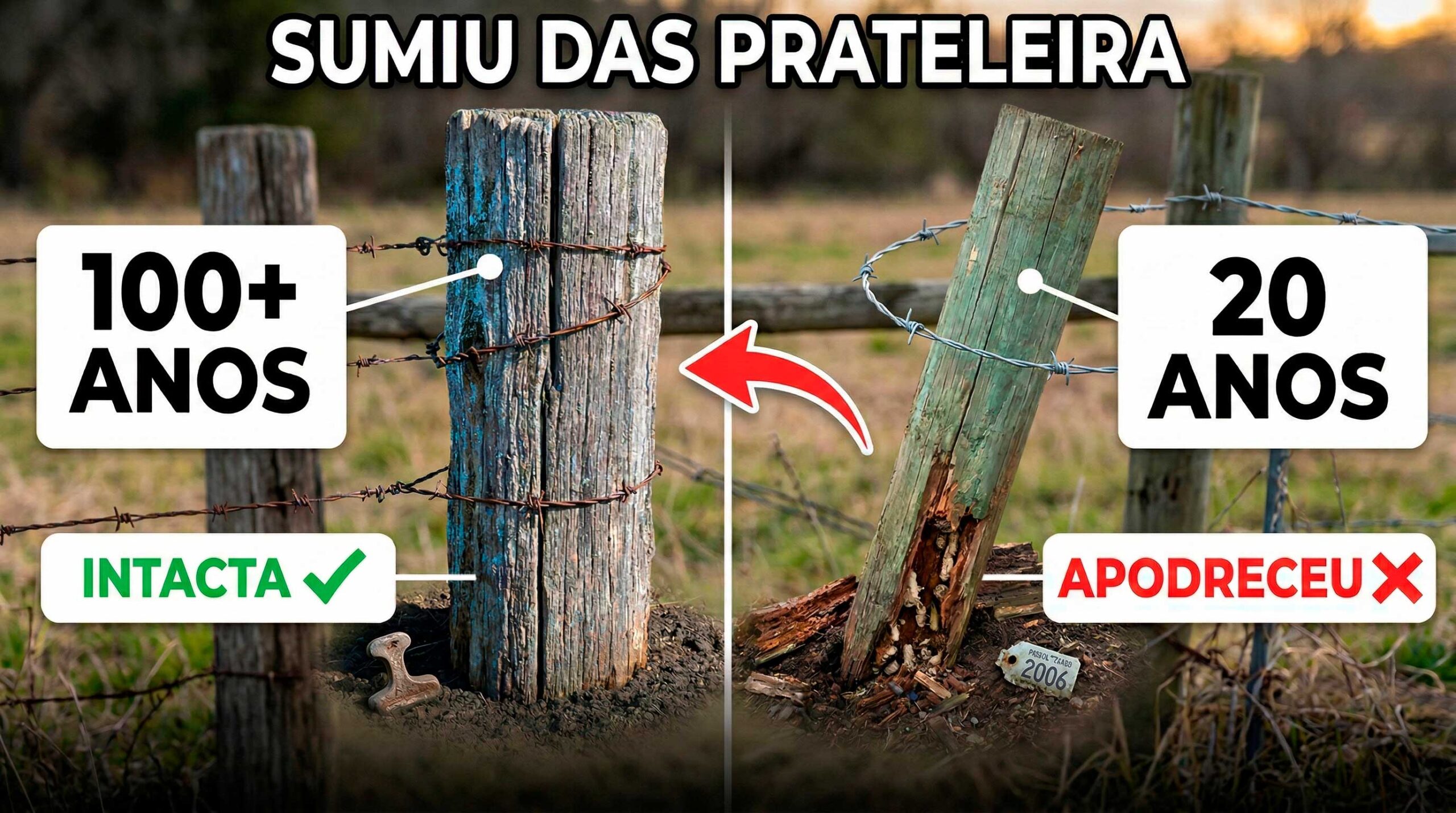
Studies Show That Black Locust Wood Has High Natural Resistance to Decay and Can Reduce Dependence on Chemical Treatments in Outdoor Uses
The wood of black locust (Robinia pseudoacacia), also known as false acacia, has returned to the radar of specialists for combining natural durability and good mechanical resistance in applications such as posts, decks, and structures exposed to the elements. Part of the technical literature classifies the material among the most resistant to fungal attack when in contact with the ground.
The interest resurfaces at a time when treated wood dominates fences and outdoor works, including in Brazil, where preservatives such as CCA and CCB are cited as the most used in the sector. At the same time, the topic involves environmental and health concerns associated with arsenic present in some historical treatments.
In the United States, CCA was invented in 1933 and, decades later, its residential uses were virtually halted by a voluntary initiative from the industry with the endorsement of the EPA, with a deadline in December 2003 for treating wood intended for most domestic environments. The shift reduced public exposure but did not eliminate the business model based on less durable wood treated with chemicals.
-
Friends have been building a small “town” for 30 years to grow old together, with compact houses, a common area, nature surrounding it, and a collective life project designed for friendship, coexistence, and simplicity.

-
This small town in Germany created its own currency 24 years ago, today it circulates millions per year, is accepted in over 300 stores, and the German government allowed all of this to happen under one condition.

-
Curitiba is shrinking and is expected to lose 97,000 residents by 2050, while inland cities in Paraná such as Sarandi, Araucária, and Toledo are experiencing accelerated growth that is changing the entire state’s map.

-
Tourists were poisoned on Everest in a million-dollar fraud scheme involving helicopters that diverted over $19 million and shocked international authorities.


In Brazil, there is still some confusion about names that often muddles the subject. The black acacia best known here is Acacia mearnsii, commercially planted in Rio Grande do Sul and used in chains such as tannin and wood, while black locust is another species, from the genus Robinia.
What Is Black Locust and Why Is It Called False Acacia in Different Countries Despite Not Being the Black Acacia Planted in Brazil

Black locust is a leguminous tree native to North America that has been widely planted in other regions of the world. In several countries, it has gained common names that refer to acacias, but the taxonomy itself registers the nickname false acacia precisely to mark the difference.
The species is cited in technical texts as useful for poor and degraded areas, as it grows vigorously and contributes to site improvement. A classic document from the American Forest Service describes black locust as fast-growing, tolerant of tough conditions, and unusually resistant to decay.
This combination helps explain why it appears in discussions of rural use and external construction. At the same time, the literature itself points out limitations due to pests and diseases that may hinder projects aimed at sawn timber on a large scale.
What Engineering Measures When Comparing Wood with Other Species and Why the Numbers Are Striking
In mechanical properties, black locust often appears with high values in references for wood technology. Technical compilations and reference databases indicate Janka around 1,700 lbf and parallel-to-grain compression strength in the 70 MPa range, numbers compatible with high-performance woods.
In practice, this means a dense wood, with good resistance to denting and stress, which is helpful in external structures and parts that bear loads. The decisive point, however, is not just strength; it is the behavior against fungi and moisture over time.
Durability in Soil and Rain: Why Robinia Posts Became a Reference in Decay Studies
The durability of black locust appears in standards and studies as very high, often associated with extractives from the heartwood and classification in upper classes of biological resistance. Research in Europe indicates classification between classes 1 and 2 of durability according to the EN 350 standard, which includes tests against fungi and use in contact with the soil.
A recent study analyzed posts used for four decades in vineyards and found minimal degradation, with preserved mechanical performance and the presence of extractives in the heartwood associated with resistance. The result reinforces the idea that, when well-managed, wood can have a long service life in real outdoor environments.
There are also historical records of black locust pieces maintaining integrity for many decades in service, used to illustrate performance in soil. A technical outreach document preserved in the public domain describes a large-section post still in good condition after 55 years of use.
The narrative that wood lasts a long time and thus loses space to alternatives requiring replacement is not easy to measure in market numbers, but there is an economic backdrop. A sector that sells treated wood in large volumes tends to rely on fast-growing species and industrial standardization.
In addition, specialists from the American Forest Service itself highlight that black locust suffers from insect problems and rot associated with perforations, complicating plantations aimed at straight, uniform logs. This detail helps explain why wood can be excellent in core durability yet still difficult to “turn shelf-ready” at scale.
A Tree That Improves the Land by Fixing Nitrogen and Helps in the Recovery of Degraded Areas
Black locust is a leguminous plant that forms symbiosis with nitrogen-fixing bacteria, adding nitrogen to the system and potentially improving soil fertility over time. Technical sources on energy crops and restoration use cite potential rates in the order of dozens to over a hundred kilos of N per hectare per year, varying depending on location, climate, and management.
The species is also frequently cited in recovery programs for poor, erosive, or mined areas due to its rapid growth and ability to stabilize soil. Reviews on its cultivation reinforce this use in degraded environments, especially outside its native area.
Even when popular narratives exaggerate the depth of roots, there is scientific evidence that the plant can develop a deep root system in just a few years, reaching meters in depth under studied conditions. This helps with resilience during dry periods, but does not make the species a solution without trade-offs.
How the Treated Wood Market Consolidated with Preservatives Like CCA and What Changed After Restrictions
The CCA became established as a preservative because it increases the durability of softer woods used outdoors, with a replicable and inexpensive industrial process. The product’s history is well documented, including its invention in 1933 and its widespread adoption throughout the 20th century.
The turning point came when studies and regulators began to treat the risk of arsenic with more caution, especially in residential contexts. The EPA records that, in December 2003, manufacturers voluntarily discontinued the production of wood treated with chromated arsenicals for “homeowner” uses, without requiring the removal of already installed structures.
Even with the change, consumption of treated wood remains enormous. A technical report from Chemical and Engineering News pointed out that, prior to the pandemic, the treated wood segment for consumers sold about 5.5 billion board feet per year in the U.S., highlighting the size of the machinery.
In Brazil, academic works describe CCA and CCB as central preservatives in the sector, and registration and guidance documents bring usage restrictions to avoid contact with food and inappropriate situations. The existence of these rules evidences that durability and safety go hand in hand, but not always at the same speed.
The Little Discussed Side Effect When a Productive Species Can Also Spread Too Much
The discussion about resuming black locust in plantations is not only technical; it is also environmental. In Europe, scientific reviews describe the species as invasive in various scenarios, impacting dry fields and open habitats by altering light, soil, and competition.
The Hungarian experience itself, often cited as a case of productive success, shows the ambivalence. Documents and studies indicate that black locust occupies a significant portion of the country’s forests and has become economically valuable, but it is also the subject of debates due to ecological effects and public policies trying to balance production and conservation.
In the end, “the wood that lasts” puts two paths at odds: continuing to rely on chemical treatments to cheapen replacement or investing in species and management that deliver longevity with less intervention. Between productivity, the risk of invasion, and cost to the producer, which choice seems more sensible for Brazil and why? Leave your comment and tell us where you think this calculation is being done the wrong way.










-

-

2 pessoas reagiram a isso.