





 Portuguese
  English
  Spanish
  4 min of reading
  0 comments


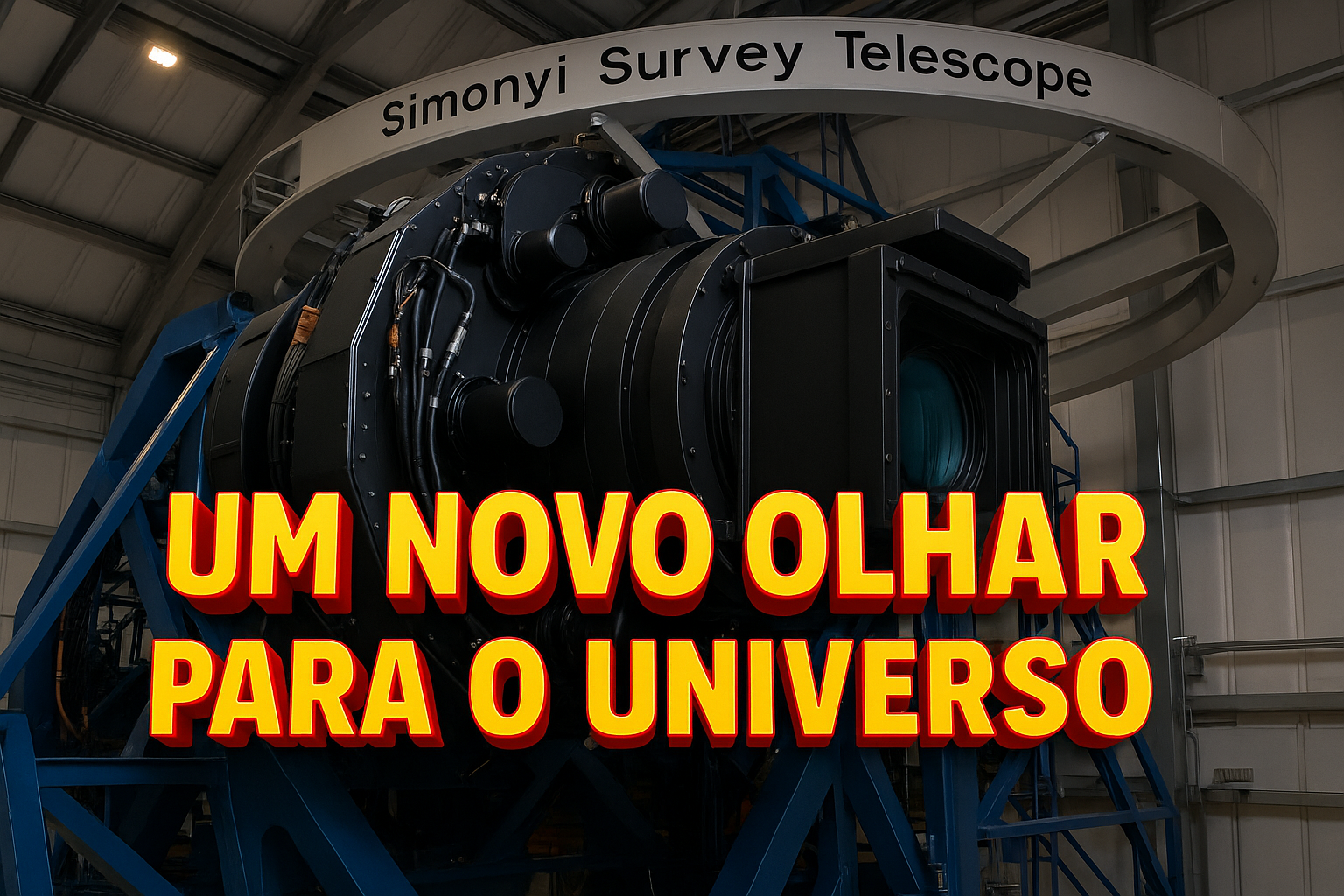
Meet the LSST Camera, the Largest Digital Camera in the World, and See How It Can Transform Astronomy
The largest digital camera ever built begins its mission in Chile and promises images that could transform our understanding of the cosmos.
State-of-the-Art Technology Reaches Space
A technological achievement of great impact for astronomy is about to be revealed to the world.
Starting on June 23, 2025, the digital camera LSST Camera, with a 3,200-megapixel sensor, will show its first images captured by the Vera C. Rubin Observatory in Chile.
-
Motorola launched the Signature with a gold seal from DxOMark, tying with the iPhone 17 Pro in camera performance, Snapdragon 8 Gen 5 that surpassed 3 million in benchmarks, and a zoom that impresses even at night.

-
Satellites reveal beneath the Sahara a giant river buried for thousands of kilometers: study shows that the largest hot desert on the planet was once traversed by a river system comparable to the largest on Earth.

-
Scientists have captured something never seen in space: newly born stars are creating gigantic rings of light a thousand times larger than the distance between the Earth and the Sun, and this changes everything we knew about stellar birth.

-
Geologists find traces of a continent that disappeared 155 million years ago after separating from Australia and reveal that it did not sink, but broke into fragments scattered across Southeast Asia.

This cutting-edge equipment, installed on the Simonyi telescope, represents one of the greatest advances in deep space visual capture.
Furthermore, the scientific community expects that the records will help to unravel new mysteries of the Universe.
How the Largest Digital Camera on the Planet Works
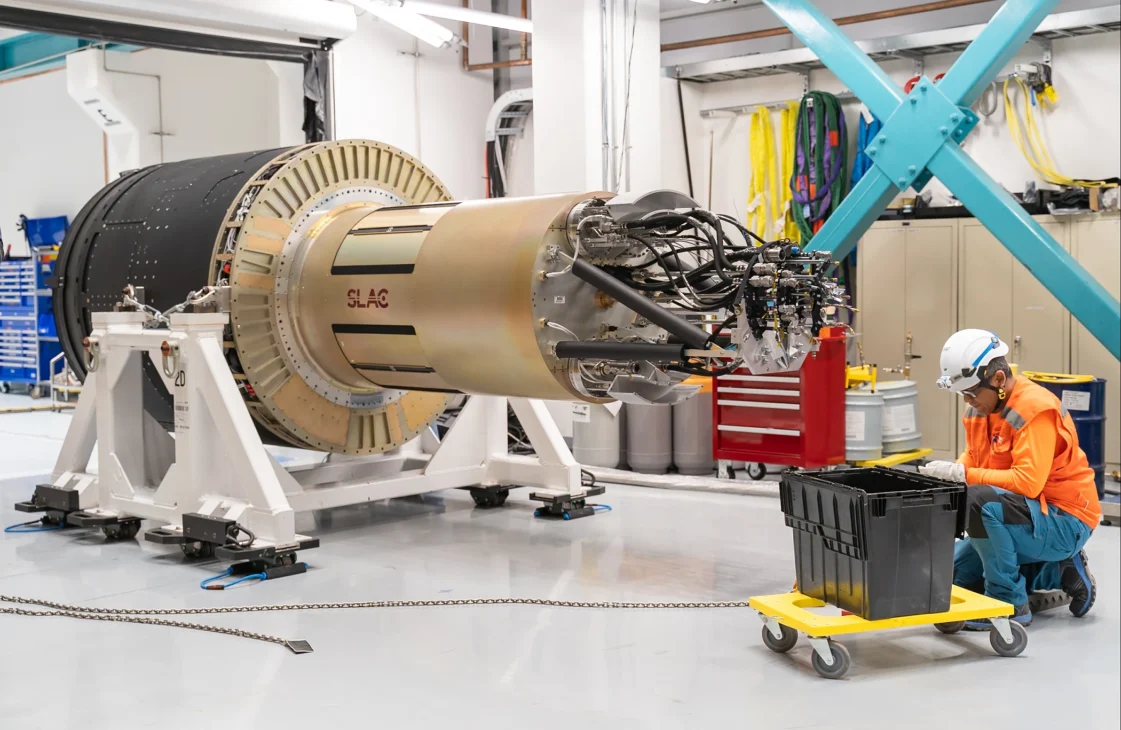
The SLAC National Accelerator Laboratory, located in California, developed the LSST Camera.
The team completed construction of the camera in 2024 and successfully transported it to Chile shortly after.
Weighing approximately 3,000 kg and with dimensions similar to a car, the camera features an optical system with three large-aperture lenses.
The high-resolution sensor allows capturing detailed images of celestial objects, from distant galaxies to smaller and less luminous bodies.
Astronomical Mission: The Largest Time-Lapse of the Night Sky
Over the next ten years, the Vera C. Rubin Observatory aims to create the largest time-lapse of the night sky ever recorded.
This ambitious project will allow for the analysis of:
- The formation and evolution of galaxies
- The dynamics of asteroids and smaller bodies
- Rare and transient astronomical events
- The structure and expansion of the Universe
Moreover, the collected data will contribute to research on dark energy, one of the greatest mysteries of modern cosmology.
Stages of the Image Capture Process
The image capture process follows a series of rigorous technical steps.
Firstly, the telescope mirrors reflect light coming from space.
Next, this light passes through the camera’s three main lenses and reaches the advanced 3,200 MP sensor.
Institutions and research centers around the world will receive the generated data and images.
Finally, specialists will conduct extensive scientific analysis and processing work.
When Will the First Images Be Revealed?
According to the official schedule of the Vera C. Rubin Observatory, the team will present the first images captured by the LSST Camera on June 23, 2025.
The presentation will occur during a live broadcast on the project’s YouTube channel at 4 PM (Lisbon time).
This event will mark the official start of the camera’s operation, which is considered one of the most advanced tools in contemporary astronomy.
Expected Impacts: New Discoveries and Scientific Advances
Experts predict that the captured records will drive important discoveries.
The work of the LSST Camera will contribute to advances in various areas of science.
Additionally, the project will undoubtedly inspire new generations of astronomers and researchers.
These results will further strengthen Chile’s position as one of the global centers for astronomical observation.
Consequently, the country will contribute to the advancement of knowledge about the cosmos.
International Collaboration and Technical Rigor
Various international institutions participated in the development of the project.
The team followed strict quality and sustainability standards.
This care aims to ensure a continuous flow of scientific data.
There is still no exact forecast for the public availability of the complete collection of images.
However, the SLAC National Accelerator Laboratory and the Vera C. Rubin Observatory state that all results will be released openly and transparently.
The Global Impact of New Images of the Universe
This new phase of space research reinforces the global trend of investments in technologies that enhance knowledge of the Universe.
As a comparison, the unprecedented images captured by the James Webb Space Telescope in 2023 demonstrated the potential of cutting-edge equipment to revolutionize scientific understanding.
What Do You Think Will Be Revealed by the New Telescope?
With the LSST Camera fully operational, experts believe a new era of astronomy will begin.
However, the success of the project requires a joint effort.
Efficient governance, transparency, and commitment to sustainable scientific development will be essential.
In the meantime, global anticipation grows for the revelation of the first images.
What do you think will be more impactful: the discovery of new celestial bodies or the revelation of unexpected patterns in galaxy formation? Share your opinion!








-

Uma pessoa reagiu a isso.