





 English
  Francês
  Alemão
  Italiano
  Japonês
  Norueguês
  Portuguese
  Spanish
  4 min of reading
  0 comments


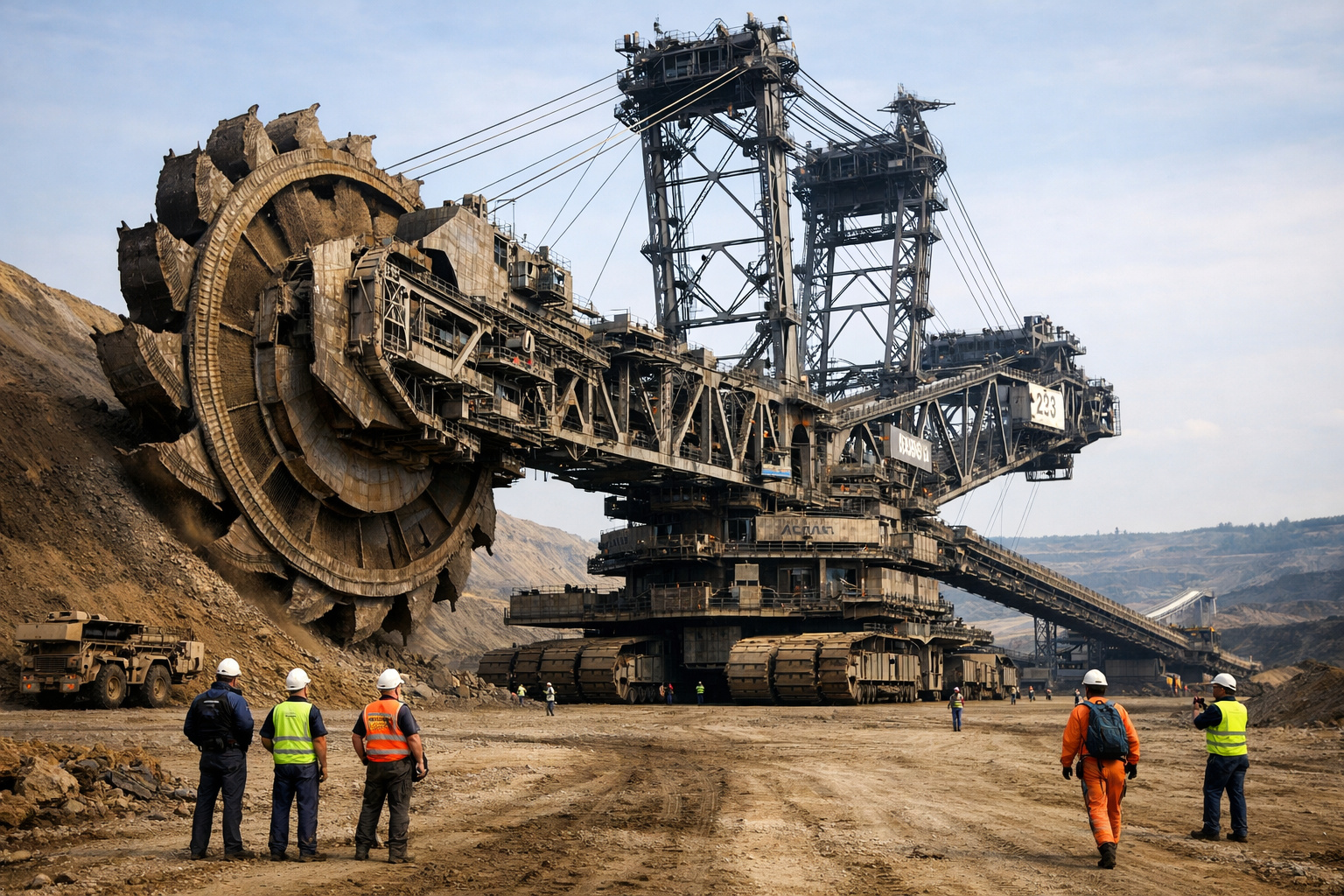
Colossal Machine Challenges The Limits Of Modern Engineering, Works In German Mine And Impresses With Its Capacity To Move Volumes Equivalent To Entire Cities In A Few Days
The largest excavator in the world continues to impress in 2026 and holds a record that is hard to surpass. With over 14 thousand tons, dimensions that surpass skyscrapers, and a daily excavation capacity of 240 thousand cubic meters, the Bagger 293 represents one of the greatest achievements of industrial engineering ever built by humanity.
The information was shared by specialized portals in economics, industry, and technology, based on technical data from the machine’s operation in the Hambach lignite mine in Germany, as well as historical records from the manufacturer. At the same time, the equipment remains a global reference when it comes to large-scale mining.
Since it began operations, the excavator has not only transformed the European mining landscape but has also come to symbolize the extreme of human capability to build machines outside any conventional scale.
-
Historic bankruptcy of Centauro shocks the market, and the century-old company puts more than 500,000 products, machines, and complete infrastructure up for online auction.

-
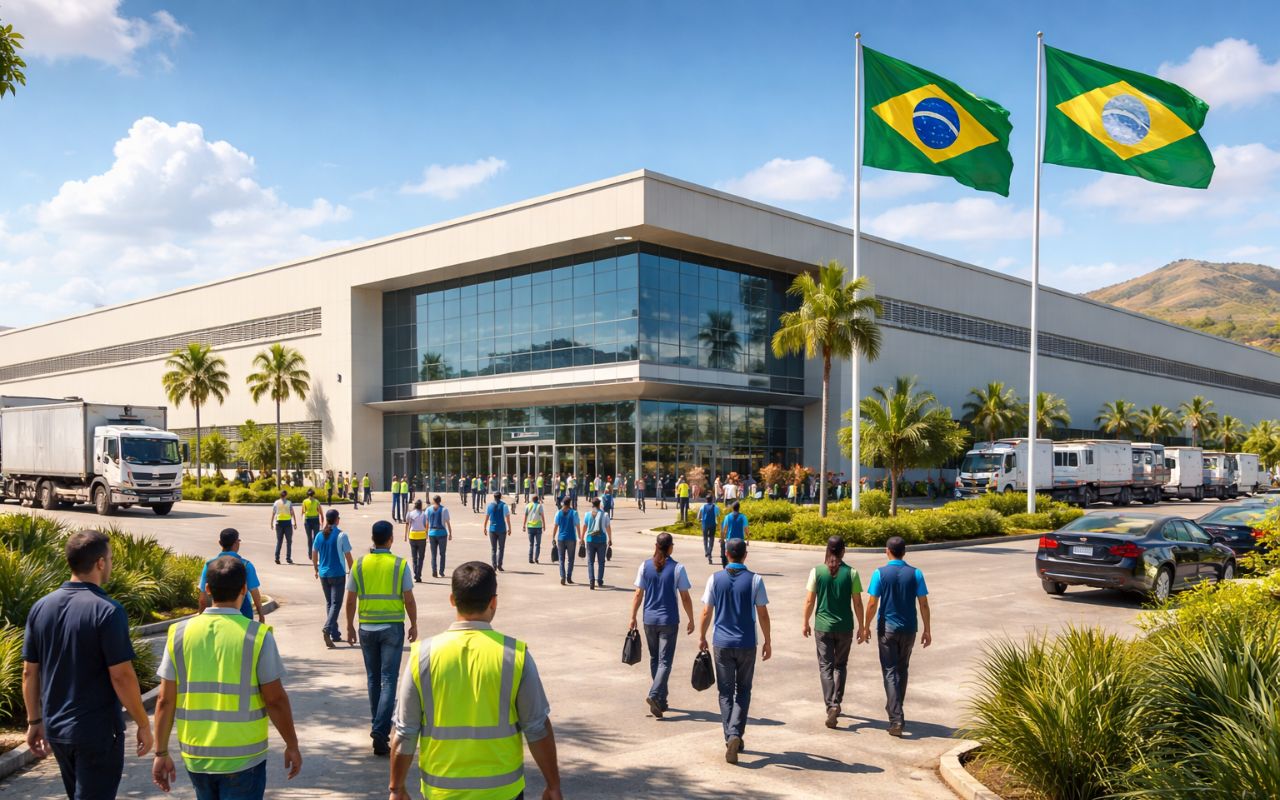
New shoe factory in Ceará is expected to create 400 jobs and strengthen the local economy.
-
No one imagined it, but a mixture of sawdust with a mineral that fights fires surprises scientists with a result that changes the course of fire-resistant construction.

-
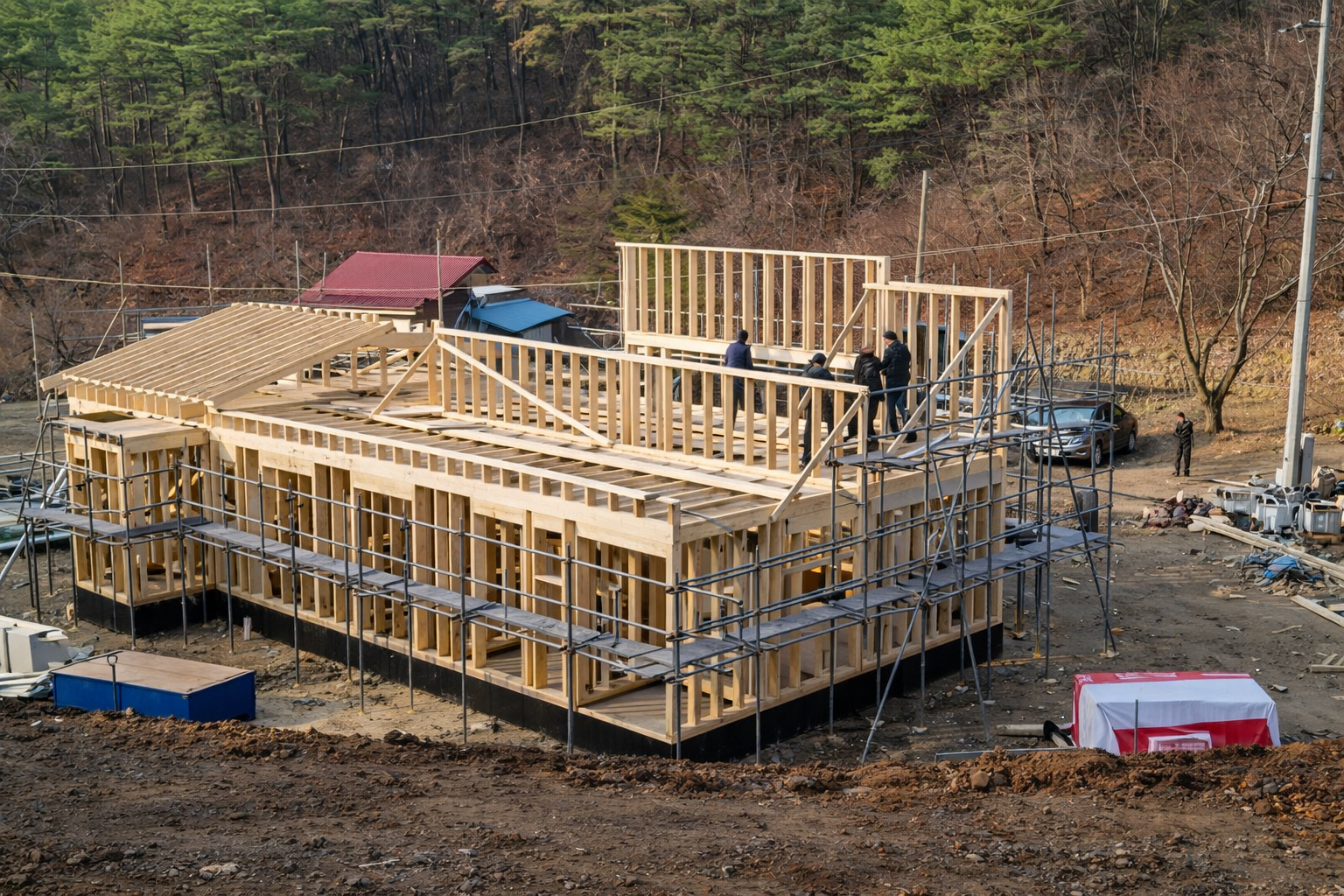
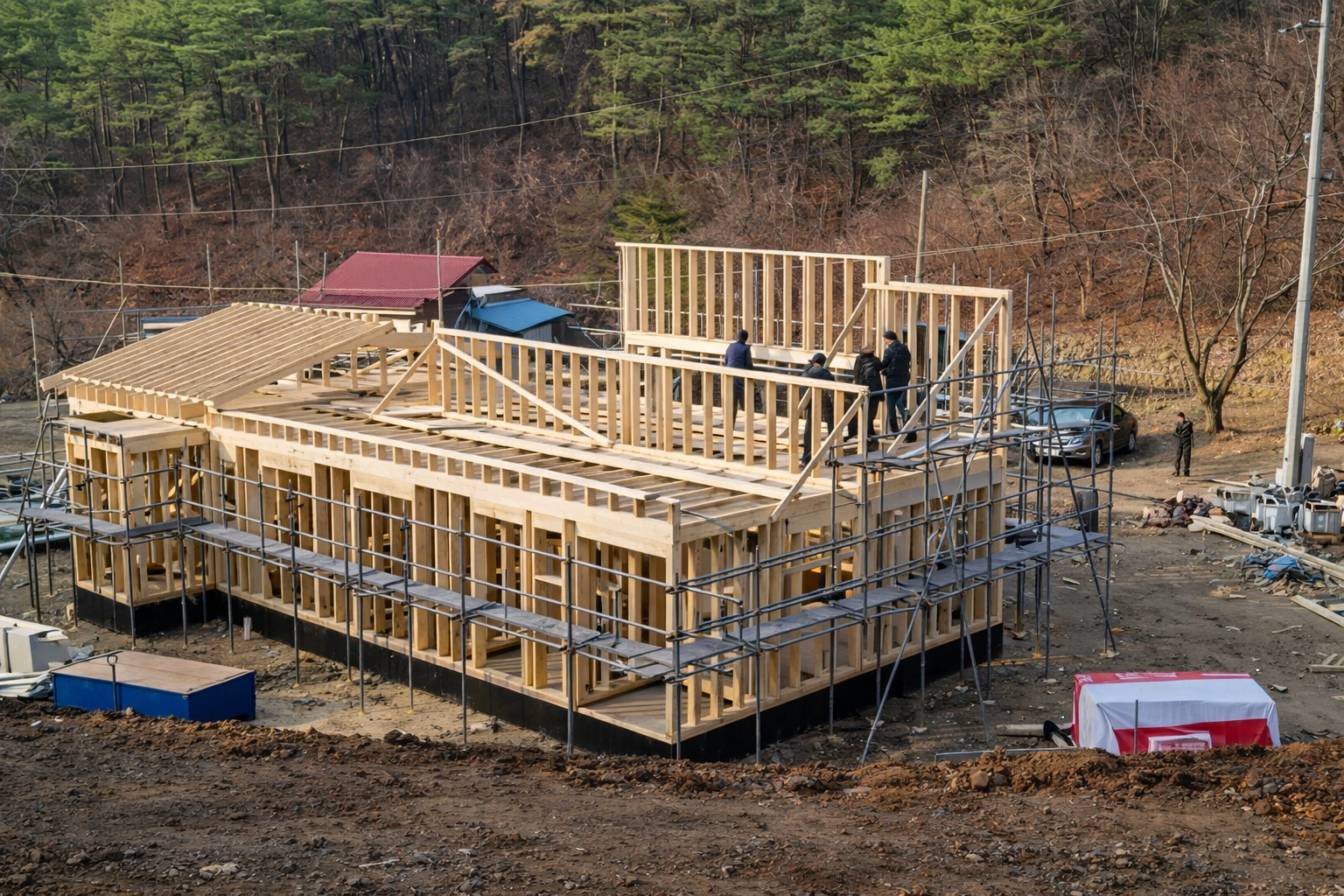
From empty land to a high-end house, wooden construction uses a lightweight system, metal structure for the foundation, ventilated ceramic cladding, and special windows to create an efficient and comfortable living space throughout the year.

Titanic Dimensions Place The Machine Among The Largest Mobile Structures Ever Created
First of all, the numbers of the Bagger 293 help to understand why it occupies the top of global rankings. The machine has a height of 96 meters, equivalent to a building of about 30 stories in full motion. Furthermore, its length reaches 225 meters, enough to cover two aligned professional football fields.
However, the most impactful data is the operational weight. With 14,200 tons, the excavator exceeds, for example, almost double the weight of the metal structure of the Eiffel Tower. Still, it moves continuously thanks to a track system designed to distribute the load and prevent sinking into the mine’s ground.
Additionally, the structure was manufactured by TAKRAF, a German company specializing in large industrial equipment. Every detail of the project was designed to ensure stability, durability, and continuous operation, even under extreme stress.
For this reason, despite its monumental appearance, the Bagger 293 was not built for speed, but for precision, consistency, and maximum productivity.
Excavation Capacity Impresses And Requires Immediate Logistics

The heart of the operation lies in the enormous bucket wheel, considered one of the largest ever installed on a terrestrial machine. With a diameter of 21.6 meters, equivalent to the height of a seven-story building, the wheel holds 18 buckets, each capable of removing 6.6 cubic meters of soil or ore with each rotation.
Thanks to this system, the excavator can remove up to 240,000 cubic meters of material every 24 hours. To put it into clearer perspective, this volume would be enough to fill approximately 2,400 freight train cars in just one day of operation.
Consequently, all activity depends on integrated logistics. Conveyor belts, distribution systems, and deposition areas must operate in sync to prevent the removed material from disrupting the operation.
In this regard, the Bagger 293 does not operate alone. It is part of a highly coordinated industrial ecosystem, capable of maintaining a continuous extraction flow without interruptions.
Electricity, Automation, And Reduced Team Surprise
Unlike conventional diesel-powered excavators, the Bagger 293 operates with external electric power. During peak operations, the consumption reaches 16.56 megawatts, a quantity sufficient to supply a small town with thousands of residents.
Despite this, the level of automation drastically reduces the need for direct labor. Only five operators are enough to control relocation, excavation, conveyor belts, and technical monitoring systems during each shift.
Moreover, advanced sensors and control systems ensure that the machine operates within safe parameters, even under extreme loads and long periods of continuous operation.
Therefore, the gigantism of the excavator contrasts with operational efficiency, demonstrating how technology and engineering work together to maximize results and reduce risks.
Specifications Of The Largest Excavator In The World

To summarize the magnitude of the Bagger 293, the main technical data reinforces its unique status:
- Total Weight: 14,200 tons
- Height: 96 meters
- Length: 225 meters
- Daily Output: Up to 240,000 m³ of soil or ore
- Cutter Wheel Diameter: 21.6 meters
- Number of Buckets: 18
- Capacity of Each Bucket: 6.6 m³
- Movement Speed: 0.6 km/h
- Maximum Energy Consumption: 16.56 MW
These numbers help explain why the machine continues to be studied, documented, and admired by engineers, students, and heavy industry enthusiasts worldwide.
Extreme Engineering That Redefines Industrial Limits
Finally, the Bagger 293 represents not just a giant excavator. It symbolizes the peak of engineering applied to large-scale mining. Its existence demonstrates how industrial projects can transcend physical, logistical, and technological limits when there is planning, investment, and innovation.
Even decades after its construction, the machine remains relevant, efficient, and irreplaceable in certain operations. Thus, while new technologies emerge, the largest excavator in the world remains as an absolute milestone of human capability to shape the environment on colossal scales.
Do you believe that machines of this size will still have a place in the future, or will mining migrate to smaller and more technological solutions?









-

-

-

11 pessoas reagiram a isso.