





 Portuguese
  English
  Spanish
  3 min of reading
  1 comment


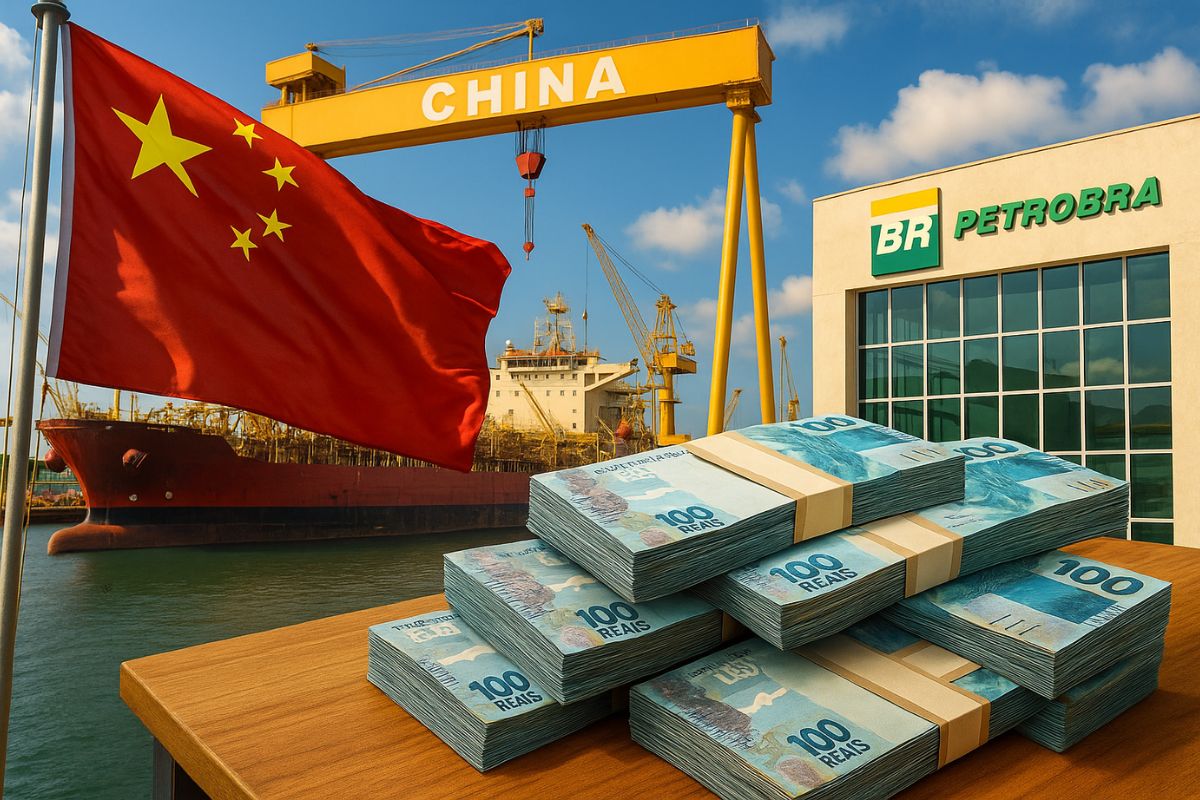


Giant Asian Company Will Participate in Navalshore in Rio and Has Already Begun Talks to Compete for State-Owned Ship Tender
The largest Chinese shipyard specialized in ships for transporting gas and ammonia, Jiangnan Shipyard Group, is eyeing the Brazilian market. The company is coming to Brazil for the first time to participate in Navalshore 2025, the main naval fair in Latin America, and has already begun contacts to compete for the new tender from Petrobras for fleet renewal of gas carriers.
According to information from the newspaper Estadão, the Chinese group wants to make its presence felt in the second hiring cycle of the state company, which foresees the purchase of eight vessels — five pressurized and three semi-refrigerated — with capacities between 7,000 and 14,000 cubic meters, intended for the transport of LPG (Liquefied Petroleum Gas) and ammonia.
Who Is Leading the Chinese Mission in Brazil?
The delegation will be led by Lin Qingshan, vice president of Jiangnan Shipyard Group, who sees Brazil as a strategic opportunity, both due to the moment of Petrobras and the geopolitical rapprochement of the Brics countries. The presence at Navalshore is considered symbolic, according to Wagner Freitas, the company’s representative in Brazil.
-
Historic bankruptcy of Centauro shocks the market, and the century-old company puts more than 500,000 products, machines, and complete infrastructure up for online auction.

-
New shoe factory in Ceará is expected to create 400 jobs and strengthen the local economy.
-
No one imagined it, but a mixture of sawdust with a mineral that fights fires surprises scientists with a result that changes the course of fire-resistant construction.

-
From empty land to a high-end house, wooden construction uses a lightweight system, metal structure for the foundation, ventilated ceramic cladding, and special windows to create an efficient and comfortable living space throughout the year.


“Participating for the first time in a fair of Navalshore’s magnitude is a milestone. Conversations with potential local partners have already begun,” said Freitas, commercial director of WSS Express.
What Is at Stake in the Fleet Renewal?
The new phase of Petrobras’ program aims to strengthen its logistical capacity in the transportation of strategic fuels. The demand for medium-sized gas carriers (pressurized and semi-refrigerated) meets the state-owned company’s need to modernize its fleet with more efficient, safe, and environmentally suitable vessels.
International competition for these contracts is expected to be fierce. In addition to Jiangnan, other European and Asian shipyards are also eyeing the tender, but the Chinese have industrial scale, production agility, and highly competitive prices, factors that may weigh in the decision of the Brazilian state company.
What Is the Impact of Navalshore in This Context?
Navalshore 2025, which takes place from August 19 to 21 in Rio de Janeiro, will feature 144 exhibitors representing more than 400 brands in the naval and offshore chain. The expectation is that the fair will generate around R$ 12 billion in business, including contracts, partnerships, and strategic connections among shipyards, shipowners, suppliers, and government representatives.
The participation of Jiangnan is seen as a sign of Chinese interest in increasing its presence in the Brazilian naval sector, especially at a time when the country is again investing in its maritime industry through Petrobras and possible local content projects.
Is It Worth Opening the Brazilian Market to Chinese Shipyards?
The entry of foreign shipyards can bring innovation, technical capacity, and cost reduction, but it also raises discussions about national content, technology transfer, and industrial sovereignty. Experts warn that partnerships with Brazilian companies may be a strategic alternative to balance interests.
If advanced, the alliance with Jiangnan could represent a new phase of Sino-Brazilian cooperation in the naval sector, directly impacting the productive chain of oil and gas, job creation, and the competitiveness of the local industry.
Do you support the entry of foreign shipyards into Petrobras’ tenders? The presence of the largest shipyard in China on Brazilian soil could accelerate the fleet renewal of Petrobras, but it also pressures the national naval industry. Do you think international partnerships strengthen or weaken the Brazilian naval sector? Leave your opinion in the comments — your experience is part of this debate.









Para quem acompanha a indústria naval brasileira, seus altos e baixos que nunca chega na real competitividade feito a China, Singapura, não dá para ver espaço real que estes estaleiros chineses vão dar para os estaleiros brasileiros, e cai por terra conteúdo local, vide o que vem acontecendo na indústria automobilística vinda da China. Eles por lá não em sindicatos, a mão de obra é mais barata, os estaleiros são governamentais. Deve sobrar muito pouco para os estaleiros brasileiros nestas construções com a China. Esqueçam o que vimos anos atrás, onde falava em transferência de tecnologia e mão de obra local. A China e Singapura tem formas prontas para construir navios em escalas, estamos longe de chegar nisso. Vamos bater palma para chineses e singapurenses.