





 Portuguese
  English
  Spanish
 3 min of reading
  7 comments


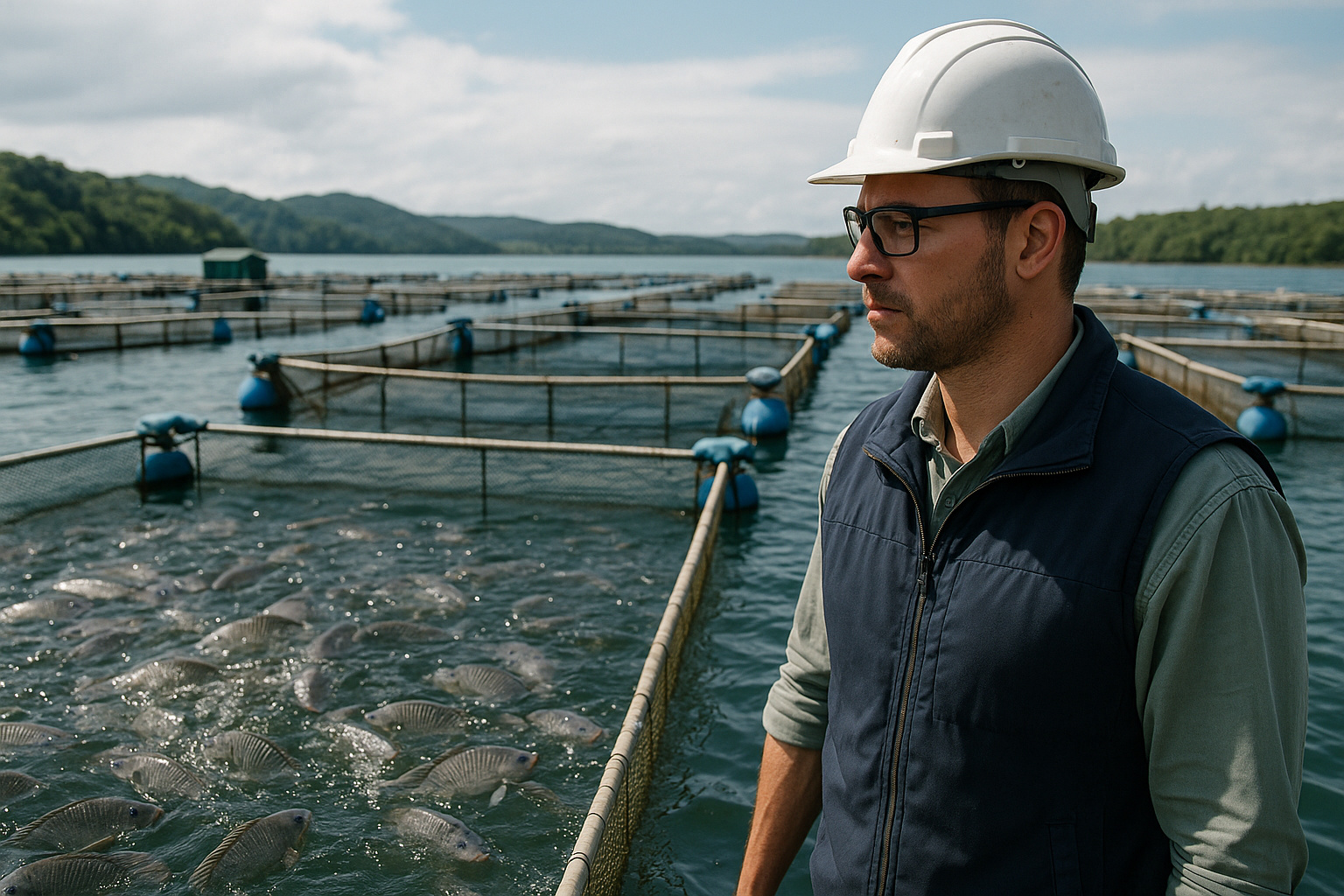


A Highly Technological Structure Reveals How Tilapia Production Transforms The Sector and Strengthens The Power of Brazilian Aquaculture
The largest tilapia farm in Brazil maintains an annual production of over 100 thousand tons and, therefore, demonstrates how national fish farming evolves with sustainability, technology, and efficiency. Thus, the enterprise stands out by combining responsible management, a favorable environment, and optimized processes that ensure high-quality fish. In addition, the entire operation reinforces the continuous expansion of the sector in the country.
Technical Investigation Reveals Unique Productive Potential
The farm is located in Selvíria, Mato Grosso do Sul, and, therefore, uses natural conditions as a competitive differential. Thus, the choice of the area resulted from an extensive analysis that evaluated over a thousand water points. In addition, the operation takes advantage of the crystal-clear waters of the Paraná River, which ensure continuous flow and ideal oxygenation.
Consequently, the fish grow healthily, always swimming against the current, which reduces stress and improves well-being. Thus, the natural environment becomes a direct ally of productive performance.
-
Unemployment rises again to 5.8% at the beginning of 2026, raising alarms about the end of temporary positions and its impact on the Brazilian job market.

-
Document organization can cut invisible costs in small businesses, a simple step that prevents waste, rework, and losses in daily operations.

-
Chinese giant worth nearly R$ 4 billion that manufactures cables for electric cars, solar energy, and robotics wants to open a factory in SC.
-
Many employers do not know, but the law guarantees domestic workers a 25% increase in salary during trips, 50% for overtime, 20% for night shifts, and 17 additional benefits that can lead to labor lawsuits if not paid.


Tilabras was founded in 2015 by Nicolas Landolt and Rudi Lamprecht, and since then, it has driven the sector with modern and highly efficient systems. Thus, the company adopted innovative floating nurseries that expand space and increase fish comfort. In addition, this model takes advantage of the natural water renewal, which eliminates the need for antibiotics or chemical products.

Differentials of The Operation
- Sustainability, with a plant-based diet and zero use of antibiotics.
- Efficiency, with feed conversion better than that of cattle.
- Quality, thanks to pure water and immediate processing.
- Social Impact, with partnerships for the production of non-GMO grains.
Economic and Social Impacts of Production
Production exceeding 100 thousand tons per year boosts national competitiveness and strengthens the domestic supply of quality protein. Thus, the high productive efficiency of tilapia allows for reduced costs and increases access for the end consumer.
In addition, the adopted model stimulates agriculture, logistics, and supply chains, which naturally integrate into the process. Thus, fish farming advances as a promising alternative and strengthens food security.
Tilapia, often compared to fish considered premium, has a balanced nutritional profile rich in omega-3 and vitamin B12. Therefore, experts consider this fish a healthy option suitable for various diets.
Moreover, regular consumption reduces pressure on wild fish populations and contributes to environmental balance. Thus, the protein enhances its relevance within sustainable practices.
Environmental Challenges and The Search for Productive Balance
Despite efficiency, the sector requires constant attention to environmental practices to ensure responsible management. Thus, the conscious use of water, care for nurseries, and ecosystem preservation ensure the continuity of the model.
Additionally, the conversion of degraded pastures into productive areas demonstrates that it is possible to increase results without compromising natural resources. Thus, the operation reinforces the commitment to sustainability and establishes a benchmark in the country.
The Future Of Aquaculture Production In Brazil
The model adopted by Tilabras follows a global trend that combines sustainable practices, efficient resource use, and productive integration. Thus, the company positions itself as a reference in the sector and inspires new investments in advanced cultivation systems.
Furthermore, the net pens used in the Paraná River ensure cleaner and tastier fish, confirming the competitive potential of Brazilian fish farming. Thus, the country evolves and increases its relevance in the global market.
And, in light of this scenario of continuous transformation, the question arises: how will the integration between technology, sustainability, and responsible management continue to shape the future of food production in Brazil?









Empresa muito forte, foi reestruturada e continua gerando alimentos para o Brasil e empregos para nosso Mato Grosso do Sul!!
A Tilabras está um caos, completamente quebrada, e ainda colocam alguém totalmente despreparado para comandar tudo isso. Já são cerca de 300 processos só no tribunal! É inacreditável que permitam que nossos recursos sejam entregues a uma gestão tão irresponsável e desastrosa.
Gente, manda essas tilápias para os atacadistas de São Paulo. Não vejo a hora de degustar.
A um precinho acessível tá!