





 Portuguese
  English
  Spanish
 4 min of reading
  37 comments


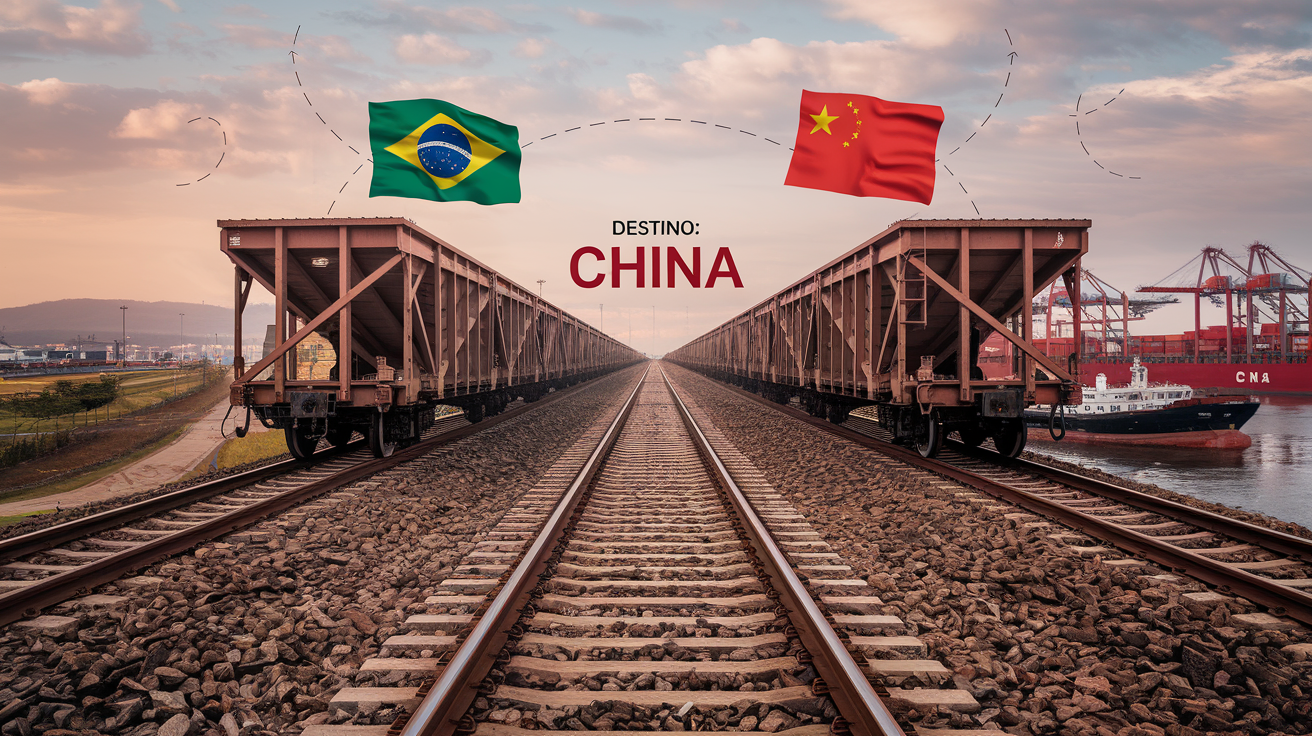


Transnordestina Promises to Transform the Northeast into a Fixed Route for Lithium Export, the Mineral that Drives Global Technologies. With 150 Thousand Tons/Month of Production, Ceará Prepares to Compete in the International Market and Attract Millions in Investments.
A revolution is underway in the Brazilian Northeast.
What seemed distant and almost impossible is about to happen: the Transnordestina, the largest railway in the region, not only promises to interconnect the interior of Ceará to the global market but also to transform the state into a powerhouse in lithium export, an essential mineral for cutting-edge technologies.
But how will such an ambitious project be realized, and what will its impact be on Brazil and the world?
-
With an investment of R$ 612 million, a capacity to process 1.2 million liters of milk per day, Piracanjuba inaugurates a mega cheese factory that increases national production, reduces dependence on imports, and repositions Brazil on the global dairy map.
-
Brazilian city gains industrial hub for 85 companies that is equivalent to 55 football fields.

-
Peugeot and Citroën factory in Argentina cuts production by half and opens a layoff program for more than 2,000 employees after Brazil drastically reduced purchases of Argentine vehicles.

-
A Brazilian city gains a factory worth R$ 300 million with the capacity to process 200 thousand tons of wheat per year, a mill of 660 tons/day, silos for 42 thousand tons, and an industrial area of 276 thousand m².


With completion expected by 2027, the railway is at the center of an ambitious plan by DCL Minerals to export 150 thousand tons of lithium per month.
Produced in Quixadá, in the interior of Ceará, the mineral will reach the Port of Pecém before heading to markets such as China, Germany, Canada, Saudi Arabia, and India.
The Railway and the Transport of Lithium
According to the Diário do Nordeste, the Transnordestina will be the main route to transport tons of lithium extracted in Quixadá, moving the mineral to the Port of Pecém, from where it will be exported to the international market.
This mineral, considered strategic, is at the center of the technological revolution.
It is widely used in the manufacture of batteries for electric vehicles, cell phones, and computers, and has applications in the aerospace and pharmaceutical industries.
The transport of lithium will be made possible through a contract between DCL Minerals and Transnordestina Logística S/A (TLSA).
According to DCL, all production of 150 thousand tons per month will be destined for export, consolidating Ceará as one of the main production hubs of the mineral in Brazil.
Investments in the Interior of Ceará
To enable large-scale production, DCL Minerals is investing around R$ 25 million in a crushing and storage facility in Quixadá.
The space will have a total area of 350 thousand square meters and will feature a flotation plant, a technology that allows the processing of minerals such as amblygonite, spodumene, and lepidolite, transforming them into high-purity lithium.
Daniel Correa, owner of DCL, explained that the construction of the facility is expected to be completed in a timeframe of three to five months, generating 200 direct and indirect jobs.
After completion, the facility will employ between 80 and 100 workers permanently.
Additionally, a road will be built connecting the facility to the cargo terminal of Transnordestina, facilitating the transport of lithium to the port.
The project, according to Correa, already has a detailed budget and is set to begin in January 2024, after the area is cleared.
Production Before the Railway
Although the railway is essential for the transportation of lithium, DCL Minerals is already prepared to operate even before the completion of Transnordestina.
Until 2027, transportation will be done by trucks, which will make about 111 daily trips to the Port of Pecém.
The first shipment of lithium produced in Ceará is expected for January 2024, destined for Hong Kong.
Currently, the company is already producing 1,500 tons of the mineral, but aims to reach 150 thousand tons per month, consolidating contracts with multinationals that demand the ore.
Ceará as a Lithium Production Hub in Brazil
Lawyer Tomás Figueiredo, a mining specialist, highlighted that Ceará is one of the three largest lithium provinces in Brazil, alongside Minas Gerais and some regions in the North.
He emphasizes, however, that more geological studies and advancements in the existing map scales are still needed to explore the state’s full potential.
DCL Minerals, which already operates in Minas Gerais, Pará, and Bahia, has 52 mining areas in Ceará, located within a radius of up to 100 km from Quixadá.
Of these, ten are already in the approval process with the National Mining Agency (ANM) for the start of large-scale extraction.
Economic and Strategic Impact
Transnordestina, in addition to transforming the logistical landscape of the Northeast, will be crucial for strengthening Brazil’s position in the global lithium market.
With the growing demand for electric vehicles and electronic devices, the export of the mineral could attract billions in investments to the country.
The arrival of the railway is also expected to boost regional development, creating jobs and stimulating the economy in the interior of Ceará.
According to experts, the project has the potential to make the Northeast a reference in the global market for strategic minerals.
Will the Transnordestina railway place Ceará at the center of the global lithium market? Share your opinion below!






O Brasil deveria impor limites para a venda de **** estratégicos e assim fazer indústrias se instalar aqui e claro dado incentivo na produção de produtos manufaturados e não vender só o **** **** e pronto. Acho quem vai comprar ou se instalar aqui não interessa o importante e fazer esse pais evoluir.
Até que ponto a China está realmente interessada no desenvolvimento da região brasileira? Sabemos que o governo COMUNISTA CHINÊS, mais parece a pior praga de gafanhotos que existiu, existe ou existirá? Mas, este governo **** que temos, pouco importa, desde que eles encham os bolsos de dinheiro. Cadê nossos políticos de direita? Estão com medo ou só pensando nas eleições? Quem está fiscalizando?
Agora sim: Temos presidente e obras significativas no nosso país que possa nos trazer progresso e desenvolvimento.