





 Portuguese
  English
  Spanish
 4 min of reading
  1 comment


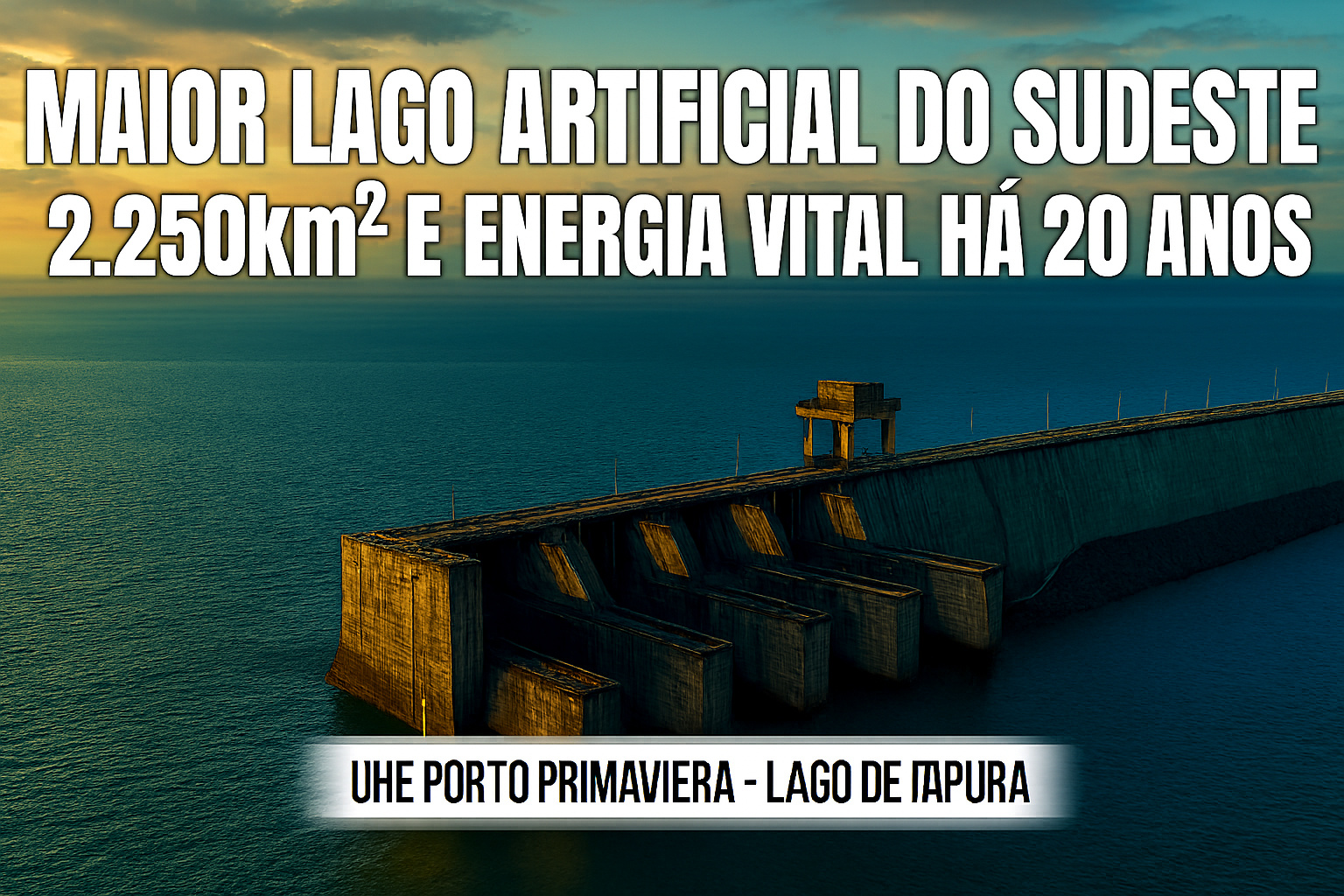

The Largest Artificial Lake in the Southeast Has 2,250 km², a Capacity of 1,540 MW, and Remains Vital More Than 20 Years After Its Inauguration on the Paraná River.
The Brazilian Southeast houses one of the largest water engineering works ever built in the country: the reservoir of the Engenheiro Sérgio Motta Hydroelectric Power Plant, better known as Porto Primavera, located on the Paraná River, on the border between São Paulo and Mato Grosso do Sul. With a monumental area of 2,250 km², it is considered the largest artificial lake in area in the Southeast and one of the largest in Brazil.
Officially inaugurated in 1999, the power plant has 1,540 megawatts (MW) of installed capacity, enough to supply millions of households. More than two decades after the filling of the lake, Porto Primavera remains indispensable for the National Interconnected System (SIN), responsible for balancing the energy supply in the country.
A Dam Among the Largest in the World
The Porto Primavera project began to be conceived in the 1970s, during a period of strong expansion of Brazilian electrical infrastructure.
-
Friends have been building a small “town” for 30 years to grow old together, with compact houses, a common area, nature surrounding it, and a collective life project designed for friendship, coexistence, and simplicity.

-
This small town in Germany created its own currency 24 years ago, today it circulates millions per year, is accepted in over 300 stores, and the German government allowed all of this to happen under one condition.

-
Curitiba is shrinking and is expected to lose 97,000 residents by 2050, while inland cities in Paraná such as Sarandi, Araucária, and Toledo are experiencing accelerated growth that is changing the entire state’s map.

-
Tourists were poisoned on Everest in a million-dollar fraud scheme involving helicopters that diverted over $19 million and shocked international authorities.


The decision to construct the power plant was strategic: to harness the power of the Paraná River, the second largest in the country by length, to permanently increase energy supply.
The dam impresses with its grandeur: it is 10.2 kilometers long, one of the largest concrete and earth walls ever built in Brazil. This structure allowed the formation of a lake so extensive that, at various points, the horizon seems to vanish like an inland sea.
Capacity of 1,540 MW: Energy for Millions
With 1,540 MW of installed capacity, Porto Primavera is not among the largest in Brazil in terms of power — Itaipu (14,000 MW) and Belo Monte (11,233 MW) are much more robust. However, its strategic location gives the project a vital role.
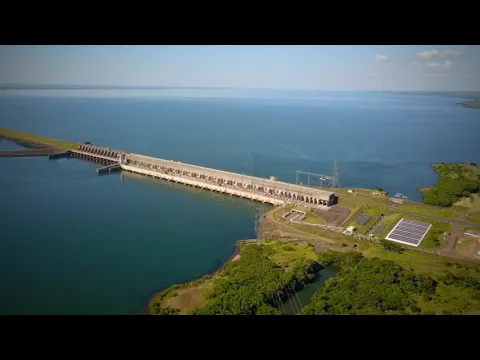

The Paraná River, which cuts through part of the Southeast and the Midwest before flowing into the Plata, concentrates a series of plants that depend on water regulation.
In this context, Porto Primavera acts as a flow regulator, ensuring stability for hydroelectric plants downstream, such as Ilha Solteira and Jupiá.
This function makes the power plant considered “smaller in capacity, but giant in importance” within the Brazilian energy system.
The Transformation of Landscape and Society
The creation of the 2,250 km² lake radically changed the geography of the region. Entire areas were flooded, forcing the relocation of families, the construction of new neighborhoods, and even the relocation of highways.
Among the most significant impacts is the disappearance of the Seven Falls, one of the largest waterfall formations on the planet, located in Guaíra (PR).
The falls were submerged in the 1980s after the Itaipu gates were closed, but Porto Primavera reinforced this process of deep transformation of the Paraná River.
Riverside communities were displaced and compensated, and cities like Presidente Epitácio (SP) and Bataguassu (MS) saw their surroundings remodeled by the presence of the new lake.
Development and New Uses of the Reservoir
While there were social and cultural losses, the reservoir also brought economic opportunities. Today, the Porto Primavera lake drives sectors such as:
- Water Sports and Recreational Activities, with a focus on sport fishing and sailing competitions.
- Agribusiness, which uses the lake as a source of irrigation for crops.
- Urban and Industrial Supply, leveraging water regulation for human consumption and industrial use.
As in other regions with large reservoirs, tourism has become a source of income, creating inns, marinas, and leisure infrastructure.
Environmental Impacts and Mitigation Programs
The filling of the reservoir altered aquatic ecosystems, affecting native fauna and flora. Migratory fish species lost part of their natural habitats, requiring repopulation programs. The formation of the lake also changed the dynamics of floodplains, which were essential for regional biodiversity.
To address these challenges, environmental compensation projects were created, including preservation areas and continuous monitoring programs for water quality and aquatic fauna.
Still, environmentalists point out that the loss of biodiversity is one of the largest negative legacies of Porto Primavera, highlighting the dilemma of large hydroelectric projects: ensuring large-scale energy versus preserving ecosystems.
The Largest Artificial Lake in the Southeast in Numbers
- Flooded Area: 2,250 km² (equivalent to more than 20 times the area of the city of Rio de Janeiro).
- Installed Capacity: 1,540 MW.
- Year of Commencement: 1999.
- Dam: 10.2 km long.
- States Affected: São Paulo and Mato Grosso do Sul.
These numbers solidify Porto Primavera as one of the largest hydroelectric enterprises in the region and a landmark in national engineering.
Strategic Role After More Than 20 Years
More than two decades after its inauguration, Porto Primavera continues to play fundamental roles:
- Stability of the SIN: helps balance the electrical matrix during peak times.
- Hydrological Control: regulates floods and droughts in the Paraná River.
- Clean Energy: generates renewable electricity, reducing the need for thermal power plants.
At a time when Brazil is looking to expand renewable sources, the hydroelectric plant reinforces the importance of large reservoirs in energy balance.
The Legacy of Porto Primavera
The Porto Primavera reservoir is more than an artificial lake: it is a work of continental proportions that transformed the geography of the Southeast, reshaped communities, and consolidated as a strategic asset in the Brazilian electric matrix.
Its legacy combines grandeur, development, and environmental impacts that continue to be debated today. The fact is that, more than 20 years later, the power plant remains a fundamental pillar for energy and water supply in Brazil, symbolizing a period when hydroelectricity affirmed itself as a driver of national progress.










Your blog is a true gem in the world of online content. I’m continually impressed by the depth of your research and the clarity of your writing. Thank you for sharing your wisdom with us.