





 Português
  Inglês
  Espanhol
  2 min de leitura
  1 comentário


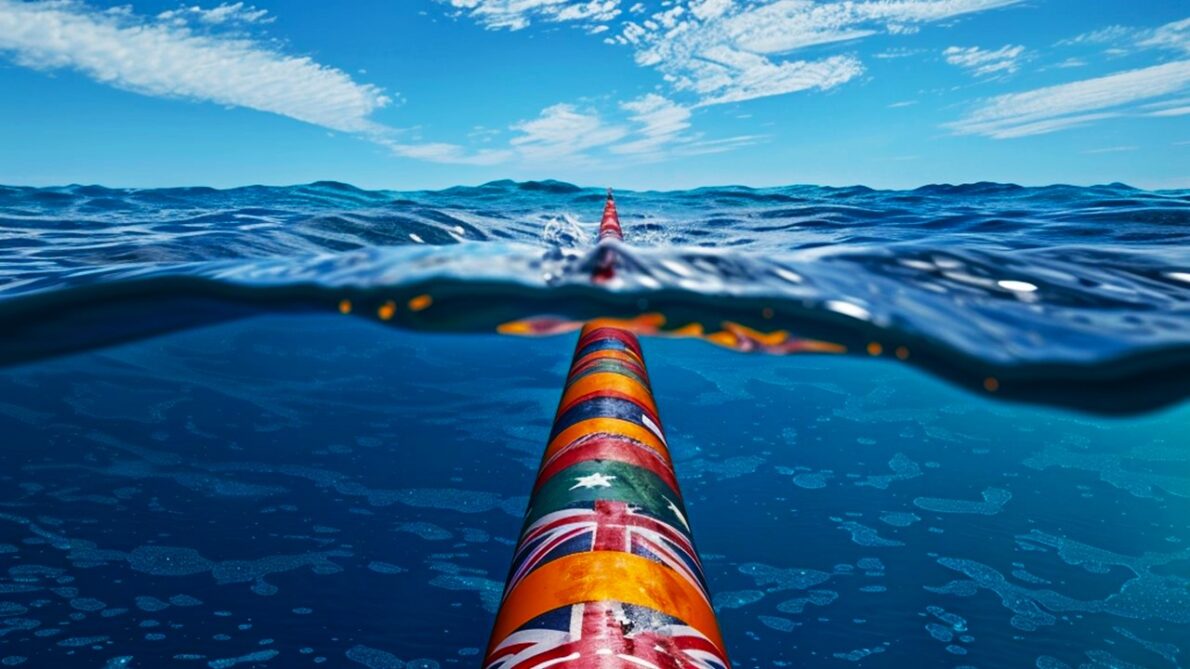

Submarine Cable Australia-Asia Power Link Obtains Environmental Approval in Australia and Represents a Milestone in Clean Energy Generation Worldwide
The world’s largest renewable energy transmission project has just received approval from environmental authorities in Australia. Known as “Australia-Asia Power Link”, this revolutionary initiative aims to send solar energy from Australia to Singapore via a 4,300-kilometer submarine cable. Led by SunCable, the project promises to transform how renewable energy is transmitted and utilized, ensuring a reliable and competitive energy source, according to the website Olhar Digital.

Details of the Clean Energy Transmission Project via Submarine Cable
The Australia-Asia Power Link project is ambitious in its essence and scope. Here are the key points that stand out:
- Transmission of 1.75 GW of Clean Energy: Solar energy will be transmitted through 4,300 km of submarine cables, connecting Australia to Singapore.
- Construction of a Gigantic Solar Farm: In northern Australia, a solar farm will be built with a capacity to generate up to 10 gigawatts of energy.
- 800 km Overhead Transmission Line: In addition to the submarine cable, there will be an overhead transmission line connecting the Darwin station to the border with Indonesia.
- Energy Storage: The project also includes local storage capacity, aiming to enhance the efficiency and reliability of energy supply.

Approval and Next Steps
The environmental approval granted allows SunCable to begin the installation of the submarine cable from a station in Darwin, the capital of the Northern Territory of Australia, extending to the border with Indonesia. The company’s director, Cameron Garnsworthy, emphasized that this approval is crucial to advancing the project’s development, commercial, and engineering activities.
-
Renewable energy advances over protected areas in Brazil, and a survey by the Energy Transition Observatory reveals silent impacts that challenge environmental conservation and pressure sensitive traditional territories.

-
Rio Grande do Sul accelerates energy transition: State invests in renewable technologies and consolidates decarbonization strategies and pathways to attract billions in new industrial investments.

-
With 160,000 m² of collectors, an area larger than 20 football fields, Silkeborg, in Denmark, hosts a solar thermal plant that heats 19,500 homes and could become the largest solar heating plant in the world.

-
A study reveals the expansion of renewable energy procurement in Brazil and shows how companies are taking advantage of opportunities to reduce expenses, ensure energy efficiency, and strengthen strategic environmental commitments.


However, there are still significant challenges ahead. SunCable needs to negotiate land use with local owners, secure agreements with other regulatory bodies, and ensure the financial support necessary for this ambitious endeavor.
Promising Future for Solar Energy
The project’s future plans include expanding the generation capacity to 20 gigawatts of peak solar energy and between 36 to 42 GWh of battery storage. This expansion will allow an even greater amount of clean energy to be transmitted efficiently and reliably. The goal is to begin supplying electricity to Singapore at the start of the next decade, marking a significant step towards global sustainability.








Só faltou o vídeo ser Ia tbm skskskks, boa matéria, de modo geral