





 Portuguese
  English
  Spanish
  7 min of reading
  1 comment


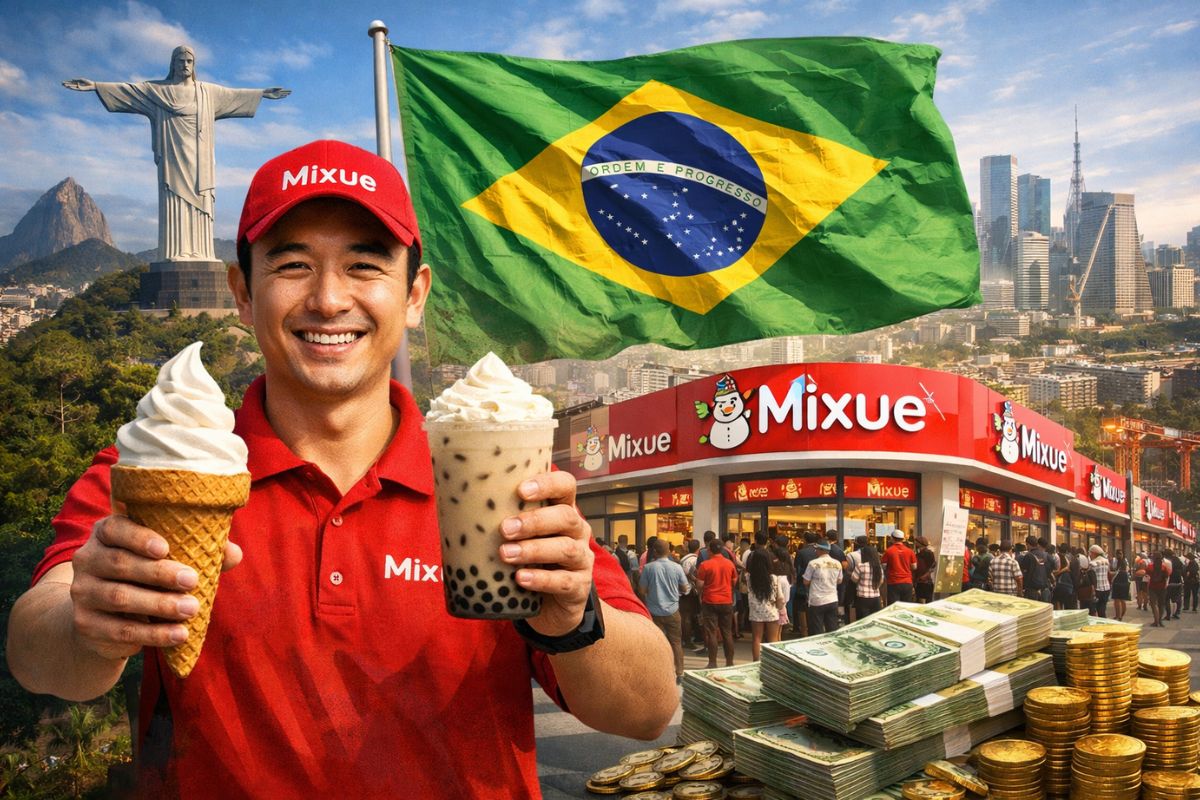

The Largest Fast Food Chain In The World Mixue Enters The Brazilian Market With First Store Scheduled For April, Plan To Invest R$ 3.2 Billion, Goal To Open Units In Different Stages And Promise To Create 25,000 Jobs, While Positioning Brazil As A Latin American Expansion Axis On The Continent.
The largest fast food chain in the world Mixue will begin its operation in Brazil with the opening of its first store at Shopping Cidade São Paulo, on Avenida Paulista, in a move that brings together commercial expansion, job creation, and a long-term project aimed at the Latin American market. Mixue’s entry draws attention not only for the size of the brand but also for the extent of the announced plan for the country.
With plans to invest R$ 3.2 billion and create 25,000 jobs by 2030, the company signals that its arrival in Brazil will not be isolated nor limited to an inaugural unit. What is at stake is a structured operation that combines store openings, menu adaptation, collaboration with national agricultural production, and using Brazilian territory as a strategic base to grow in the region.
Mixue’s Debut In Brazil Marks More Than The Opening Of A New Store
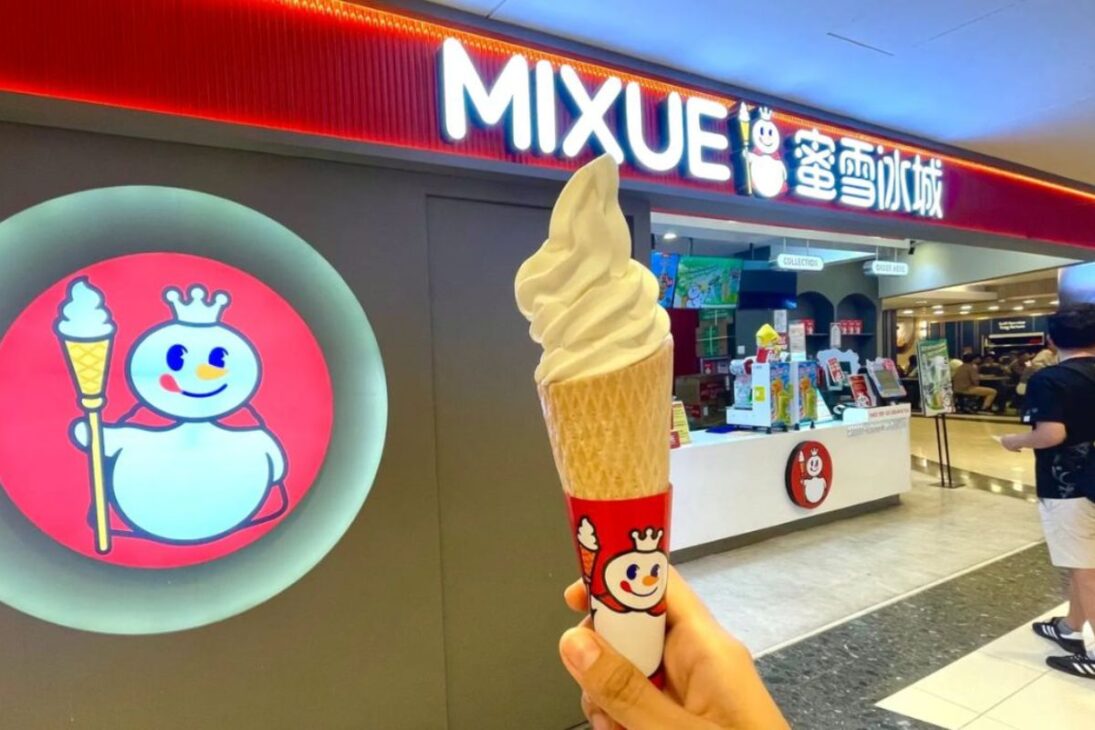
According to the portal NDMAIS, choosing Shopping Cidade São Paulo as the debut point places the brand’s first operation in one of the most symbolic areas of the capital. Opening the inaugural unit on Avenida Paulista gives Mixue’s arrival strategic weight, as it concentrates visibility, intense consumer circulation, and immediate association with one of the main economic centers in the country. This is not just about opening a door to the public, but starting operations at an address capable of serving as a showcase for the brand.
-
Larger than entire cities in Brazil: BYD is building a 4.6 km² complex in Bahia with a capacity for 600,000 vehicles per year, but the discovery of 163 workers in conditions analogous to slavery has shaken the entire project.

-
With an investment of R$ 612 million, a capacity to process 1.2 million liters of milk per day, Piracanjuba inaugurates a mega cheese factory that increases national production, reduces dependence on imports, and repositions Brazil on the global dairy map.

-
Brazilian city gains industrial hub for 85 companies that is equivalent to 55 football fields.

-
Peugeot and Citroën factory in Argentina cuts production by half and opens a layoff program for more than 2,000 employees after Brazil drastically reduced purchases of Argentine vehicles.


The announcement also reinforces that Brazil was chosen to fulfill a larger role within the company’s international design. Rather than just acting as a new consumer market, the country appears as a future expansion base for Latin America.
This helps explain why the project was presented with robust numbers from the outset. The combination of billion-dollar investment, store opening schedule, and job creation indicates that the company intends to build a lasting presence, not just test acceptance.
The chain’s entry into the country was consolidated during President Luiz Inácio Lula da Silva’s official visit to Beijing in 2025. In this context, the operation also gained institutional and economic dimensions, especially as it was associated with the potential to move Brazilian production chains.
This detail changes the interpretation of the business, as the brand’s arrival is no longer seen solely as retail food expansion and starts to involve effects on production, supply, and circulation of goods.
Why The Largest Fast Food Chain In The World Surpasses Giants That Seem Much Larger
The strength of Mixue lies in the volume of units. With over 45,000 stores spread across 14 countries, the company ranks ahead of more globally recognized brands like McDonald’s, Starbucks, and Subway when the observed criterion is the absolute number of points of sale. This data helps understand why the expression largest fast food chain in the world gained prominence in the announcement of its arrival in Brazil. The brand may not yet have the same local recognition as traditional competitors, but its operational size places it on another level.
This expansion was built upon a very specific model. Founded in 1997 by Zhang Hongchao as a small shaved ice stall, the company grew in Asia supported by affordable prices and a simplified business structure.
The network’s advancement did not arise from luxury or sophistication, but from the ability to scale a mass consumption proposal with a replicable operation. This type of strategy tends to gain strength precisely in broad markets, with significant urban circulation and strong price sensitivity.
In the Brazilian case, this history matters because it reveals the type of positioning that can guide the network’s entry. Rather than seeking a premium niche, the company tends to approach a broader audience, focusing on popular appeal products and accelerated expansion. This helps explain why the announcement mixes such high numbers of investment and employment with a menu centered on frozen desserts and beverages. The model seems to aim at scale, recurrence, and capillarity, three decisive factors for those seeking to expand rapidly.
The 25,000 Jobs Show The Real Dimension Of The Project Until 2030
The forecast to create 25,000 jobs by 2030 transforms Mixue’s arrival into something larger than a simple inauguration. This volume suggests a growth plan in stages, with the opening of new units over the coming years and the need for operational structure to support the network.
Although the announcement does not detail the distribution of these opportunities, the number alone indicates a project capable of mobilizing hiring, training, store operation, logistics, and administrative support.
It is also important to note that job creation is linked to an investment of R$ 3.2 billion in the national market. When these two elements emerge together, the signal is clear: the company is not just announcing intent, but a high-level implementation agenda. Employment, investment, and expansion emerge as parts of the same package, reinforcing the perception that the company wants to gain space in a structured manner. In the food retail environment, plans of this scale typically require a consistent rhythm of opening and standardization.
At the same time, the impact of the announcement involves the expectation it creates around the job market. In a sector known for its high turnover and constant need for labor, the arrival of a network with this goal is likely to attract attention from those seeking their first job, re-employment, or new opportunities in major urban centers.
Even though the details of the roles and hiring stages have not been presented, the projected volume already changes the weight of the news, as it shifts the discussion from curiosity about the brand to the concrete effect it can produce.
Ice Creams, Bubble Tea And Local Fruits Should Define The Identity Of The Brazilian Operation
In Brazil, the initial focus of the operation will be the production of frozen desserts and beverages like bubble tea. This focus helps differentiate the company’s performance within the national market, as it points to an entry based on quick consumption, accessible pricing, and products with strong visual and climatic appeal. In a country with high temperatures for much of the year, the bet on frozen items seems coherent with the pursuit of popular reach. The menu, in this case, serves as both an adaptation and scaling strategy.
The company also promises a tropicalization of the offerings, with special beverages made from local fruits and coffee. This movement is relevant because it shows that the Brazilian operation will not automatically replicate the same model applied in other countries. By incorporating ingredients and references closer to national tastes, the brand seeks to reduce the cultural gap between its original portfolio and Brazilian consumer behavior. This does not mean abandoning its identity, but adjusting the proposal to facilitate acceptance and frequency.
This adaptation is also connected to a broader economic point. When the brand signals interest in Brazilian fruits and integration with local production chains, it makes clear that the menu can also serve as a commercial bridge. What goes into the cup and dessert now has a direct relationship with national production, giving the project a broader scope than just a simple franchise expansion. The operation no longer relies solely on the store’s showcase and approaches the logic of large-scale supply.
Brazil Enters The Company’s Map As A Platform For Latin America And Link To Agriculture
The plan to use Brazil as a strategic headquarters for the future Latin American operation may be the most important aspect of the entire movement.
This decision means that the country was not chosen solely for the size of its consumer market, but also for its potential to function as a regional coordination center. In other words, the arrival of the largest fast food chain in the world has immediate commercial value, but also serves as a base for a subsequent stage aimed at expansion into other markets on the continent.
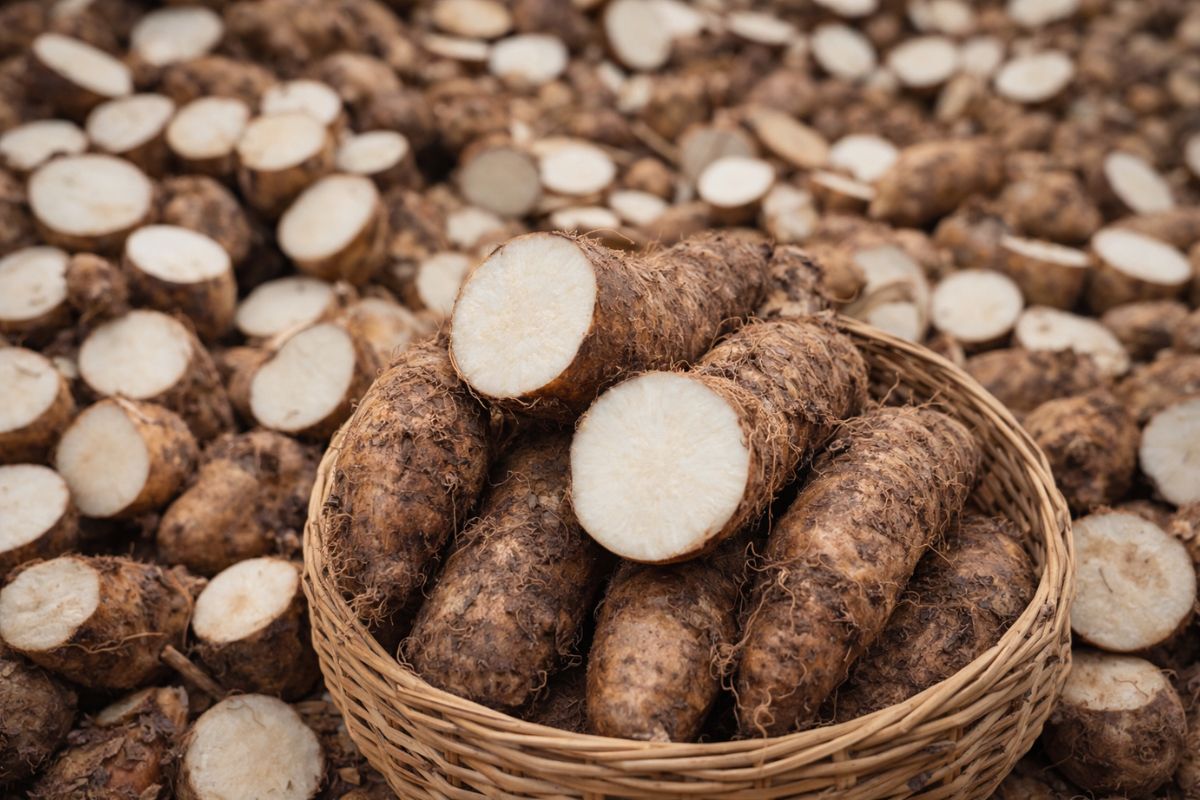
This design gains even more strength with the information that, starting in 2027, the company is expected to begin directly purchasing Brazilian agricultural products to supply units around the world. This point brings the network’s entry closer to a broader logic of integration between food, industry, and export.
Brazil appears not only as a sales location but as a potential supplier within the company’s global chain. For a country with historical weight in agriculture, this type of connection amplifies the announcement’s relevance.
The final reading is that the project involves three layers simultaneously: retail, employment, and supply. The store opening in April is the most visible face, but behind it is a more extensive mechanism that includes billion-dollar investment, network formation, portfolio adaptation, and the use of national inputs. When these factors come together, the news ceases to be just about a foreign brand reaching Brazil and becomes about how a global operation intends to fit in, grow, and influence different sectors of the local economy.
Mixue’s arrival in Brazil brings together international scale, a promise of rapid expansion, and potential impact on consumption, jobs, and production. What begins with a store in São Paulo could transform over the coming years into a much broader operation, with repercussions in retail and the agricultural chain.
It remains to be seen how the public will react to the brand’s debut and whether the announced plan will be executed at the projected pace. Do you believe that the largest fast food chain in the world will quickly gain space in Brazil or will it face barriers in the national market?






Fast Food tem que ter sanduíche.
Chá e sorvete não é Fast Food.