





 Português
  Inglês
  Espanhol
  5 min de leitura
  0 comentários


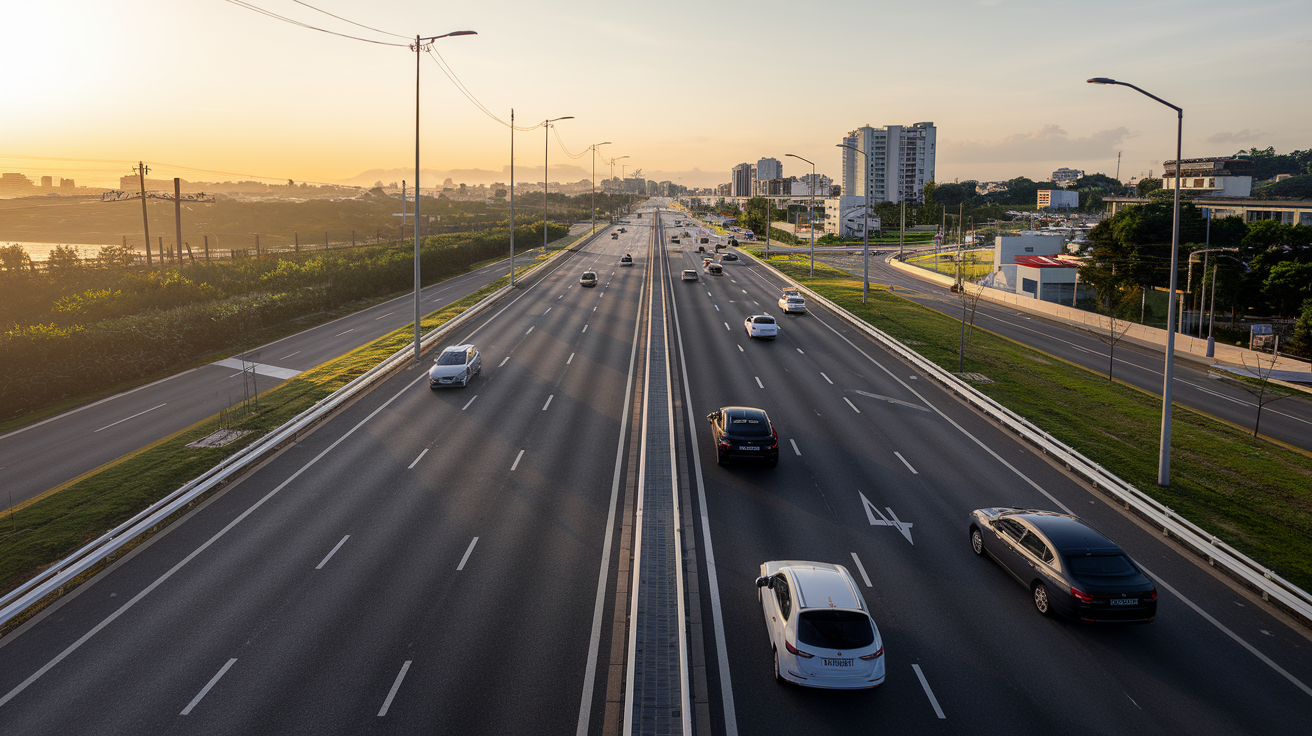
Starting March 30, tolls in São Paulo will have a reduction of up to 35.5%! That’s right, drivers using the Castello Branco and Raposo Tavares will pay much less.
The government of São Paulo announced an important reduction in toll rates on some of the state’s highways.
According to the state government, the tolls for the Sorocabana and Nova Raposo lots, which have recently been granted to the private sector, will have a reduction of up to 35.5% in rates.
The change, which was announced this Friday (21), will directly affect drivers using important sections of the Castello Branco and Raposo Tavares highways.
-
Brazilian city gains industrial hub for 85 companies that is equivalent to 55 football fields.

-
Peugeot and Citroën factory in Argentina cuts production by half and opens a layoff program for more than 2,000 employees after Brazil drastically reduced purchases of Argentine vehicles.

-
A Brazilian city gains a factory worth R$ 300 million with the capacity to process 200 thousand tons of wheat per year, a mill of 660 tons/day, silos for 42 thousand tons, and an industrial area of 276 thousand m².

-
Havan will leave the shopping mall in Blumenau to inaugurate something that the chain has never done before: a megastore in half-timbered style in the Historic Center of the city, which is expected to be completed in May and change the landscape of local retail.


This measure comes with a series of changes to the charging model, which promises to transform the way drivers pay for the concessions.
Ecorodovias, the company that took over the concession of 92 kilometers of highways, including sections of Raposo Tavares (SP-270) and Castelo Branco (SP-280), will adopt the free flow system.
In this new charging model, the driver pays according to the distance traveled, instead of paying a fixed rate at each toll plaza.
The change will be implemented on the coming Sunday, March 30, when the new rates will take effect.
The toll rates for automatic lanes, those with the non-stop payment system, will have a reduction of up to 35.5%.
The São Paulo State Transportation Agency (Artesp) reported that the new toll structure was designed to mainly benefit drivers using these automated systems, who, due to efficiency and speed, will receive more advantageous discounts.
Additionally, the São Paulo government highlighted that manual tolls, those that require the vehicle to stop, will also undergo adjustments, but in a more moderate manner.
The rates for these booths will be reduced by between 19.8% and 21.4%, depending on the stretch.
What Changes with the Reduction of Toll Rates?
The changes in toll rates directly affect drivers traveling on the highways under Ecorodovias’ concession.
The Castello Branco and Raposo Tavares highways, which are some of the most important in the state of São Paulo, experience heavy traffic, especially on the stretch between the capital and the interior of São Paulo.
The reduction in rates will be significant, positively impacting costs for those traveling on these roads.
To exemplify the magnitude of the change, let’s compare the rates before and after the reduction.
In the Sorocabana lot, which includes the Castello Branco highway, the toll at the Itu plaza (km 72.8) will decrease from R$ 15.80 to R$ 11.97 for automatic lanes, representing a drop of 24.2%.
For manual booths, the price will drop from R$ 12.60 to R$ 12.60, representing a reduction of 20.2%.
Another relevant stretch is the toll in São Roque, also on the Castello Branco highway, which will see a decrease of 23.8% for automatic lanes and 19.8% for manual lanes, going from R$ 12.60 to R$ 9.59 for automatic and R$ 10.10 for manual.
Drivers using the José Ermírio de Moraes highway (SP-075) will also feel the positive impact, with tolls decreasing from R$ 9.00 to R$ 6.74 for automatic lanes and from R$ 7.10 to R$ 7.10 for manual.
In the Nova Raposo lot, which includes sections of Castello Branco, the reduction is even more expressive.
The toll in Osasco, which was R$ 5.90, will drop to R$ 3.80 for automatic lanes and R$ 4.00 for manual lanes, representing a decrease of up to 35.5%.
The change that promises to please drivers is the implementation of the free flow model, which allows drivers to pay more fairly, according to the distance traveled instead of a fixed rate.
This model aims to promote greater agility at toll plazas, especially on busier highways, where congestion and wait times at tolls are common.
Free Flow System: What Changes for Drivers?
The new charging system adopted on the highways in São Paulo promises to be more efficient for drivers and financially advantageous.
With the free flow model, drivers pay for the stretch traveled and no longer for passing through each toll plaza.
The main benefit is for those using automatic booths, who will incur lower costs.
Charging will be conducted through portals, and the rates will be lower than current ones, promoting a reduced price throughout the journey.
This model is especially advantageous for drivers traveling long distances.
Current rates, which are fixed per toll plaza, often penalize those traveling long stretches, but with the introduction of free flow, drivers will only pay the amount corresponding to the distance actually traveled.
How Will the New Rates Be Implemented?
The new rates, which have already been defined, will officially take effect on March 30.
They will affect the tolls of 92 kilometers of highways under the Ecorodovias concession.
The changes will also be published in the Official State Gazette on the next March 24, to ensure that the implementation occurs in a transparent and organized manner.
The government of São Paulo hopes that the reduction in toll rates will bring benefits not only for drivers but also for the flow of vehicles on the highways, reducing congestion and increasing traffic fluidity, especially during peak hours.
Additionally, with the change, the highways may become more competitive, offering a viable and economical alternative for those traveling between regions.
The Impact for Drivers and Highways
With reduced toll costs, it is expected that the number of vehicles on the roads will increase.
This could provide relief for drivers who struggle with high travel costs in São Paulo, where toll prices are traditionally higher than in other states in Brazil.
The changes should also help reduce operational costs for transportation companies, which may reflect in lower prices for the final consumer.
However, although the free flow model brings more efficiency and fairness in charging, the installation of new charging portals on the highways may incur additional costs in the short term.
Nevertheless, the expectation is that these initial investments will yield returns in the future, with less congestion and greater payment agility.
Economic Impact of Toll Reduction
In economic terms, this change in tolls could have a significant impact on the local economy, especially in the transportation sector.
The reduction in travel costs may encourage an increase in business and tourism trips, as well as benefit consumers through lower freight prices.
While the changes provide relief for drivers, it will be interesting to observe how the new charging system is accepted by the public, especially in the first months following implementation.
In the future, it will be important to evaluate how the reduction in tolls will impact traffic and the quality of the highways.
What do you think about this reduction in rates? Do you believe that the implementation of the free flow model will improve traffic on the highways of São Paulo? Leave your opinion in the comments!








Seja o primeiro a reagir!