





 Portuguese
  English
  Spanish
  4 min of reading
  0 comments


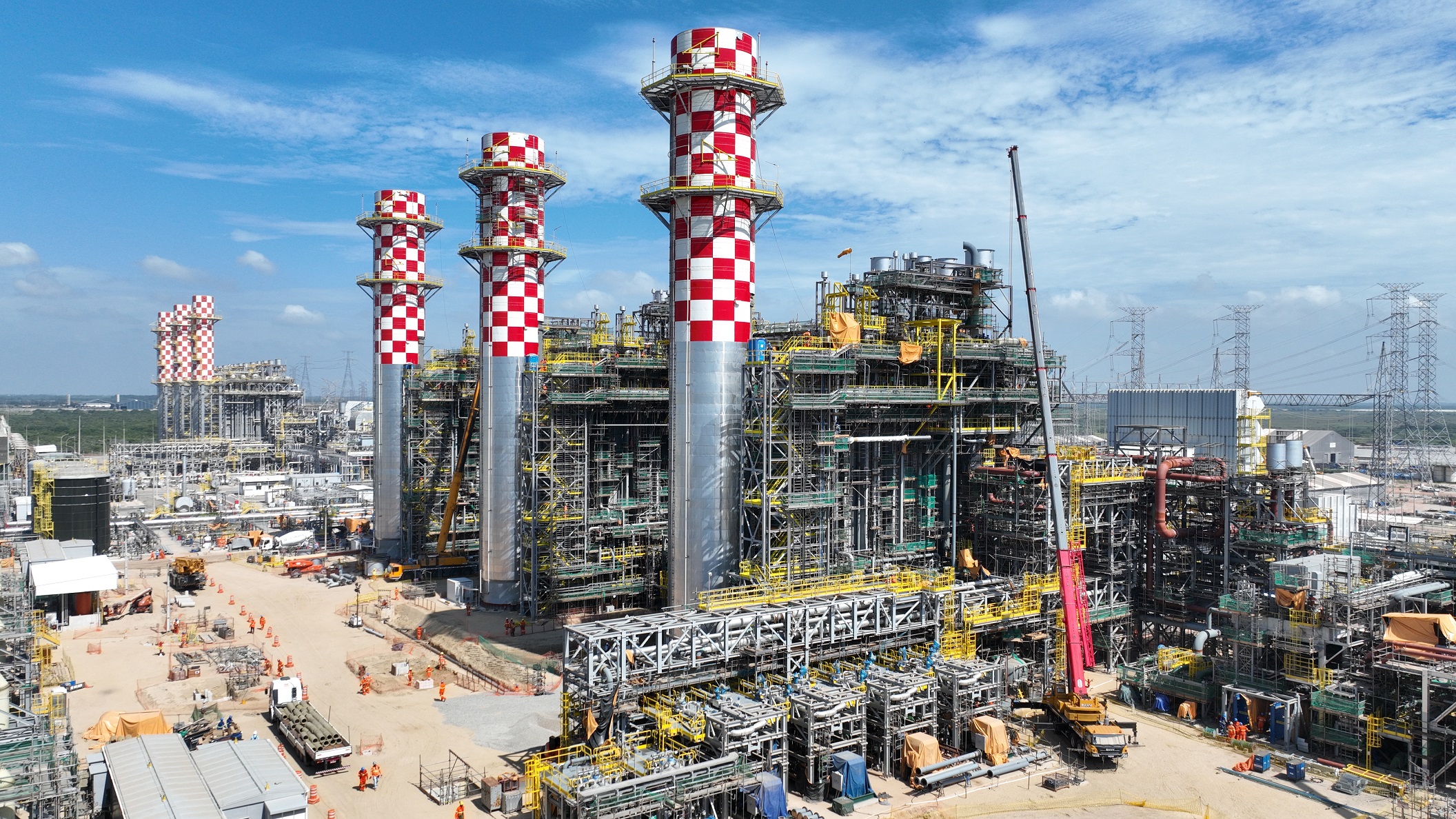
Clean Energy, Jobs, and Innovation: Meet GNA II, Megaproject in RJ Transforming LNG into Electric Power with Combined Cycle and Pioneering Use of Desalinated Water
The GNA II Thermal Power Plant, located at the Port of Açu in São João da Barra (RJ), is about to become the largest natural gas thermal power plant in Latin America in installed capacity. With 1,672 megawatts (MW) of power, the project strengthens the diversification of the Brazilian energy matrix while boosting regional development, integrating technological innovation, environmental sustainability, and the generation of skilled jobs.
Its construction and future operation are part of an energy mega-complex that includes the GNA I UTE, already in operation since 2021, and the liquefied natural gas (LNG) regasification terminal. Together, the two plants will form one of the world’s largest private natural gas power generation hubs.
Billion-Dollar Investments and Strategic Partnerships
The GNA II UTE is the result of a consortium between companies with national and international capital: Prumo Logística (controlled by the EIG Global Energy Partners fund), the British energy giant BP, Siemens Energy, and the Chinese state-owned company SPIC Brasil. This alliance demonstrates the confidence of foreign investors and the national financial sector in Brazil’s energy potential.
-
Renewable energy advances over protected areas in Brazil, and a survey by the Energy Transition Observatory reveals silent impacts that challenge environmental conservation and pressure sensitive traditional territories.

-
Rio Grande do Sul accelerates energy transition: State invests in renewable technologies and consolidates decarbonization strategies and pathways to attract billions in new industrial investments.

-
With 160,000 m² of collectors, an area larger than 20 football fields, Silkeborg, in Denmark, hosts a solar thermal plant that heats 19,500 homes and could become the largest solar heating plant in the world.

-
A study reveals the expansion of renewable energy procurement in Brazil and shows how companies are taking advantage of opportunities to reduce expenses, ensure energy efficiency, and strengthen strategic environmental commitments.


The total investment in GNA II is estimated at R$ 7 billion, of which R$ 3.93 billion was financed by BNDES through the issuance of infrastructure debentures. This is one of the largest structured operations in the country’s energy sector, focusing on sustainable and long-term projects. The project is also part of the Novo PAC (Growth Acceleration Program), launched by the Federal Government to encourage investments in infrastructure.
In addition to financial support, the project has logistical and institutional support from Prumo Logística, responsible for developing the Port of Açu — essential infrastructure for the flow and supply of the thermal complex.
High Technology: LNG and Combined Cycle with World-Class Efficiency
GNA II will use liquefied natural gas as its main fuel, which will be imported by methane ships and unloaded at the regasification terminal operated at the Port of Açu. After the regasification process, the fuel will go to the plant’s turbines.
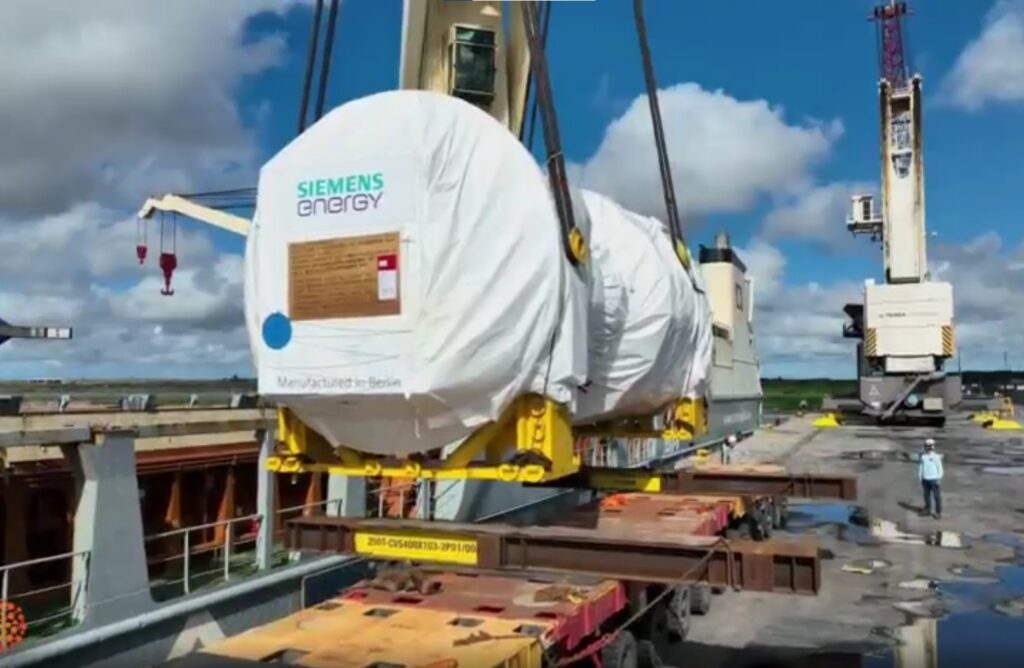
The adopted model is combined cycle, which utilizes three gas turbines and one steam turbine, all supplied by Siemens Energy. In this configuration, the hot gases generated by the combustion of natural gas are reused to heat water and generate steam, activating an additional turbine. This technology elevates the plant’s efficiency to over 60%, a high level for thermal power plants.
The connection to the National Interconnected System (SIN) will be made through a 500 kV transmission line, ensuring that the generated energy safely reaches the country’s main load centers, such as the Southeast and Northeast states.
Sustainability: Environmental Innovation with Desalination and Emission Control
GNA II is an example of how it is possible to align thermal power generation with sustainable practices. One of the plant’s differentiators is the use of a seawater desalination system to supply its industrial processes. This eliminates the need to source water from rivers or aquifers, reducing impacts on local water resources.
The project also has a robust environmental management program, which includes monitoring of atmospheric emissions, air quality, noise, biodiversity, and waste management. The project was licensed by the State Institute of the Environment (INEA) and recently obtained its operating license with a favorable technical opinion, as reported by Petronotícias.
In addition, GNA is committed to the ESG agenda, with annual sustainability reports and investments in social actions alongside surrounding communities, such as environmental education, technical courses, and income generation.
Jobs, Revenue, and Regional Development
During the construction phase, GNA II generated over 5,000 direct and indirect jobs, prioritizing the hiring of local labor. The company also invests in professional training, in partnership with SENAI, to prepare technicians and operators to work in the plant and industrial ventures in the region.
With the start of operations, it is expected to maintain hundreds of skilled jobs, in addition to a significant increase in tax revenue for the municipalities of São João da Barra and Campos dos Goytacazes.
This economic boost creates a value chain that involves service and material suppliers, hotels, restaurants, and transportation companies, consolidating the Port of Açu as a vector for development in Northern Fluminense.
Strategic Role in Brazil’s Energy Matrix
The geographical position of GNA II, associated with the logistical structure of the Port of Açu, gives the project a central role in Brazil’s energy strategy. The port allows the arrival of LNG by sea, eliminating dependence on long and expensive land pipelines, in addition to facilitating the export of energy surpluses.
Diversifying the energy matrix with natural gas is an essential step for Brazil’s energy transition, especially during drought periods that impact the performance of hydroelectric plants. In this regard, GNA II offers energy stability and security, reducing the need to use more polluting and costly sources, such as fuel oil and coal.








Seja o primeiro a reagir!