





 Portuguese
  English
  Spanish
  5 min of reading
  0 comments


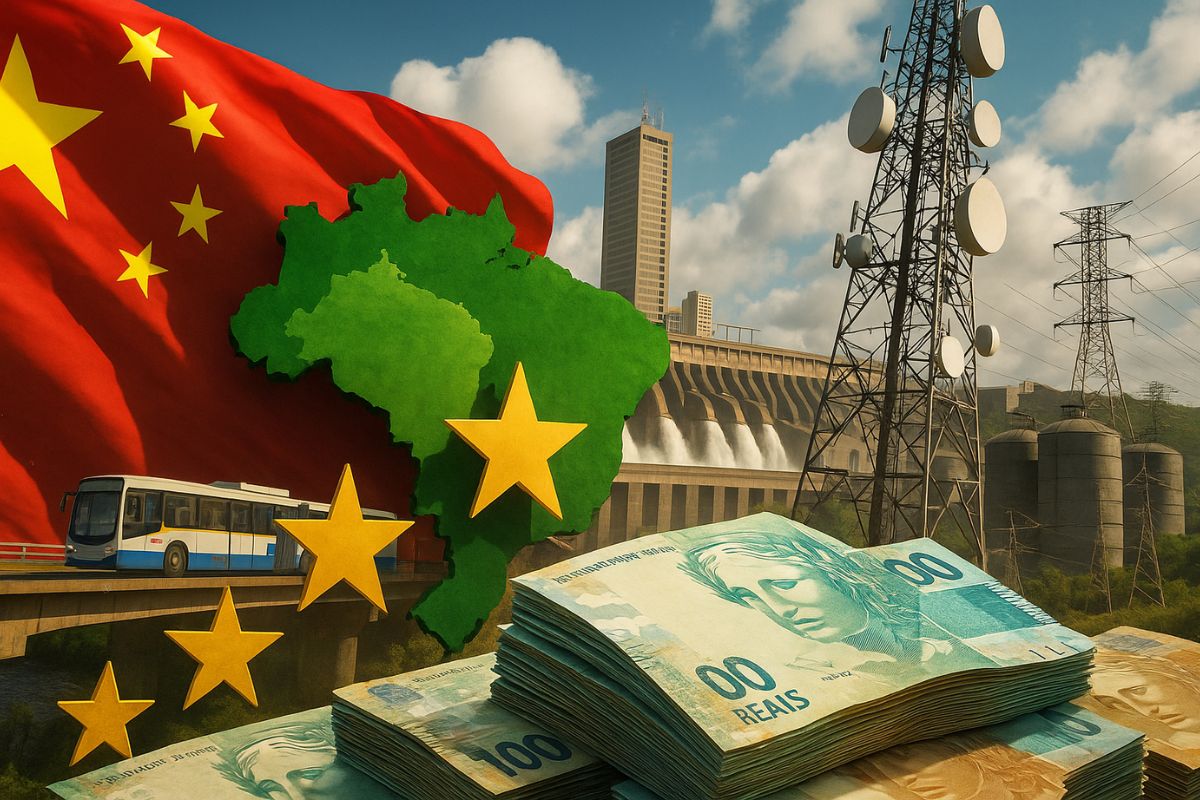
Chinese Companies Expand Presence in Energy, Technology, and Infrastructure, with Public Investment Intentions that Could Reach R$ 200 Billion by 2030, Led by Groups Such as State Grid, CTG, SPIC, CCCC, E-commerce Platforms Such as Shopee, Temu, Shein, and AliExpress, as Well as Movements in Mobility, Agriculture, and Services that Reposition Strategic Chains in the Country
Chinese companies have already surpassed 200 operations in Brazil, with accelerated expansion in energy, infrastructure, technology, services, and agriculture. The movement involves billion-dollar investments and entry into segments considered critical for the country’s competitiveness, from electricity transmission to marketplaces, including logistics and urban mobility.
By 2030, investment intentions disclosed by different groups indicate a potential of R$ 200 billion additional, with projects ranging from transmission lines to structural works, as well as factories and distribution centers. The bet is long-term and targets both the domestic market of 215 million consumers and Brazil’s insertion into global chains.
Who is Coming, How Much They Plan to Invest, and Where They Operate
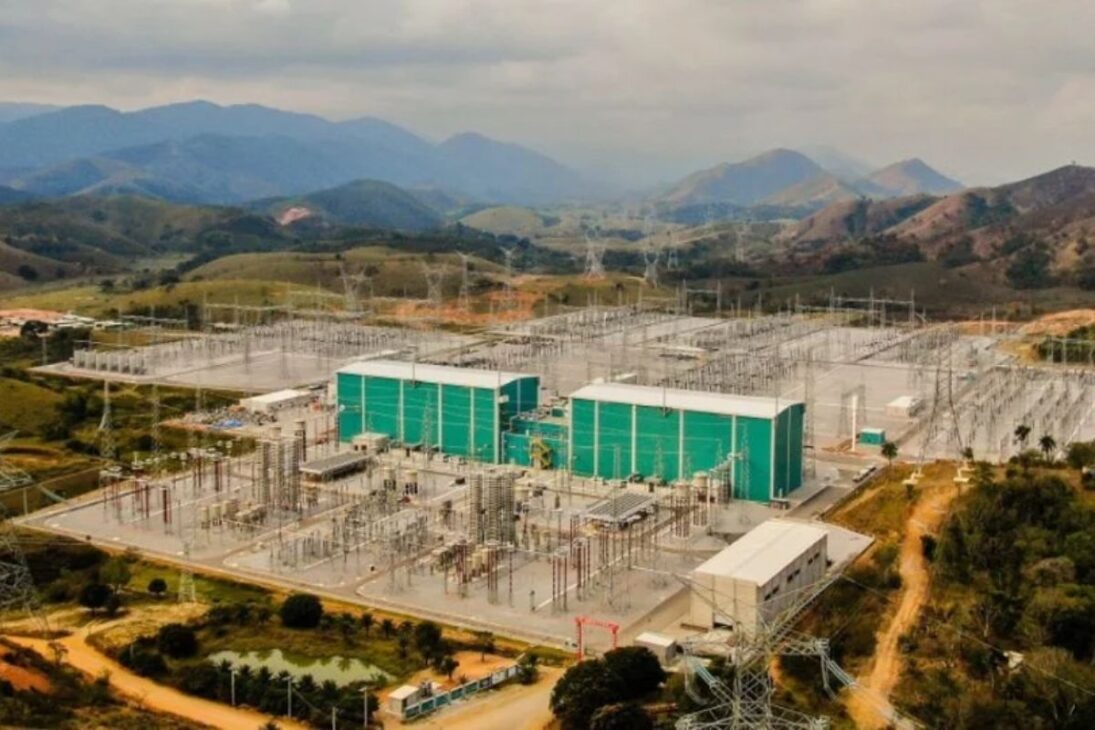
The advancement of Chinese companies occurs on multiple fronts. According to CNN, State Grid has expressed intention to invest R$ 200 billion in Brazil, strengthening its position in energy transmission.
-
A new Brazilian shopping center worth R$ 400 million will be built in an area equivalent to more than 4 football fields, featuring 90 stores, 5 cinemas, a supermarket, a college, and parking for 1,700 cars, potentially generating 3,000 jobs.

-
Larger than entire cities in Brazil: BYD is building a 4.6 km² complex in Bahia with a capacity for 600,000 vehicles per year, but the discovery of 163 workers in conditions analogous to slavery has shaken the entire project.

-
With an investment of R$ 612 million, a capacity to process 1.2 million liters of milk per day, Piracanjuba inaugurates a mega cheese factory that increases national production, reduces dependence on imports, and repositions Brazil on the global dairy map.

-
Brazilian city gains industrial hub for 85 companies that is equivalent to 55 football fields.


CTG Brasil, a subsidiary of China Three Gorges, operates in clean energy and expands its portfolio with a focus on hydropower and renewable sources. SPIC Brasil accelerates wind and solar projects with million-dollar disbursements in different states.
In infrastructure, CCCC targets large-scale projects such as the Santos-Guarujá Tunnel and the Salvador-Itaparica Bridge.
The strategy is to address logistical bottlenecks, integrating export corridors and consumption centers, which tends to reduce systemic costs and increase predictability for new investments.
Technology, E-commerce, and Mobility: Platforms and Apps Gain Scale
The Brazilian digital ecosystem attracts Chinese platforms. Shopee, Temu, Shein, and AliExpress rank among the largest in e-commerce, driving competition on price, delivery speed, and catalog curation.
99 and Didi continue to make significant operations in ride-hailing, seeking sustainable market share in a highly competitive market.
According to G1, the delivery service, Meituan (Kita), announced its arrival in Brazil in 2025 to compete with local leaders.
The presence of Chinese companies in digital services is expected to boost investments in technology, payment methods, last-mile logistics, and data centers, creating new growth routes for online retail and mobility.
Agriculture, Energy, and Infrastructure: Why They Are Key Sectors
Agriculture remains central to Chinese companies, focusing on food security and export chains.
The interconnection between ports, railways, and highways is viewed as a lever to unlock productivity and reduce costs. In energy, the focus is on renewables and transmission, areas where Brazil has abundant resources and scalable projects.
Infrastructure is a pillar of the strategy to increase logistical efficiency and attract industry, while also mitigating risks from currency volatility and freight costs.
The logic is to integrate productive investment with commercial reach, anchoring the presence of Chinese companies in the long term.
Electric Automotive Industry: Factories and Plans in Implementation
The transition to electric and hybrid vehicles attracts Chinese automakers. BYD advances with a factory in Brazil and related initiatives.
O Globo reported that GWM will invest in plants and technology. GAC is building a factory in Catalão (GO), while Chery and JAC continue to operate in the local market.
The goal is to bring production, distribution, and after-sales closer, reducing timeframes and costs.
This framework accelerates technological diffusion in batteries, electric motors, and vehicle software, increases competition on price and technological content, and pressures suppliers to raise the bar on quality.
Consumers are likely to benefit from more options, while local manufacturers face direct competition for scale and innovation.
Food and Services: Expansion Beyond Classic Sectors
The presence of Chinese companies also reaches food and services. The Michuê network aims to create 20,000 jobs in Brazil by 2030, in a movement of capillarization beyond major centers.
Sector diversification reinforces the understanding that the strategy is not limited to infrastructure and technology but extends to everyday consumption.
For the labor market, new networks and formats are likely to generate jobs and training, while small and medium businesses adjust pricing, experience, and niche to maintain competitiveness.
The competitive dynamic intensifies, and the consumer gains prominence in defining winners through preference and recurrence.
Why Do Chinese Companies Invest So Much in Brazil
Brazil combines abundant natural resources, consumer scale, and a warm environment for international capital.
A market of over 200 million people, widespread use of applications, and energy and infrastructure projects with long-term returns make up an attractive package.
The geopolitical dimension also matters, with strategic partnerships and value chains connecting Brazil and China.
The vision is pragmatic: to consolidate food and energy supply, gain market share in digital platforms, and transfer part of the production closer to the consumer.
The result is a more integrated landscape, with effects on prices, employment, and competitiveness in different regions.
Impacts, Risks, and Debates About Chain Control
The expansion of Chinese companies opens investment, job, and technology opportunities, but raises discussions about competition with national companies and governance of strategic sectors.
Controlling critical stages of energy, logistics, and data can reposition bargaining power in the economy, demanding clear and predictable regulation.
In the short term, the consumer is likely to benefit from lower prices and more options. In the medium and long term, the quality of the competitive environment, industrial policy, and local content requirements will define who captures value.
Transparency and regulatory predictability will be essential to balance capital attraction and national strategic interests.
USA vs. China: How Do They Compare in Investment Paths
In terms of direct investment stock, the United States remains the largest historical investor in Brazil. In recent flows, China has accelerated its presence, elevating the country to the top of destinations in energy, technology, and infrastructure.
This change in pace helps explain why Chinese companies have expanded projects and promises in Brazilian territory.
The practical understanding is that stock and flow tell complementary stories: while American capital sustains a relevant historical base, Chinese advancement is reflected in the speed of new projects.
For Brazil, the challenge is to convert competition for investment into gains in productivity, skilled employment, and innovation.
The presence of Chinese companies is already reorganizing entire sectors in Brazil, from transmission lines to the digital shopping cart, with projects and intentions that could total R$ 200 billion by 2030.
The balance between opportunity and dependence will be determined by healthy competition, effective industrial policy, and stable regulation.
Do you agree with the pace of this expansion of Chinese companies in the country or do you see risks of concentration in strategic chains? Does this movement improve prices, employment, and technology in daily life or pressure local businesses? Leave your opinion in the comments, we want to hear from those who live this in practice.









-

-

-

-

-

43 pessoas reagiram a isso.