





 Portuguese
  English
  Spanish
  3 min of reading
  5 comments


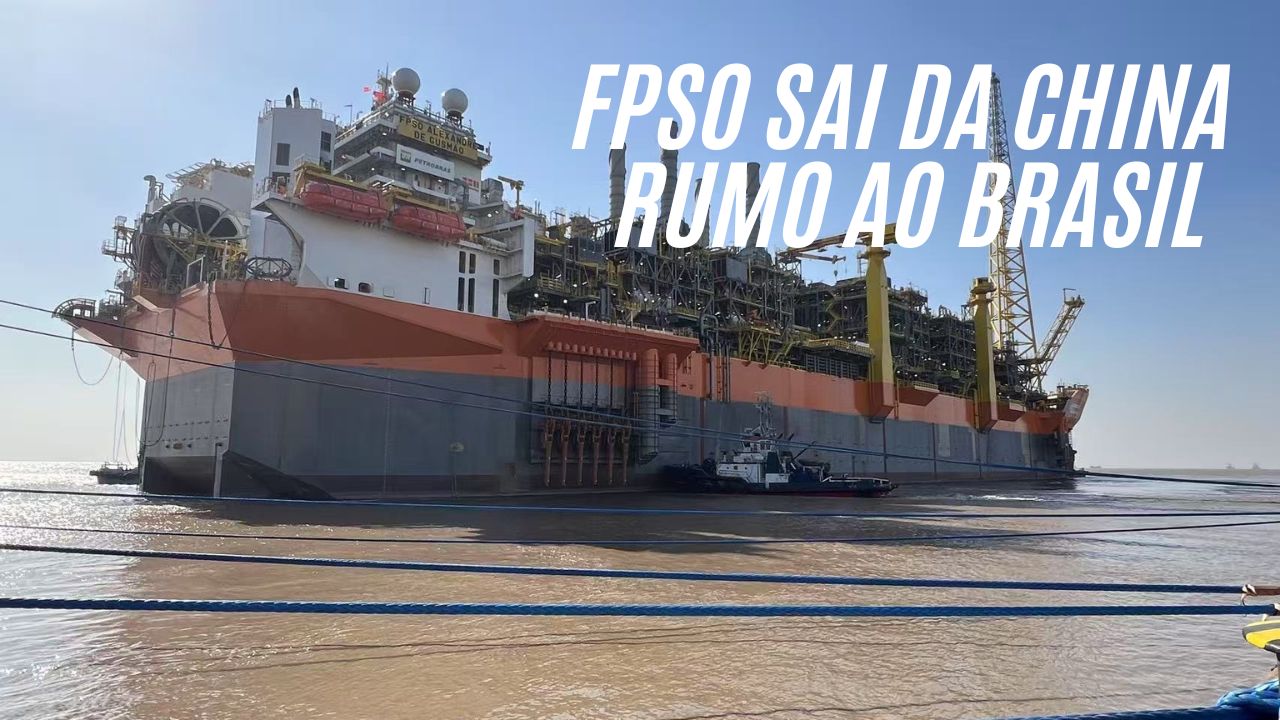


Mero Field Sets Historical Record in Oil and Petroleum Production, Solidifying Itself as One of Petrobras’ Largest Assets in the Pre-Salt.
The Mero Field, located in the pre-salt of the Santos Basin, reached on February 28, 2025 the impressive mark of 500 thousand barrels of oil produced daily. With this number, it became the third largest operating field of Petrobras, behind only Tupi and Búzios.
The Libra Block, where the Mero Field is located, was acquired by the Libra Consortium in 2013. This was the first contract signed under the production sharing regime in Brazil, marking a milestone in the history of the national oil sector.
Currently, four FPSO platforms are in operation in the region. The first of these, FPSO Pioneiro de Libra, began production in 2017. Following that, the FPSOs Guanabara, Sepetiba, and Duque de Caxias began operations, with the FPSO Guanabara currently being the country’s highest producing unit.
-
Offshore industrial demand in Macaé skyrockets with the recovery of oil and gas and could grow by up to 396% by 2026 in the Campos Basin.
-
Offshore industrial demand in Macaé surges with the recovery of oil and gas and could grow by up to 396% by 2026 in the Campos Basin.
-
Brazilian giant expands borders in the Southeast: Petrobras confirms new oil discovery in ultra-deep waters in the pre-salt of the Campos Basin.

-
Alert in the global energy market: Severe tropical cyclone hits the coast and disrupts gas production at major plants in Australia, threatening global supply.

“Since it extracted its first oil, the production of Mero has been marked by technological advancements, innovation, and records. Reaching 500 thousand barrels daily reflects the integrated work of various areas and the new technologies implemented by Petrobras.”
– Magda Chambriard, CEO of Petrobras.
FPSO Alexandre de Gusmão Will Further Increase Production
The expansion of the Mero Field continues. Still in 2025, Petrobras will put the FPSO Alexandre de Gusmão into operation, which left China in December 2024 and is on its way to Brazil. With this new unit, the installed capacity of the field will rise to 770 thousand barrels of oil per day, reinforcing the pre-salt as the main production source of the company, which today represents 81% of the total oil extracted by Petrobras.
The Mero Field is the third largest in Brazil, behind only Tupi and Búzios in terms of oil in place volume. According to Sylvia Anjos, Director of Exploration and Production at Petrobras, investments in technology have been crucial to increase productivity and reduce environmental impacts.
“We are implementing solutions to maximize production while minimizing greenhouse gas emissions, always ensuring operational safety and integrity.”
– Sylvia Anjos, Director of Exploration and Production at Petrobras.
One of the Greatest Achievements of the Brazilian Pre-Salt
The Mero Field was discovered in 2010, located in ultra-deep waters, at a depth of 2,100 meters and 180 km from the coast of the state of Rio de Janeiro. The consortium that manages the field operates under the Production Sharing Contract of Libra, led by Petrobras (38.6%), with participation from Shell Brasil (19.3%), TotalEnergies (19.3%), CNOOC (9.65%), CNPC (9.65%), and Pré-Sal Petróleo S.A (PPSA) (3.5%).
The PPSA also acts as the representative of the Union in the uncontracted area (3.5%), managing the government’s interests in the exploration and production of the field. According to Petrobras’ website, the partnership between these companies is strategic to enhance operational efficiency and ensure the competitiveness of the Brazilian pre-salt in the global market.
With technical advancements and robust investments, the Mero Field is consolidating itself as one of Petrobras’ most promising assets, being one of the major engines of the growth of national oil production in the coming years.








Seria maravilhoso se com toda essa produção de petróleo aqui no Brasil o governo investisse em novas tecnologia nas refinadoras que temos e começasse a produção de gasolina e diesel aqui no Brasil.E passa se a exportar o produto refinado em vez do ****.Trazendo produtividade,mais postos de trabalho e diminuição do preço do combustível aqui no Brasil sem contar com aprovação de nosso próprio gás de cozinha.
O governo anterior começou a dividir a empresa para facilitar a privatização.
Foi vendida uma refinaria, toda a produção de fertilizantes nitrogenados, todos os postos de combustível (BR). O governo atual está tentando reverter este processo.
Já é produzido, tanto pelo refino da Petrobras quanto pela “iniciativa” privada, que iniciativa não teve nenhuma em desembolsar altos volumes de dinheiro em investimento, aproveitando-se de onde liberal para retirar a participação da Petrobras do setor refino no Brasil. O maior número de “player’s” nesse setor, aumentando a concorrência, não representou redução de valores de venda ao consumidor. Em alguns estados como Bahia e Amazonas, ocorreu exatamente o oposto, não havendo concorrência na microrregião, porém, com o controle da produção nas mãos de “privados” (que também não é privado, pois quem adquiriu o complexo de refino foi um fundo estatal árabe – Mubadala) que aumentou o valor dos seus produtos finais. Resumo: reduziu-se a participação da Petrobras no refino e aumentou-se o valor dos produtos refinados.
Os cientistas avisaram em 80 que o dióxido de carbono CO2 havia passado do equilíbrio em ppm parte por milhão e que a partir daí estava só aumentando que tinha que plantar florestas dos biomas no mundo inteiro e mudar política energética para energia limpa,os poderosos gananciosos do petróleo não ouviram e facilitaram o financiamento de venda de automóveis navios avião e aumentaram a produção de petróleo,e com super população destruindo o planeta, planejamento familiar JÁ e plantar florestas dos biomas e mudar política energética para energia limpa o planeta pede socorro não existe mais as quatro estações do.
PPSA, deveria ter uma parte maior nessa divisão