





 Portuguese
  English
  Spanish
  4 min of reading
  0 comments


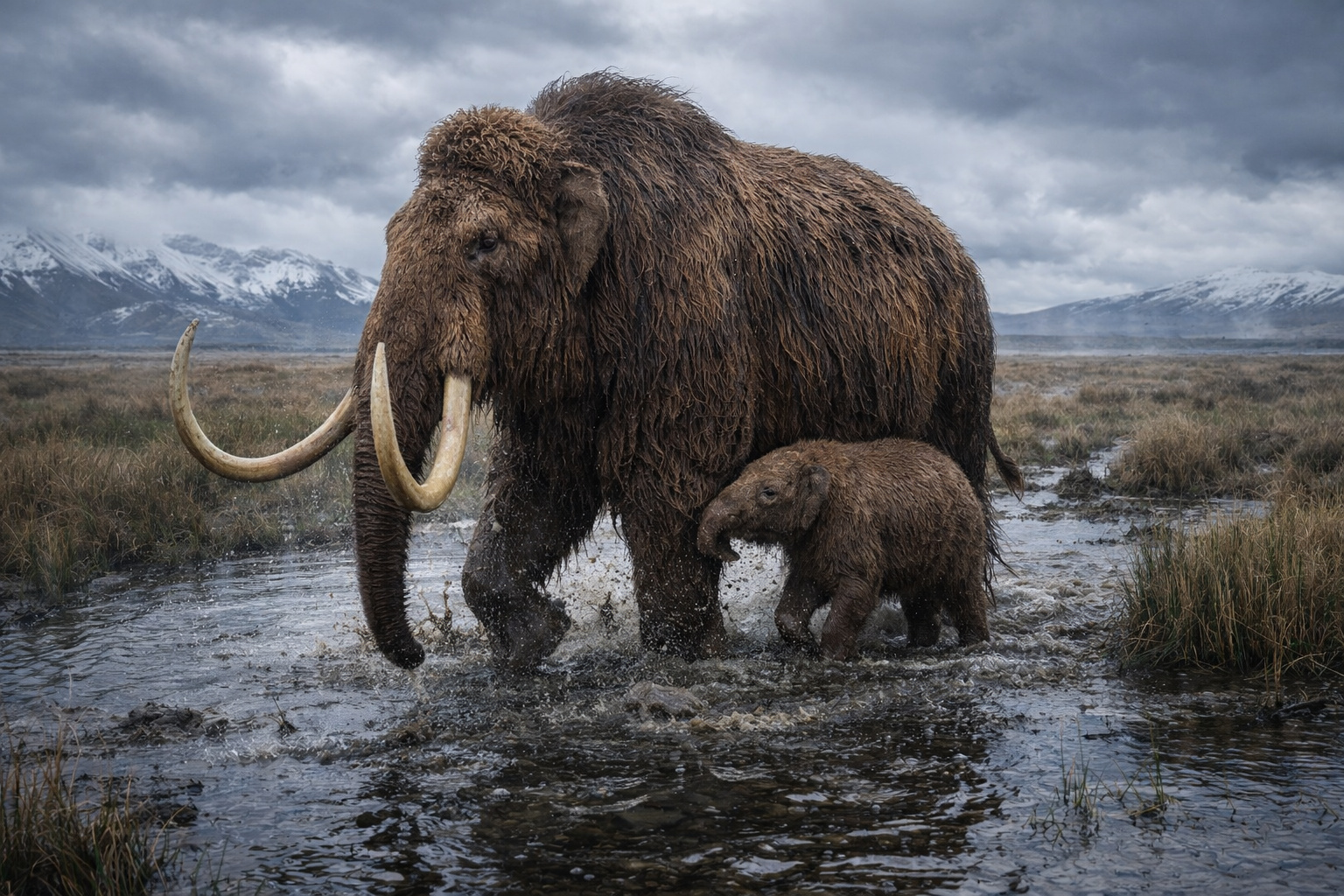
A Frozen Woolly Mammoth Skeleton Of About 10 Thousand Years Was Found Almost Intact, Offering Insights Into Animal And Human Life In The Pleistocene.
When a fossilized woolly mammoth (Mammuthus primigenius) skeleton was recently unearthed, scientists were surprised not only by the preservation of the bones but also by what this find could reveal about the megafauna that shared the planet with the early modern humans and about the environmental changes at the end of the last Ice Age.
This type of discovery — although similar finds have been recorded in other parts of the world — is rare enough to provoke a deep debate among paleontologists, archaeologists, and geneticists. Woolly mammoths roamed widely across Eurasia and North America during the Pleistocene, a period that lasted from about 2.6 million to 11,700 years ago and witnessed repeated glaciations and the expansion of Homo sapiens across the planet.
A Giant Of The Ice Age, Preserved By Time
The woolly mammoth was one of the largest mammals of its time: adult individuals could weigh over 6 tons and stand over 3 meters tall at the shoulder, with curved tusks up to 4 meters long, adapted for scraping vegetation under the snow and fighting for dominance.
-
Motorola launched the Signature with a gold seal from DxOMark, tying with the iPhone 17 Pro in camera performance, Snapdragon 8 Gen 5 that surpassed 3 million in benchmarks, and a zoom that impresses even at night.

-
Satellites reveal beneath the Sahara a giant river buried for thousands of kilometers: study shows that the largest hot desert on the planet was once traversed by a river system comparable to the largest on Earth.

-
Scientists have captured something never seen in space: newly born stars are creating gigantic rings of light a thousand times larger than the distance between the Earth and the Sun, and this changes everything we knew about stellar birth.

-
Geologists find traces of a continent that disappeared 155 million years ago after separating from Australia and reveal that it did not sink, but broke into fragments scattered across Southeast Asia.


These traits made the species an iconic figure of Pleistocene megafauna, coexisting with both giant felines and humans who mastered the art of making stone tools.
The newly discovered skeleton, approximately 10,000 years old, came from a context still dominated by permafrost — permanently frozen ground that acted as a natural preservative for bones, teeth, and, in some cases, soft tissues. This allows researchers to extract vital information about the anatomy, diet, and even genetic aspects of these extinct animals.
Late Pleistocene: Climate, Humans And Extinction
The late Pleistocene was marked by dramatic climatic changes and contractions of cold habitats that supported large herbivores like the woolly mammoth. As the climate warmed and glaciers retreated, the cold grasslands — the preferred food of these animals — diminished, resulting in increasing ecological pressures on entire populations.

At the same time, early modern humans — Homo sapiens — had already spread across much of the Northern Hemisphere and interacted with this megafaunal environment. Lithic tools and archaeological sites clearly document that humans and mammoths coexisted, and in many cases, humans benefited from resources derived from the megafauna itself, including meat, hide, and ivory.
Permafrost And Preservation: Windows Into The Past
Frozen soil like that of the Siberian Arctic acts as a natural archive, slowing decomposition and preserving bones in excellent condition. This has allowed scientists to not only study skeletal structures but also, in some cases, recover rare genetic material that has survived for tens of thousands of years.
In similar discoveries, samples recovered in Siberia have allowed researchers to extract ancient RNA, molecules that typically degrade rapidly after death. In the case of a mammoth nicknamed Yuka, for example, traces of RNA preserved in the permafrost date back about 39,000 years, opening doors to understand which genes were active moments before the animal died — something that only becomes possible in exceptional conservation conditions.

These preservation levels help not only to map the anatomy and biology of these giants but also to offer perspectives on genetic variation, behavior, and adaptations that allowed these animals to survive for millennia in hostile environments.
What The New Find May Reveal?
The discovery of this 10,000-year-old skeleton — dating from the end of the Pleistocene — provides a valuable opportunity to:
- Reexamine Comparative Anatomy Of Mammoths And Modern Elephants, Deepening The Evolutionary Understanding Of The Group;
- Study Living Conditions And Physiological Adaptations To Extreme Cold Climates;
- Seek Evidence Of Interaction With Humans, Such As Tool Marks Or Cut Patterns On The Bones;
- Contribute To Debates On Extinction, Combining Climatic Factors And Anthropogenic Pressures At The End Of The Glacial Period.
In contrast, controversial discoveries — such as fossils initially attributed to mammoths that later turned out to be whale remains — highlight the care needed in interpreting ancient archaeological records.
Mammoths And The Future Of Genetic Paleontology
With increasingly precise sequencing techniques, some laboratories have managed to reconstruct complete mammoth genomes from preserved DNA fragments. This has sparked serious discussions in the scientific community about what is technically possible in terms of reviving extinct traits, although the idea of “de-extinction” still faces significant ethical, practical, and biological hurdles.
These findings also help calibrate models of evolution and extinction: why did such well-adapted species to cold disappear so quickly? The answers lie at the intersection of climate, ecosystems, and human impacts, and each new fossil contributes to fine-tuning this complex picture.
A Fossil, Multiple Stories
The 10,000-year-old woolly mammoth skeleton is not just a collection of ancient bones — it is a window into life in the Pleistocene, an invitation to understand how megafauna and humans intersected and how major climatic changes reshaped the biosphere.
As more of these discoveries emerge from permafrost and ancient sediments, the story of life on Earth at the end of the Ice Age takes on new contours, richer and more surprising than we ever imagined.








-

2 pessoas reagiram a isso.