





 Portuguese
  English
  Spanish
  6 min of reading
  0 comments


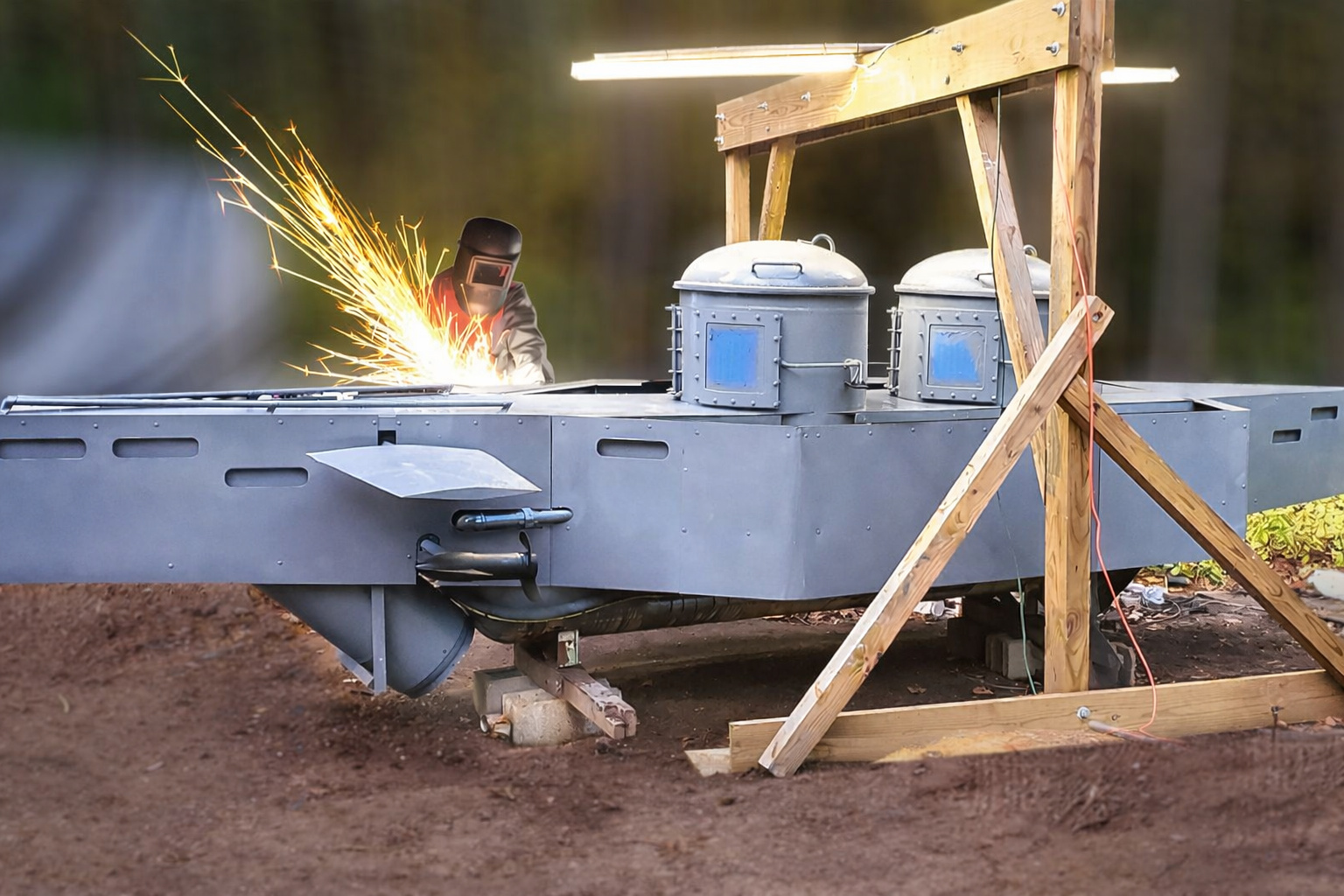
Lake Defender home-built submarine: 8-meter project built for 26 thousand dollars gains approval and impresses with engineering
In an interview published by Newsweek in September 2024, American builder Steve, a New York resident without a degree in naval engineering, revealed the details of building the Lake Defender, a functional 8-meter home-built submarine developed over four years with an investment of 26 thousand dollars. The project, which garnered millions of views on social media, drew attention not only for its boldness, but for the official approval from the United States Coast Guard for operation in inland waters.
Without access to professional software or a technical team, Steve designed, welded, and assembled each component manually, using knowledge acquired from books, tutorials, and the online P-Subs community. The result is an electric steel submersible weighing 2.7 tons, capable of operating safely in freshwater lakes, becoming one of the most documented examples of amateur engineering applied to shipbuilding.
Origin of the project: home-built submarine inspired by a TV show and the P-Subs community
Steve was 26 years old when he watched a television program about Andy Seymour, creator of a home-built submarine called The Kraken. The idea that it would be possible to build a functional submersible in one’s own garage turned from curiosity into a technical project.
-
Millions of people have been eating yam for centuries without knowing that this humble tuber contains a compound called diosgenin, which scientists have now discovered can improve memory and help control blood sugar levels.

-
Scientists from an international project drill 1,800 meters of ice in Antarctica using hot water and discover details about one of the most intriguing places on planet Earth.
-
Seen from space, a colossal volcano nearly 5,000 meters high in Russia has released 1,600 km of smoke over the Pacific, forming “devil’s horns” of lava and revealing the brutal force of the Ring of Fire.

-
Expedition 501: Scientists drill into the ocean floor and discover a giant reserve of fresh water hidden beneath the sea, extracting nearly 50,000 liters and revealing an invisible system that could reshape the map of water scarcity.


He spent months studying fundamental concepts such as hydrostatic pressure, ballast systems, electric propulsion, and underwater life support. He also reached out to the P-Subs community, an online group dedicated to building personal submarines, where he accessed technical discussions and practical experiences shared by other enthusiasts.
This study phase was crucial for transforming a personal interest into a technically and operationally viable project.
Improvised engineering: submarine project made with cell phone and manual markings
Without naval engineering software, Steve used his cell phone to design the cutting lines directly on the steel sheets. He projected technical images onto the material and marked the lines with chalk before starting the cut.
All welding was performed manually. A significant error during construction, when an entire section was welded incorrectly, resulted in the loss of six months of work and a cost of approximately 2 thousand dollars.
This type of error highlights the level of complexity involved in the project, even when conducted by a builder without formal training.
Construction of the home-built submarine: 4 thousand hours of work and complete manual assembly
The construction of the Lake Defender required over 4 thousand hours of manual labor over four years. The project was primarily developed in Steve’s garage, where he executed all stages, from the metal structure to the installation of internal systems.
The submarine incorporates hydraulic systems, low-power electrical components, and safety solutions designed based on basic naval engineering principles. Among the implemented systems are emergency valves, adjustable ballast control, and airtight sealing tested before each dive.
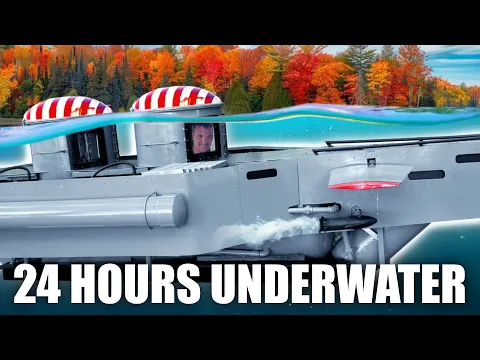
The cabin was equipped with an oxygen supply, CO₂ sensors, and acrylic windows for underwater visibility. These elements ensure that the submersible operates within safe parameters, even as a home-built project.
Technical specifications of the Lake Defender: 8-meter submarine, 2.7 tons, and underwater autonomy
The Lake Defender is 8 meters long and weighs approximately 2.7 tons. The structure is entirely made of steel and controlled by a compact panel operated by joystick, which manages the electric motors, the rudder, and the diving planes.
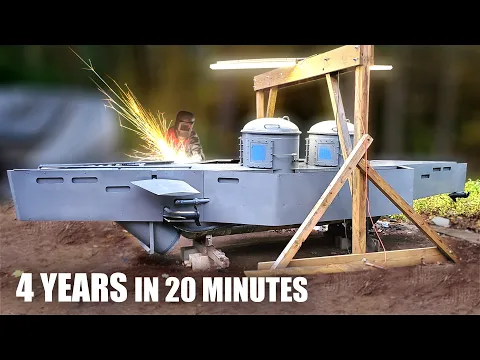
The maximum speed ranges from 5 to 6 km/h with a full battery load. The operational depth is 18 meters, with an estimated crush depth of 36 meters, providing structural safety margin.
The life support system allows for underwater stays of up to 8 hours, depending on oxygen load and CO₂ absorption capacity. These parameters place the Lake Defender within a functional technical standard for freshwater operations.
First test of the submarine: public reaction and police intervention
The first test took place in a lake near Steve’s home. The appearance of the submarine, with its robust metal structure and military-like design, raised concerns among local residents.
A witness called the police upon seeing the submersible surface. After evaluation, the officers recognized the experimental nature of the project and did not take any legal action. Steve became locally known as “the submarine guy.”
The episode demonstrates how unconventional projects can create immediate social impact, especially when involving unusual technologies in public environments.
Coast Guard approval: home-built submarine passes official technical inspection
When submitting the Lake Defender for inspection by the United States Coast Guard, Steve faced initial skepticism. However, after a detailed analysis of all systems, including structural integrity, ballast, oxygen, and emergency protocols, the submarine was approved.
The submersible was officially registered for operation in inland waters, becoming one of the rare cases of a home-built submarine with regulatory validation.
This approval represents an important milestone, as it grants technical legitimacy to the project developed outside the industrial environment.
Safety protocols: system inspired by professional diving and naval operations
Each dive performed with the Lake Defender follows strict safety protocols. A support boat remains on the surface and an autonomous diver accompanies the operation.
Identifying buoys indicate the position of the submarine, while sensors continuously monitor CO₂ levels. In case of emergency, the system allows for external opening of the hatches, enabling immediate rescue.
According to Steve, in statements to Newsweek, there have never been incidents or critical situations during the dives conducted. This level of operational control brings the project closer to practices used in professional diving and underwater exploration operations.
Additional technologies: water cannons and auxiliary propulsion make project viral
In addition to essential functionalities, Steve incorporated experimental elements into the submarine, such as water cannons and small auxiliary propulsion systems.
Although not necessary for operation, these components contributed to the project’s popularity on social media. The channel “Planes Boats and Submarines” documents the entire process, from construction to testing.
The combination of functional engineering and digital content has turned the Lake Defender into an online phenomenon.
1:10 scale test avoids critical failures in the home-built submarine
Before launching the full-size version, Steve built a 1:10 scale model to test stability and weight distribution.
The tests revealed significant flaws in the positioning of the ballast tanks, which could compromise the stability of the submarine. After adjustments, the final project was corrected. This type of prior validation is common in professional naval engineering and was decisive for the project’s success.
The total cost of the Lake Defender was approximately 26 thousand dollars, a significantly lower amount than commercial submarines, which can exceed 1 million dollars. For comparison, commercial tourist submersibles, like those used in oceanic expeditions, can cost hundreds of thousands of dollars per individual operation.
The cost difference highlights the potential of amateur engineering when combined with technical knowledge and careful execution.
Differential of the Lake Defender: complete documentation and official validation
Although there are other home-built submarines, the Lake Defender stands out for three main factors: scale, detailed public documentation, and regulatory approval.
Builders like Hank Pronk have developed submarines over decades, but few projects have been as widely documented as Steve’s. Additionally, the Coast Guard approval reinforces the reliability of the submersible.
These elements make the Lake Defender a reference within the amateur engineering community.
When asked about the motivation to build a submarine, Steve stated that he simply enjoys the subject. The straightforward answer reflects a common pattern among independent builders: personal interest combined with technical dedication.
Without an engineering degree, he transformed theoretical knowledge into practical application, building a functional vessel capable of diving and operating safely.
The Lake Defender is a direct result of the combination of technical curiosity, persistence, and detailed execution over four years.








Seja o primeiro a reagir!