





 Portuguese
  English
  Spanish
  4 min of reading
  158 comments


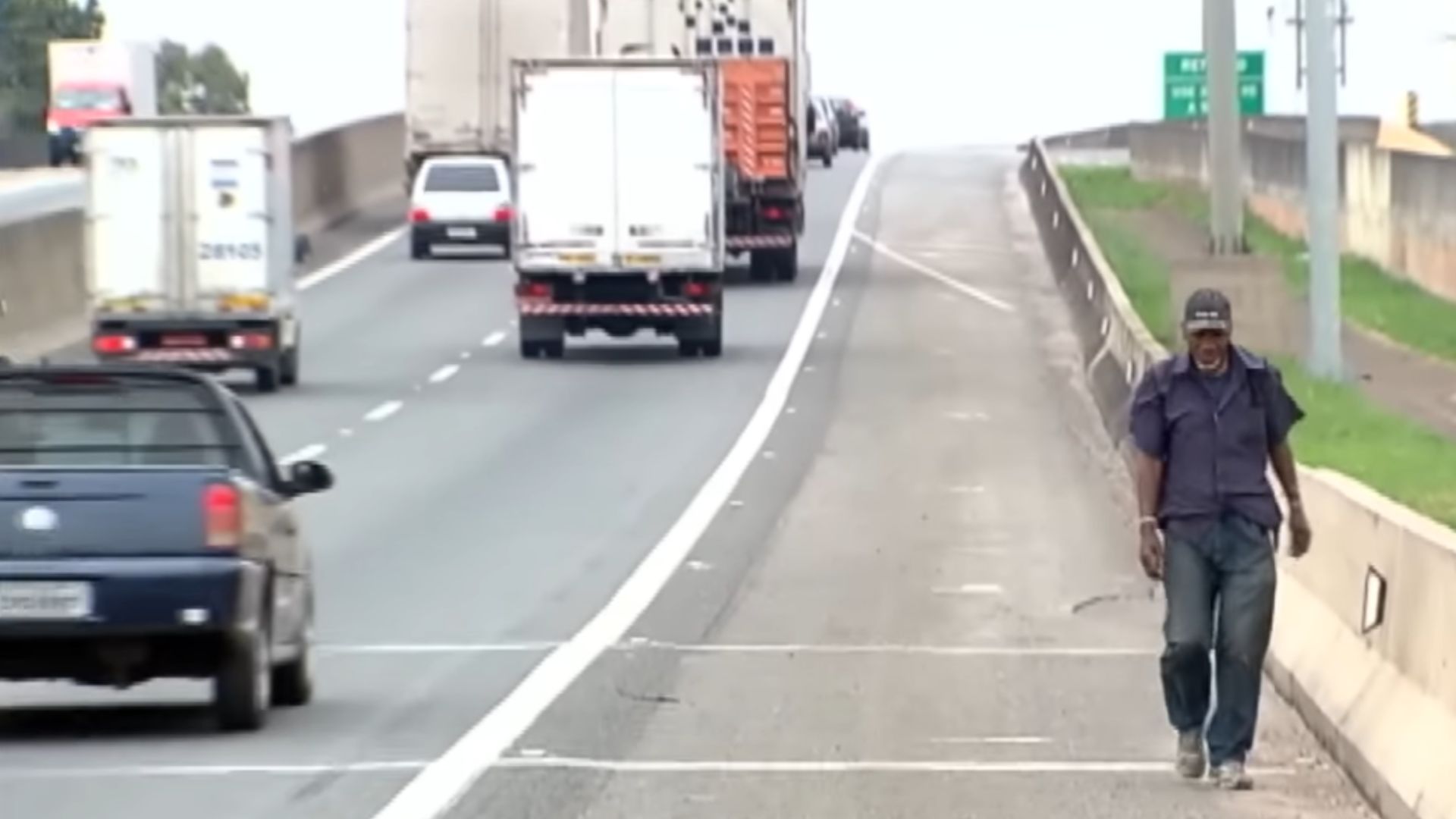


Far From The Cities And Urban Comfort, Men Who Live On The Roads Share How Love Disappointments, Family Breakups, Faith, Survival, And Difficult Choices Pushed Them Into An Invisible Life Under The Extreme Heat Of The Asphalt
The sun has not even risen when they are already up. Around 4 AM, the wanderers begin another day of walking along the country’s busiest highways, crossing São Paulo, Rio de Janeiro, Minas Gerais, and the surroundings of the Federal District. With light backpacks, worn clothes, and constant steps, they follow a routine marked by survival, faith, and stories that are rarely heard.
Along these roads, our team followed men who travel about 40 kilometers a day, facing temperatures that reach 35 degrees on the asphalt, hunger, thirst, and nights slept under bridges, overpasses, or gas stations. More than just numbers, these are human trajectories marked by deep losses, irreversible choices, and, paradoxically, a sense of freedom that many say they have not found at home.
The information was released by a special report aired nationwide, which traversed Brazilian highways to directly hear from those who live on the margins of cities, according to field research conducted across different states.
-
Son of a seamstress from the rural area of Ceará who did not speak English wins a scholarship of over 2 million reais at Williams College, one of the top 10 universities in the United States, covering everything including dormitory, meals, and annual trips to Brazil.

-
Bill Gates revealed that the true secret behind every great achievement is not a brilliant leap but rather small improvements repeated over the years, and the data from his own career and the fight against climate change prove that he is right.

-
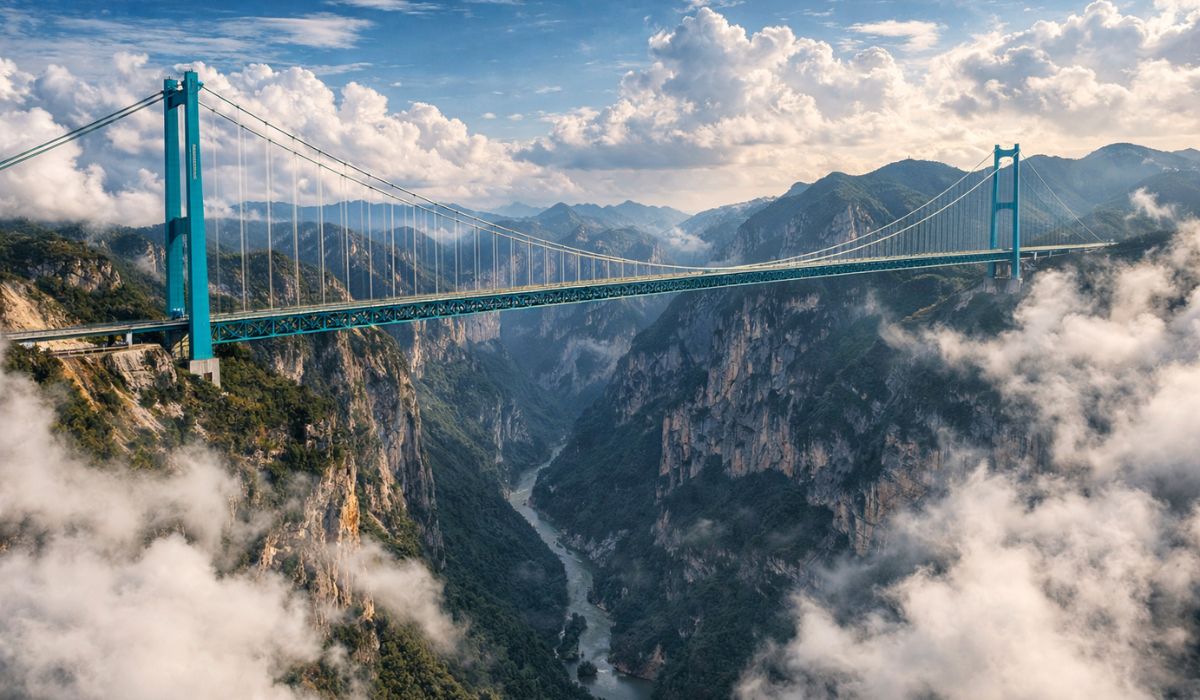
With 22 thousand tons of steel, a height nearly three times greater than the Eiffel Tower, and a cost of R$ 1.6 billion, China is building the highest bridge on the planet over a colossal canyon, reducing a crossing time of over 2 hours to just over 2 minutes.
-
With more than 635,000 doctors, Brazil sees competition increasing in large cities, and recent graduates are competing for shifts at an accelerated pace while the countryside still faces shortages.

Life Begins Before Dawn And The Daily Fight Is For Food, Water, And Shelter

Before the traffic picks up, the wanderers are already on the road. The logic is simple: walking early reduces the physical wear caused by intense heat. Even so, the effort is extreme. Without a stable income, the main concern of the day is to find food, usually a breakfast or lunch offered by drivers, merchants, or kind residents.
According to reports collected by the coverage, about 90% of the meals are obtained through donations. When this does not happen, hunger strikes cruelly. “You really go hungry,” summarizes one of the interviewees, who traveled almost all of the Northeast before arriving in Minas Gerais, surviving on water and scraps of food.
Sleeping is also a constant challenge. Gas stations, awnings, bridges, and overpasses become makeshift shelters. In some places, there are old marks on the walls, with initials and dates dating back to 2009 and 2013, indicating that this spot has served for years as a temporary refuge for those who live on the roads.
Insects, nighttime cold, the risk of violence, and constant fear are part of the routine. Still, many claim that continuing to walk is the only option they know.
Love Disappointments, Family Breakups, And The Decision To Leave Everything Behind
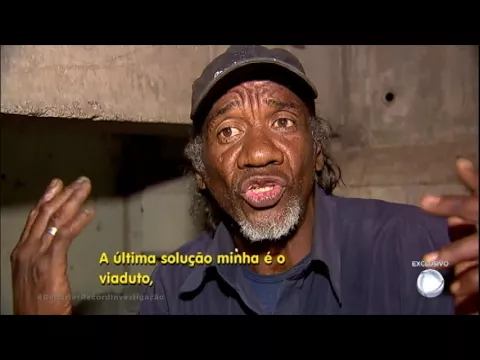

Among the reasons that lead someone to abandon everything and live on the highways, love disappointments often appear. This is the case of José Matias, a 62-year-old from Pernambuco, who left three children in Recife after a suspected betrayal destroyed his marriage. At the time, he was a bricklayer and earned up to R$ 3,000 a month, but he decided to leave married life behind and embrace the road.
“Walking was my choice,” he states. Even admitting that he feels the urge to stop and settle somewhere, he says that life has ended up molding this way. From time to time, he returns to Recife only to visit his brother, but soon goes back to the highways.
Another case is that of Antônio, who is 53 years old and lives in the Campinas region, interior of São Paulo. A father to a 29-year-old son, who is married and living in Paraná, he has not been in contact with his family for over a decade. Before becoming a wanderer, he worked in general services. Today, he says he prefers the road to trying to restart within a family structure that he no longer recognizes as his.
Despite the humorous tone with which he talks about his situation, Antônio admits that his body feels the weight of the years and the kilometers accumulated daily.
Work In Exchange For Food, Faith As Support, And Memories Stored In The Backpack
When they can, the wanderers offer work in exchange for food or money. Sweeping a yard, cleaning a bathroom, carrying goods, or helping with small tasks is a common strategy. In many cases, a polite request is enough for merchants to allow the use of the bathroom or offer a shower.
It was like this with Thiago, who was walking under the strong sun in Campinas and asked permission to clean the bathroom of an establishment in exchange for a shower. Minutes later, he was already wielding a broom and a squeegee. “It’s like this every day,” he summarizes.
For José Francisco, a 44-year-old from Alagoas, walking is also a spiritual mission. He left Teotônio Vilela, Alagoas, ten years ago, and believes that walking along the roads is part of a divine calling. Single and without children, he maintained sporadic contact with his family until he managed to talk to relatives by phone after the help of a truck driver.
In his backpack, he carries few things, but one in particular holds deep memories: an old pair of shorts, the last he brought from home. His documents, always well protected, are treated as precious belongings. “Nothing has changed,” he says as he shows his ID.
As night falls and the road gets dark, there is only prayer left. For many, praying is the only way to face fear, cold, and loneliness when there is no overpass or bridge to sleep under.
To what extent is the road a choice — and when does it become the only way out for those who have lost everything along the way?






Os planos de Deus é perfeito para cada um, o que leva uma pessoa a viver assim é obra maligna. Precisa das nossas orações, porque é espiritual.
Seja lá qual for o motivo, seja lá de quem for a culpa, as pessoas em suas jornadas pelas ruas é uma realidade, histórias e histórias que apenas Deus conhece o real motivo para tomarem tal decisão.
Há muitos anos sofri um acidente de carro na estrada e um andarilho que passava pelo local me ajudou. Agradeci muito e dei a ele o dinheiro que tinha na carteira.