





 Português
  Inglês
  Espanhol
  3 min de leitura
  1 comentário


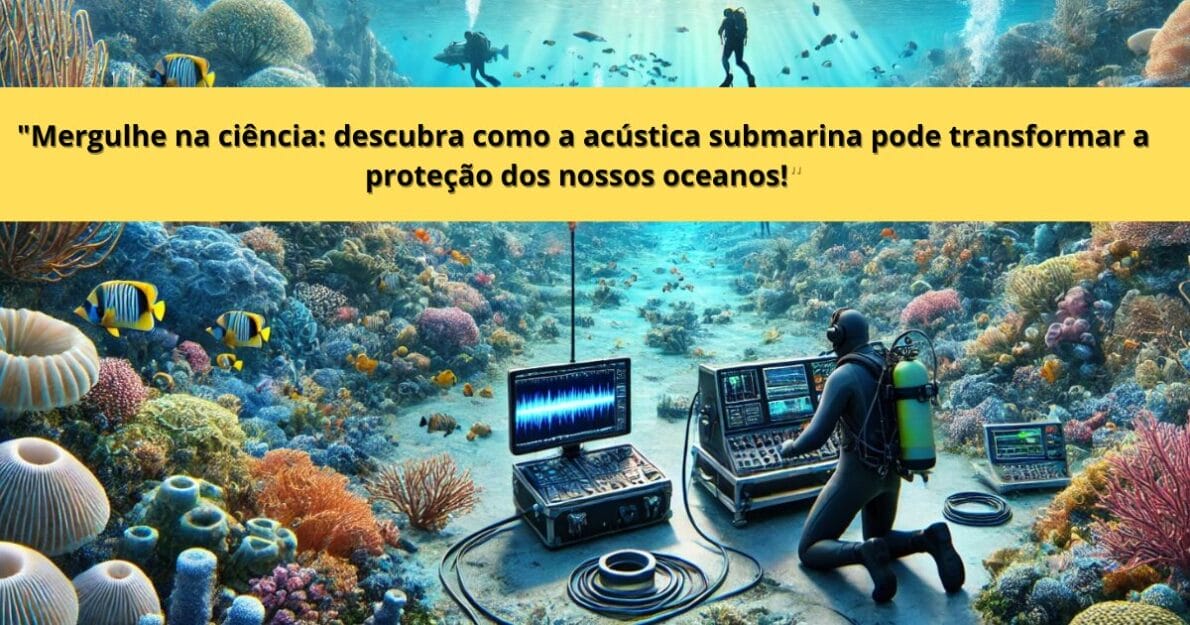

The Brazilian Navy Offers a Master’s Program in Underwater Acoustics, Open to Professionals from Various Fields. Applications Are Open Until October 31, with Classes Expected to Start in April 2025.
In the vastness of Brazilian waters, a new academic opportunity emerges, surprising even the most attentive.
This is the proposal of the Brazilian Navy, which, through the Admiral Paulo Moreira Institute for Marine Studies (IEAPM), announced the opening of applications for the Selection Process of the Graduate Program in Underwater Acoustics (PPGAS).
Applications Until October 31
It is not necessary to be military to participate, and interested individuals have until October 31 to register, according to the announcement available on the official IEAPM website.
-
With 11,000 tons and sensors capable of hunting submarines at long distances, the Type 055 has become one of the most feared floating arsenals of the Chinese navy.

-
With over 15,000 tons, radars capable of tracking hundreds of targets simultaneously, and more than 120 missiles ready for launch in seconds, modern destroyers cease to be escorts and begin to dominate the naval battlefield.
-
With over 15,000 tons, radars capable of tracking hundreds of targets simultaneously, and more than 120 missiles ready for launch in seconds, modern destroyers cease to be escorts and begin to dominate the naval battlefield.
-
Valued at over $2 billion, the B-2 Spirit bomber requires meticulous inspection, bombs calibrated in a controlled environment, and extreme preparation to disappear from radar and launch attacks with lethal precision.

The Master’s program is targeted at professionals with higher education in the fields of Exact and Earth Sciences, Biological Sciences, Engineering, Nautical and Naval Sciences.
Candidates wishing to specialize can choose from three research lines: Communication and Underwater Sensor Networks, Underwater Environmental Monitoring, and Energy Propagation in the Ocean.
Selection Process to Join the Navy
The selection of candidates will be made through a document analysis, an online knowledge test, and an interview.
Those approved will have the opportunity to start classes in April 2025, at the IEAPM campus, located in Arraial do Cabo, Rio de Janeiro.
For more information, interested parties can visit the official IEAPM site or contact via email (ieapm.ppgas@marinha.mil.br) and phone (22) 2622-9023 and (22) 2622-9020).
What Will Students Learn?
The Underwater Acoustics course prepares students to work in strategic sectors, such as the offshore industry and the exploration of natural resources.
They will also contribute to the protection and sustainability of the Blue Amazon, which represents 52% of the total area of Brazilian territory.
According to the Marine Agency, the program was launched in 2021, complementing other graduate initiatives focused on studying the marine environment.
Students will have access to a team of 17 qualified faculty members and a curriculum that includes interaction with sensors and acoustic monitoring systems.
Students will also learn about underwater communications, integration of land systems with submarine and surface vehicles, as well as techniques for processing acoustic signals and propagation models.
Understanding Underwater Acoustics
Underwater acoustics is the study of sound waves in aquatic environments, such as oceans, seas, and large lakes.
This field of science investigates sound propagation through water and its interactions with the marine environment, including the ocean floor, the surface, and submerged objects.
The practice of underwater acoustics has various applications, including:
- Underwater Communication: Used by submarines and ships to exchange information via sound waves, as electromagnetic signals have low propagation in water.
- sonar: Technology that uses the reflection of sound waves to detect submerged objects, such as submarines, schools of fish, or geological structures.
- Environmental Monitoring: Assists in observing marine life, detecting sounds produced by animals such as whales and dolphins, and studying events such as underwater earthquakes and tsunamis.
- Scientific Research: Investigates the acoustic properties of water to better understand the marine environment and oceanic processes.
It is important to note that sound propagation underwater is influenced by factors such as temperature, salinity, and depth, affecting the speed and direction of sound waves.
Therefore, underwater acoustics is essential in areas such as naval defense, offshore engineering, and oceanographic research.
The Importance of Acoustics in Brazil
In Brazil, knowledge of acoustics and monitoring of the vast oceanic region known as the Blue Amazon are fundamental to ensuring national sovereignty and the protection of the marine environment.
The Graduate Program in Underwater Acoustics offers a unique opportunity for those seeking to contribute to the preservation and study of this vital environment.
The initiative of the Brazilian Navy represents a significant step in training professionals capable of working in critical areas for the country.







Precisando de MG MEC nesse projeto só vc falar