





 Portuguese
  English
  Spanish
  4 min of reading
  0 comments



The Advance of China’s AI Surprised the USA, and Mark Zuckerberg Is Acting Quickly to Understand the Situation.
The recent advance of the Chinese startup DeepSeek in the field of artificial intelligence (AI) has shaken the foundations of the global tech sector. In a move that took giants like Mark Zuckerberg’s Meta, OpenAI, and Google by surprise, China’s AI launched its R1 language model, which promises to compete on equal footing with solutions like ChatGPT, but at a fraction of the cost.
This development triggered a chain reaction, with American companies mobilizing entire teams to understand and respond to China’s AI.
Moreover, the impact was amplified by the economic and strategic implications, positioning DeepSeek as a direct threat to established market structures.
-
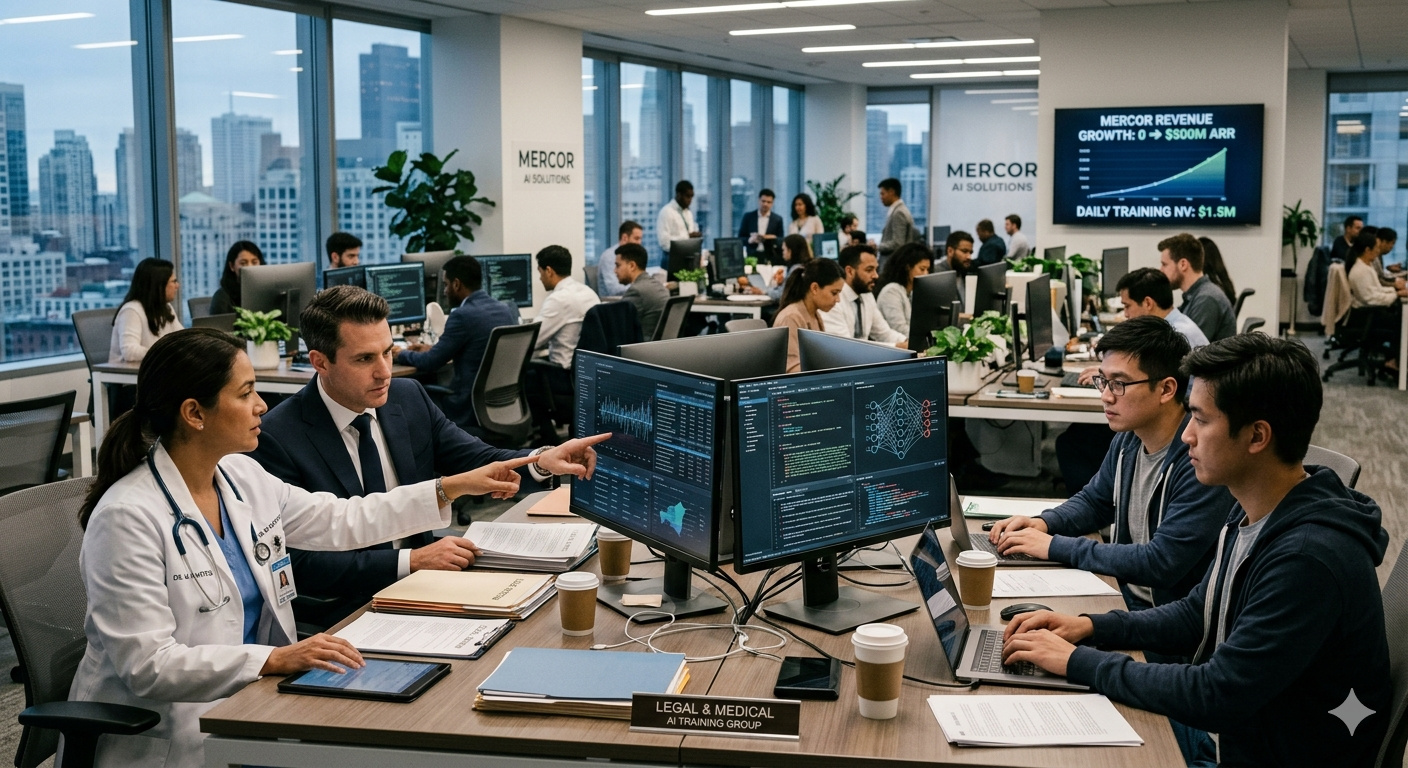
Mercor paid $1.5 million per day for doctors, lawyers, and former Goldman Sachs bankers to teach artificial intelligence to do their jobs, and in 17 months, it went from zero to $500 million in annual revenue while its own contractors accelerated the replacement of their own work.
-
Casio Unveils Moflin, Robotic Pet With Artificial Intelligence Designed To Provide Emotional Comfort And Simulate A Permanent Affectionate Bond

-
Google Maps Revolutionizes GPS Navigation With Gemini Artificial Intelligence, Ask Maps Feature, and Advanced 3D Visualization for Route and Travel Planning

-
China Warns the U.S. of a “Terminator” Style Apocalypse: Military AI Rivalry, Sanctions Against American Startup, and Fear of Algorithms Deciding Who Lives or Dies Place the World on the Brink of a Nightmare That Seemed Like Fiction

The Innovation of China’s AI and Its Impact on the Market
Earlier this month, DeepSeek, backed by hedge fund High-Flyer Capital Management, introduced its R1 model to the market.
In addition to promising performance similar to its competitors, the model drew attention for its significantly reduced training and operating costs.
As a result, the R1 quickly surpassed ChatGPT in downloads on the Apple App Store, becoming the most downloaded free app.
This phenomenon highlights a shift in consumer behavior, with users now more receptive to new solutions that offer quality and accessibility.
This success, however, came with turbulence in the financial market. Companies like Nvidia, Microsoft, and Alphabet saw significant drops in their stock prices, notably Nvidia, whose market cap shrank by over 17% in a single day.
The main concern revolves around the impact that accessible models like the R1 may have on the demand for high-performance hardware, and many analysts suggest that this trend could redefine investment paradigms in the sector.
The Reaction of Mark Zuckerberg’s Meta
Meta was one of the first to react to DeepSeek’s advance, setting up four “war rooms” composed of specialized engineers.
According to internal sources, two of these groups are focused on understanding how DeepSeek managed to reduce the training and operating costs of its AI.
The other two are investigating the data used by the Chinese startup to train the R1 and how these advances could be applied to the next generation of the Llama model.
Additionally, there are indications that Meta intends to accelerate its development timeline to cope with the growing pressure.
In a recent statement, Mathew Oldham, Meta’s AI infrastructure director, stated that the R1 could be a genuine threat, potentially surpassing Llama 4, which is scheduled to launch in early 2025.
Mark Zuckerberg also reinforced Meta’s commitment to AI, announcing an investment of up to US$ 65 billion in the sector over the next 12 months, including the construction of a large data center and hiring of new talent.
This level of investment reflects not only the strategic importance of the sector but also the desire to consolidate the company’s leadership amid increasingly intense global competition.
The Response of Other Tech Giants
The impact of DeepSeek has been widely commented on by industry leaders. Satya Nadella, CEO of Microsoft, highlighted the concept of the Jevons Paradox, noting that as AI becomes more efficient, its adoption accelerates, turning it into an essential tool.
On the other hand, Yann LeCun, Chief AI Scientist at Meta, argued that DeepSeek’s advance demonstrates the power of open-source models compared to proprietary solutions.
He emphasized that the sector could benefit from more open collaborations, encouraging more inclusive innovations.
Marc Andreessen, co-founder of Andreessen Horowitz, described the R1 as “one of the most impressive advancements” and compared its significance to the Sputnik moment in the space race.
Meanwhile, Pat Gelsinger, former CEO of Intel, stressed that DeepSeek’s low-cost approach could significantly expand the market for AI applications, countering the negative reaction in the financial market.
The statements from these leaders indicate that the sector is undergoing a transformation where economic efficiency is becoming increasingly relevant.
Challenges of China’s AI
The advance of DeepSeek also highlights the challenges of regulation and safety in AI.
As technology becomes more accessible, the need to establish global parameters for responsible development and use becomes urgent.
Governments and regulatory entities now face the difficult task of balancing innovation and safety, while companies must navigate this ever-changing landscape.
Meanwhile, startups and established companies need to rethink their business models and investment strategies.
DeepSeek has demonstrated that innovation does not solely depend on large budgets, but also on creativity and resource optimization.
Because of this, it is possible that we may see a shift towards more collaborative partnerships and the democratization of technology.
Additionally, DeepSeek’s approach may encourage other startups to explore alternative business models that prioritize efficiency and accessibility without compromising quality.
With information from Fortune and BI.









-

-

6 pessoas reagiram a isso.