





 Portuguese
  English
  Spanish
  3 min of reading
  0 comments


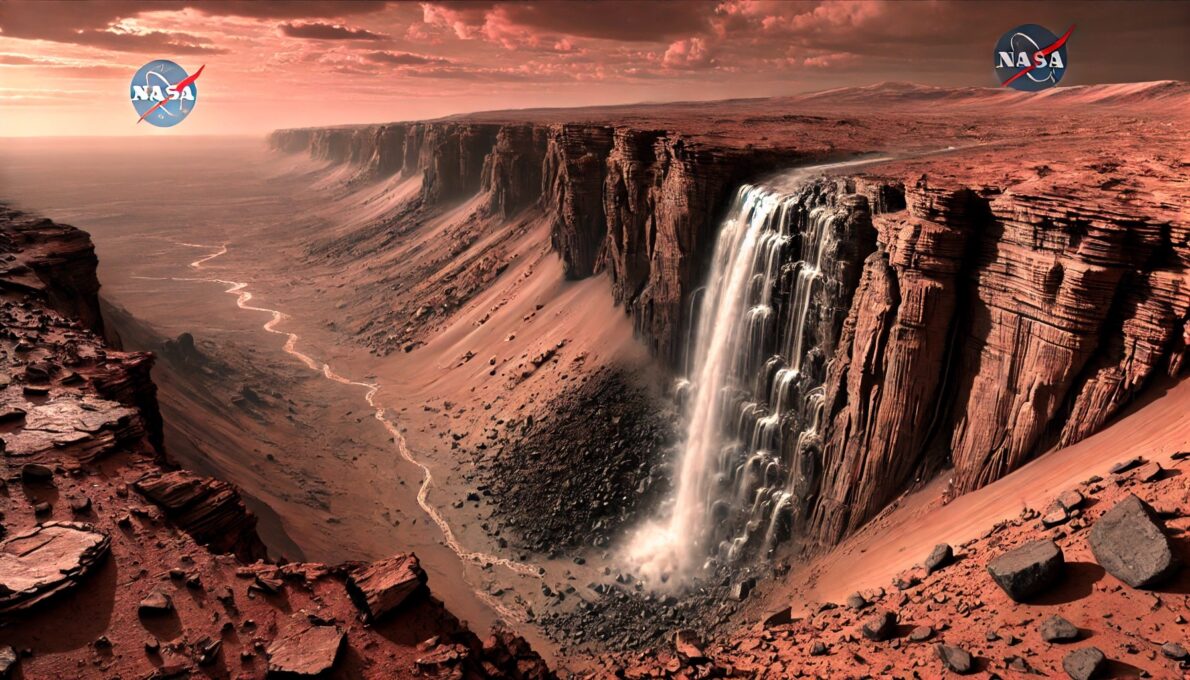
NASA Reveals Impressive News About Mars: Possible Waterfall Discovered on the Red Planet May Be Larger and More Impactful Than the Famous Niagara Falls.
Mars, the closest rocky planet to Earth, is a fascinating and enigmatic place, marked by unique geological formations. Unlike Earth, where erosion and vegetation cover many traces of planetary history, the surface of Mars reveals a “raw” landscape, allowing for a clear view of its formation over billions of years. Recently, NASA satellites captured intriguing images revealing a structure resembling a waterfall, fueling scientists and enthusiasts’ imaginations about the red planet’s watery past. This type of discovery could provide new clues about Mars’ geological and climatic history, and who knows, perhaps even signs of ancient life.
NASA Probes Reveal Unique Features on Mars


The red planet is dry, and there isn’t enough water concentration in the atmosphere or on the surface to justify the existence of an active waterfall; thus, the formations found by NASA’s satellites show a historical record, something that dates back to a distant past.
At first, you may wonder what are the chances of a dry, cold, desert-like, and dusty place having accumulated enough water on the surface for a landscape like that to have existed.
-
A “silent skill” is allowing Brazilians to earn up to R$ 22,000 per month without a degree and become indispensable for companies that rely on millions of data to survive.

-
Researchers at the Toyota Research Institute found that if a human uses robotic arms to flip a pancake 300 times in an afternoon, the robot learns to do it on its own the next morning, and this is currently the most promising method to solve the biggest bottleneck in modern robotics.

-
Goodbye iron: a common item in households is starting to lose space to technology that smooths clothes in minutes without an ironing board and with less energy consumption.

-
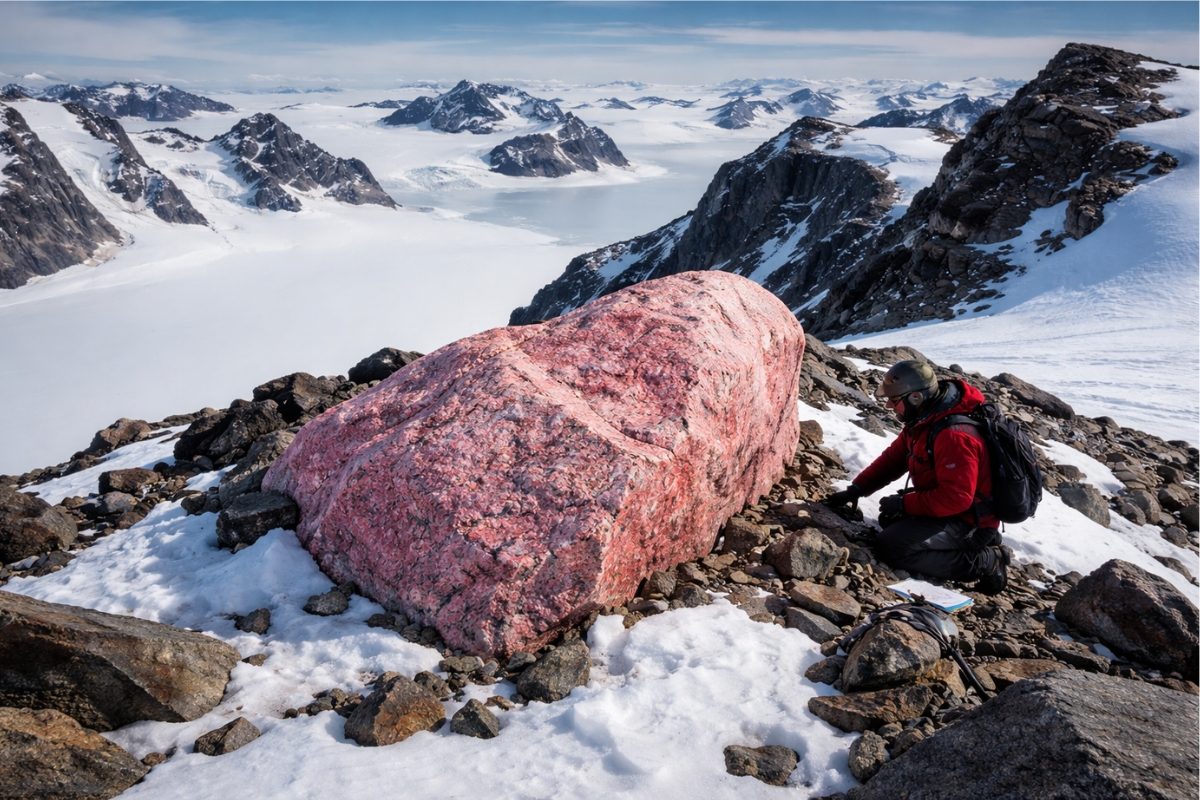
Antarctica reveals an unusual clue high in the Hudson Mountains, and what appeared to be just an isolated rock began to expose a secret hidden under the ice for ages.

Surprisingly, the current appearance of Mars is something entirely different from what it once was in the distant past. NASA’s spacecraft have already revealed geological features resembling ancient coastlines and riverbeds, and they have also found rocks that seem to have been shaped by the constant passage of water.
The visual characteristics of this evidence, along with chemical analysis when possible, leave no doubt that these points on the red planet once had water. According to the records made by orbiters on the red planet, a waterfall on Mars may have been a reality in a distant past.
Does Mars Have the Necessary Characteristics to Form a Waterfall?
Besides liquid water, a suitable topography would be necessary to form a waterfall on Mars. The planet presents numerous geological characteristics indicating the existence of valleys and deep canyons, and just like on Earth, geological formations resulting from volcanic processes could have created these abrupt elevations on the surface, after all, Martian water would need to fall from a considerable height to be called a waterfall.
To have a fully functioning waterfall on Mars, a very large amount of uninterrupted water would be necessary, and there is evidence of that, but the sad part of the story is that Mars’ atmosphere has become increasingly thin for reasons that are still poorly understood, meaning water has been disappearing along with these ideal conditions.
A Waterfall on Mars Could Have a 500m Drop
Images of Earth’s waterfalls from space, when compared to the geological features of Mars, can be revealing. In the case of the Kasei Valley, we have a region that extends for 2400 km across the surface of the red planet. At any point along its course, we can check detailed images from NASA orbiters and find a wealth of features created by the passage of water in an incredible manner.
The dry waterfalls found in Kasei feature a vertical drop of 400 to 500 m, where the edge of the waterfalls can be traced further for 100 km across the Martian surface. For comparison, the Niagara Falls here on Earth only have a height of 50 m, with a total length of approximately 1 km, combining both the American and Canadian parts.
Imagining Kasei in full activity, with streams of water plummeting over these gigantic elevations, would be witnessing one of the most grand spectacles of any planet, surpassing even the most impressive natural formations here on Earth. Nowadays, it is completely dry, but the history is there on the dusty red planet.







Seja o primeiro a reagir!