





 Portuguese
  English
  Spanish
  4 min of reading
  0 comments


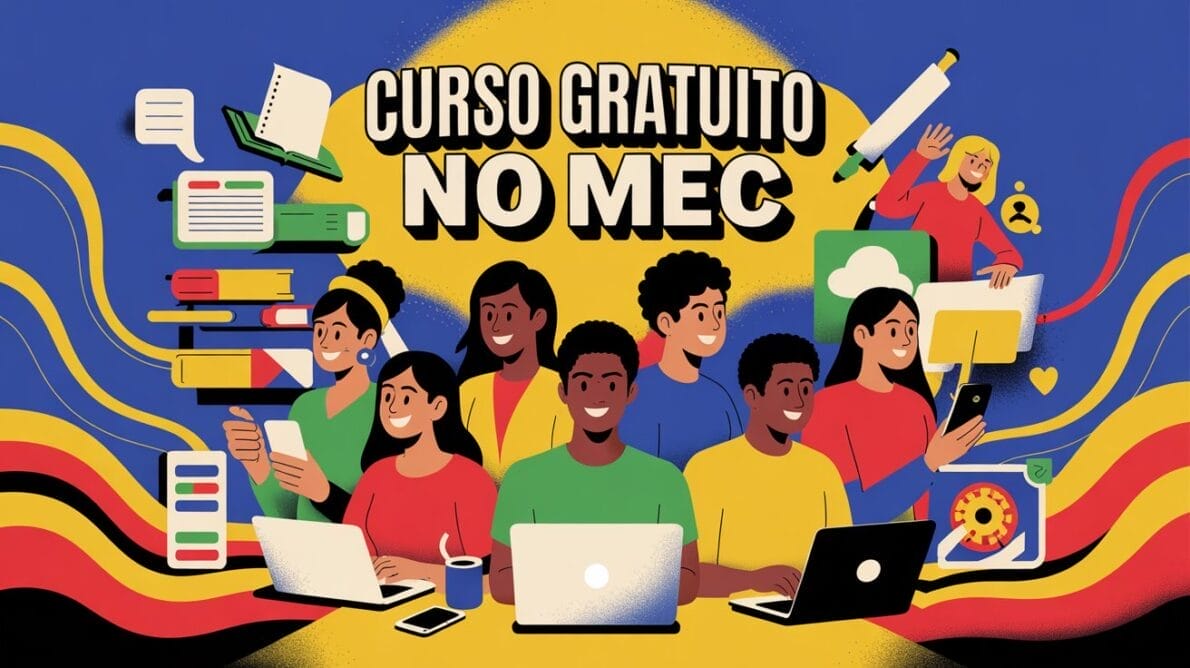
More than seven thousand places are available for those who want to study from home on urgent topics such as human rights, diversity, and media. The course is free, certified, and targeted to educators and professionals working in social transformation through education.
Enrollment is open for a free and completely online course on “Media Education for the Promotion and Defense of Human Rights and Diversity.”
The course, offered by the Federal University of Uberlândia (UFU) in partnership with the Ministry of Education (MEC), provides 7,560 places for citizens from all regions of Brazil, aiming to promote a more critical and conscious education about contemporary social and cultural issues.
Free Course Covers Fundamental Topics on Human Rights and Diversity
-
Federal Institute opens over 700 vacancies in free technical courses in Civil Engineering, Mechanics, Electrotechnics, Computer Science, and Nursing; see how to enroll and study at IFPB.
-
Become a professional in logistics, mechanics, computer science, chemistry, or gastronomy at the Federal Institute: Ifes opens more than 1,000 spots in free technical courses with selection without an exam.

-
Take a 100% online and free course at Itaú: Foundation releases 156 options with certificates, registrations open for all of Brazil, unlimited access, areas such as technology, education, and management, and a flexible schedule without tutoring.
-
Senai will pay up to R$ 700 per month for those who take free technical courses: there are 12,000 open positions across Brazil and training with access to the technology market.

Interested individuals will have the opportunity to participate in a structured asynchronous content, with classes occurring between June 2, 2025, and January 31, 2026.
During this period, students will explore a series of crucial themes, organized into six teaching units that range from the fundamentals of human rights to the analysis of the interrelationship among themes such as racism, aporophobia, and climate change.
The course units cover topics such as:
Unit I: Fundamentals of education in human rights and diversity, addressing how these discussions can contribute to the development of a more inclusive and equitable school environment.
Unit II: Fundamentals of Media Education, explaining the importance of understanding how media impacts social perceptions and how knowledge about media education can be an ally in defending human rights and diversity.
Unit III: The relationship between media education, sexual and gender diversity, addressing fundamental issues such as communication about gender and sexuality, and how these themes should be treated ethically in the media.
Unit IV: Training and protection of children and adolescents, using media education as a tool to promote safety and child well-being starting from the school.
Unit V: The role of education professionals and the school environment in media exposure and representations, reflecting on how schools can influence the construction of new social perspectives.
Unit VI: The interrelationship between aporophobia, racism, and climate change, encouraging critical reflection on how these topics can be analyzed and addressed within the contexts of human rights and media education.
The course offers a total workload of 225 hours, providing a complete immersion for those who wish to delve into these essential themes for citizen and educational formation.
Why Is Media Education So Important?
In a scenario of constant exposure to information and misinformation on digital platforms, media education becomes a crucial element for the formation of critical and conscious citizens.
Understanding how information is produced and manipulated in the media is fundamental for people to make more informed choices about what they consume and how they interact with content.
Additionally, media education is a powerful tool for promoting respect for human rights, diversity, and combating the spread of prejudices and stereotypes.
This course aims to provide participants with the necessary tools to interpret and produce content ethically and responsibly.
It addresses issues ranging from respect for sexual diversity to the analysis of representations of marginalized groups in the media.
How Does the Course Impact Brazilian Society?
In a Brazil marked by deep social and cultural inequalities, courses like this have a significant impact on the formation of a more just and equal society.
Education, especially when focused on promoting human rights and diversity, has the power to transform the reality of millions of people.
By training educators and other professionals who work directly with children and youth, the course offers a pathway for new perspectives to be incorporated into school training.
It generates a cycle of change and awareness.
By investing in the training of teachers and education professionals on such relevant topics, the MEC and UFU promote a solid foundation for future generations to better understand social challenges and position themselves critically and consciously.
Who Can Register and How to Participate in the Free Course
Out of more than 7,000 places, 5,400 will be prioritized for teachers working in basic education.
Meanwhile, the other 2,160 places will be filled by other education professionals or related areas.
This is an important step to ensure that training on human rights and diversity reaches a significant number of educators and people involved in the education of children and youth throughout Brazil.
Enrollment is open until May 12, 2025.
It can be done through the official link provided by the MEC, accessible here.
By accessing the link, candidates can fill out a registration form and check all the necessary information to participate.
And you, have you registered for the course? What do you think about the importance of including media education and human rights in the school curriculum? Leave your comment below and join the discussion!






Seja o primeiro a reagir!