





 English
  Francês
  Alemão
  Italiano
  Japonês
  Norueguês
  Portuguese
  Spanish
  5 min of reading
  1 comment





Understand Why the Offshore Mechanic Has Become One of the Most Valuable Professionals in Recent Years, Working in the Maintenance of Critical Equipment in the Oil and Gas Sector.
The Offshore Mechanic has established himself as one of the most strategic professionals in the oil and gas industry. Operating in an extreme environment characterized by constant vibration, high noise, and isolation, this specialist is responsible for keeping critical equipment operational, whose failure can result in significant financial losses. According to a report published by Mercado Monitor on January 26, for this reason, the role has come to be recognized as a highly technical offshore career and a true valued professional within offshore platforms.
Offshore Mechanic as a Key Player in the Oil and Gas Industry
Without maintenance, there is no production. This logic summarizes the importance of the on-board mechanic. Turbines, compressors, engines, and auxiliary systems need to operate continuously to ensure the flow of extraction and export. Any unplanned downtime directly impacts the financial results of operators, making the Offshore Mechanic indispensable for the operational stability of the sector.
In the production chain of oil and gas, the Offshore Mechanic plays a critical role. Unlike land-based industrial environments, platforms do not allow for long response times. Thus, the professional needs to act with speed, precision, and technical autonomy.
-
Constellation opens an offshore position with a 14×14 schedule for those who want to work onboard in Rio das Ostras (RJ) with great benefits.
-
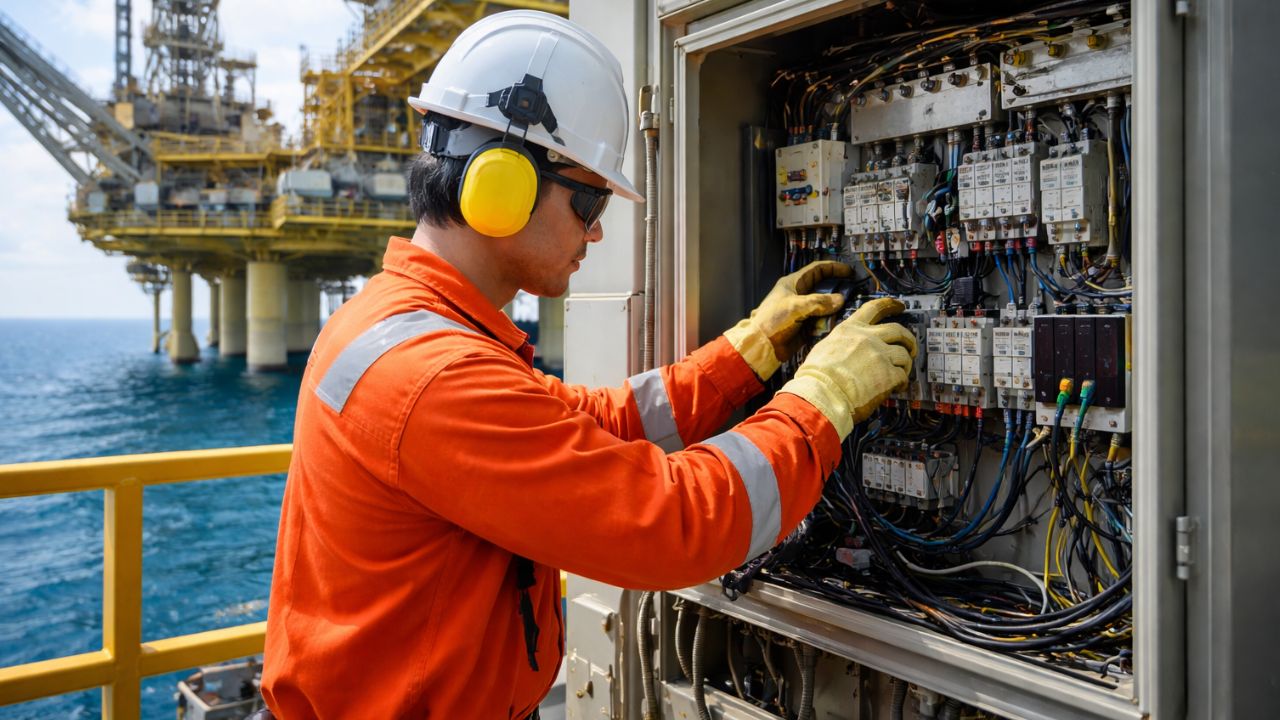
Oceânica Announces Offshore Vacancy on 14×14 Schedule for Electrical Technician in Rio de Janeiro
-
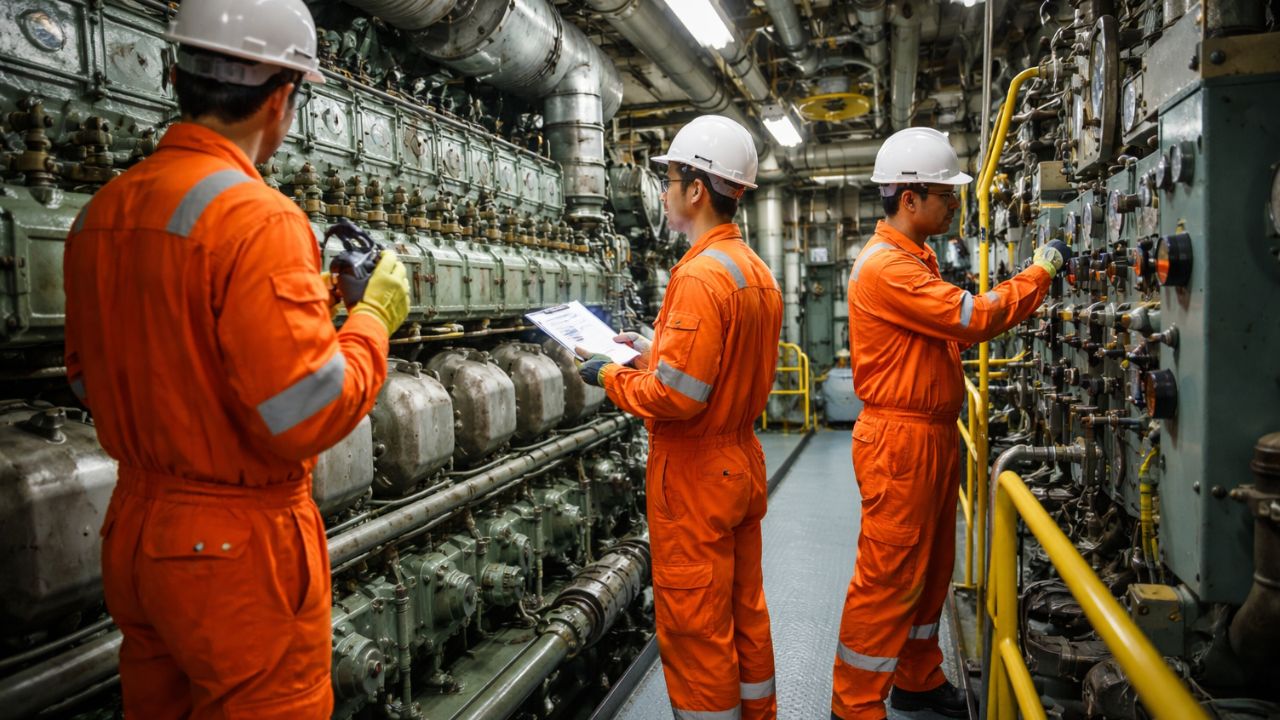
Offshore Position for Engine Room Fourth Officer with 28×28 Rotation in Rio de Janeiro
-
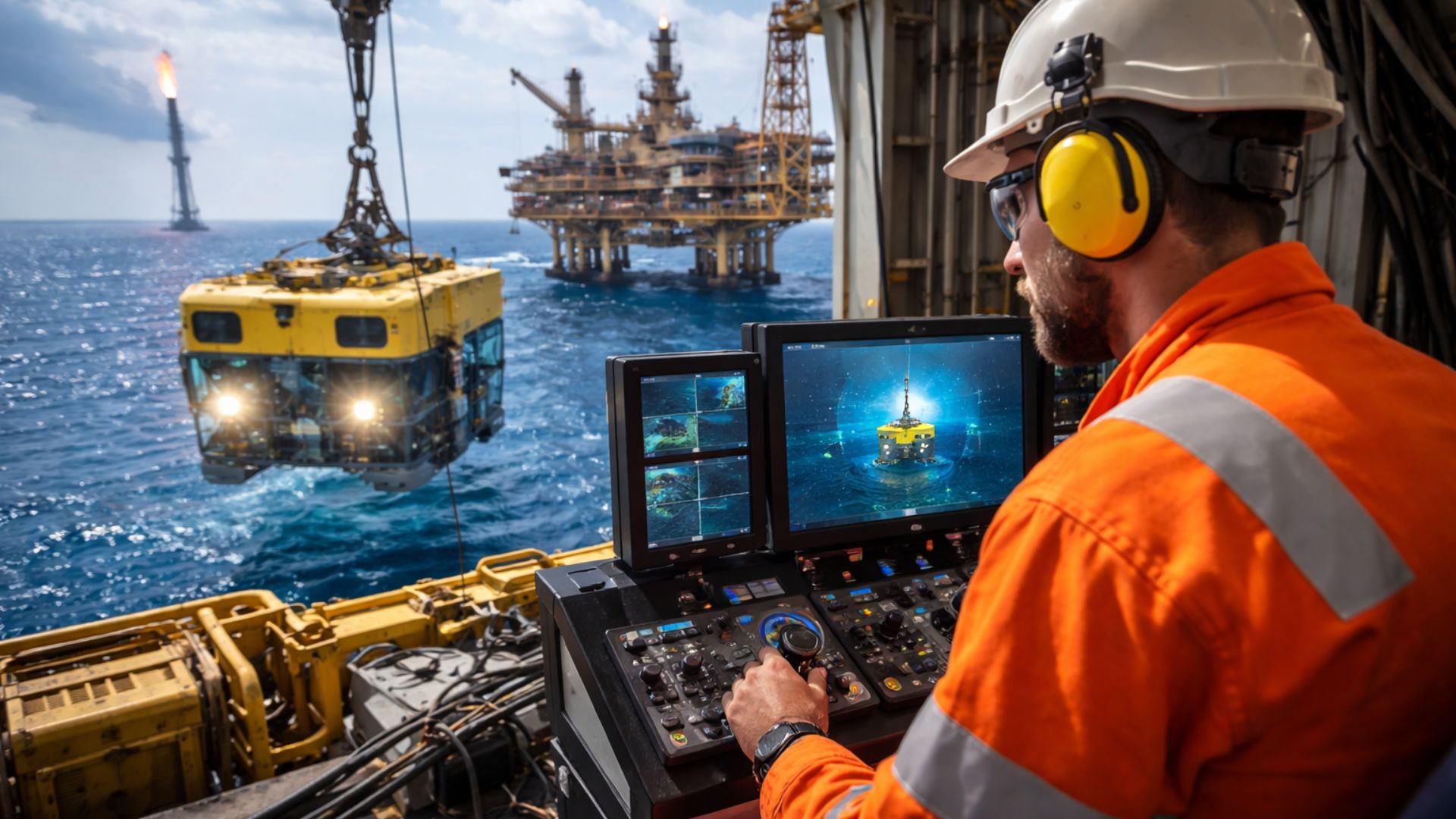
With Announcement for ROV Course in Partnership with Zen, Rio das Ostras Aims to Transform Technical Qualification into Real Jobs in the Competitive Offshore Market
Furthermore, the complexity of the embedded systems requires an in-depth knowledge of heavy mechanics, hydraulics, and rotating systems. Every intervention needs to be correct on the first attempt. This level of responsibility explains why the on-board mechanic is seen as a valued professional and essential for the continuity of production.
Offshore Mechanic Routine in Extreme Environments
The routine of the Offshore Mechanic involves preventive and corrective maintenance of diesel engines, centrifugal pumps, cranes, gas compressors, and power generation systems. All of this occurs in an environment subject to continuous vibration, intense heat, and high humidity.
In addition to physical effort, there is a strong cognitive demand. The professional needs to diagnose complex failures without immediate support from manufacturers. At sea, controlled improvisation and technical knowledge go hand in hand. This reality differentiates the offshore career from conventional industrial maintenance.
Constant Vibration and Technology in the Offshore Career
Constant vibration is one of the biggest challenges in the offshore career. It accelerates the wear of bearings, shafts, and couplings, requiring continuous monitoring. For this reason, the modern Offshore Mechanic uses vibration sensors, thermal analysis, and digital inspection systems.
Industrial tablets and maintenance software assist in decision-making. Traditional mechanics now goes hand in hand with data analysis. This technological integration has raised the level of demand and contributed to making the mechanic a valued professional within the oil and gas industry.
Why the Offshore Mechanic is a Valued Professional
The status of valued professional is directly linked to working conditions and the financial impact of their decisions. An error in a gas compressor can halt production for days. In high-productivity platforms, this represents millions in losses.
Additionally, the work schedule, typically 14 days on and 14 days off, requires psychological and social adjustment. Not everyone accepts this model, which reduces the supply of qualified professionals. Fewer available professionals, greater valuation in the market.


Technical Requirements to Work as an Offshore Mechanic
To enter as an Offshore Mechanic, a solid technical background in Mechanics is essential, along with an active registration with the Federal Council of Industrial Technicians (CFT). This requirement ensures that the professional is technically qualified to respond to reports and interventions.
Safety certifications, such as CBSP and HUET, are also mandatory, enabling the worker to handle emergencies at sea. Advanced hydraulic knowledge, technical diagram reading, and technical English complete the profile demanded by the oil and gas industry.
Offshore Mechanic Salary Range in 2026
The salary of the Offshore Mechanic varies according to the level of experience and the type of equipment under their responsibility. Professionals working with pumps and valves earn less than those specialized in diesel engines, compressors, or gas turbines.
Turbomachinery specialists occupy the top of the salary hierarchy. This differentiation reflects the technical complexity and financial risk associated with failures in these systems. Thus, the offshore career remains one of the most attractive for industrial technicians in Brazil.
Safer Paths to Enter the Offshore Career
Entry into the offshore career is usually preceded by experience in heavy industries on land, such as refineries, steel mills, or shipyards. This background demonstrates familiarity with strict safety standards and large-scale equipment.
Supplementary courses in laser alignment, vibration analysis, and predictive maintenance significantly increase employability. Being ready to embark makes a difference. Valid documentation, passport, and up-to-date vaccinations are decisive factors in urgent selection processes in the oil and gas industry.
Future Demand and Evolution of the Offshore Mechanic
Even amidst the energy transition, the demand for Offshore Mechanic remains high. More modern, automated, and digital platforms require professionals capable of integrating mechanical knowledge with technology.
The trend is for this professional to increasingly act in a strategic manner, focusing on reliability and failure prevention. The greater the complexity of the platforms, the more valuable specialized maintenance becomes. This reinforces the mechanic’s role as a valued professional in the medium and long term.
Strategic Relevance of the Offshore Mechanic to the Sector
The Offshore Mechanic not only keeps machines running. He supports production, protects investments, and ensures operational safety. In the oil and gas industry, their role directly impacts financial results and the reputation of companies.
Keeping critical equipment operational offshore is a responsibility that few can shoulder. Therefore, the offshore career continues to be one of the most respected and well-paid in the industrial sector, solidifying the on-board mechanic as a true valued professional.









Sou mecanico a 12 anos , tenho todos certificados e cursos em dias , porém a experiência offshore é o que falta , como iniciar se não dão oportunidades. Tenho o Thuet,CBSP,INGLES INTERMEDIÁRIO, NRs 11,12,13 ,20,33,35 e me falta oportunidade . Celular 71996055391