





 Português
  Inglês
  Espanhol
  5 min de leitura
  0 comentários


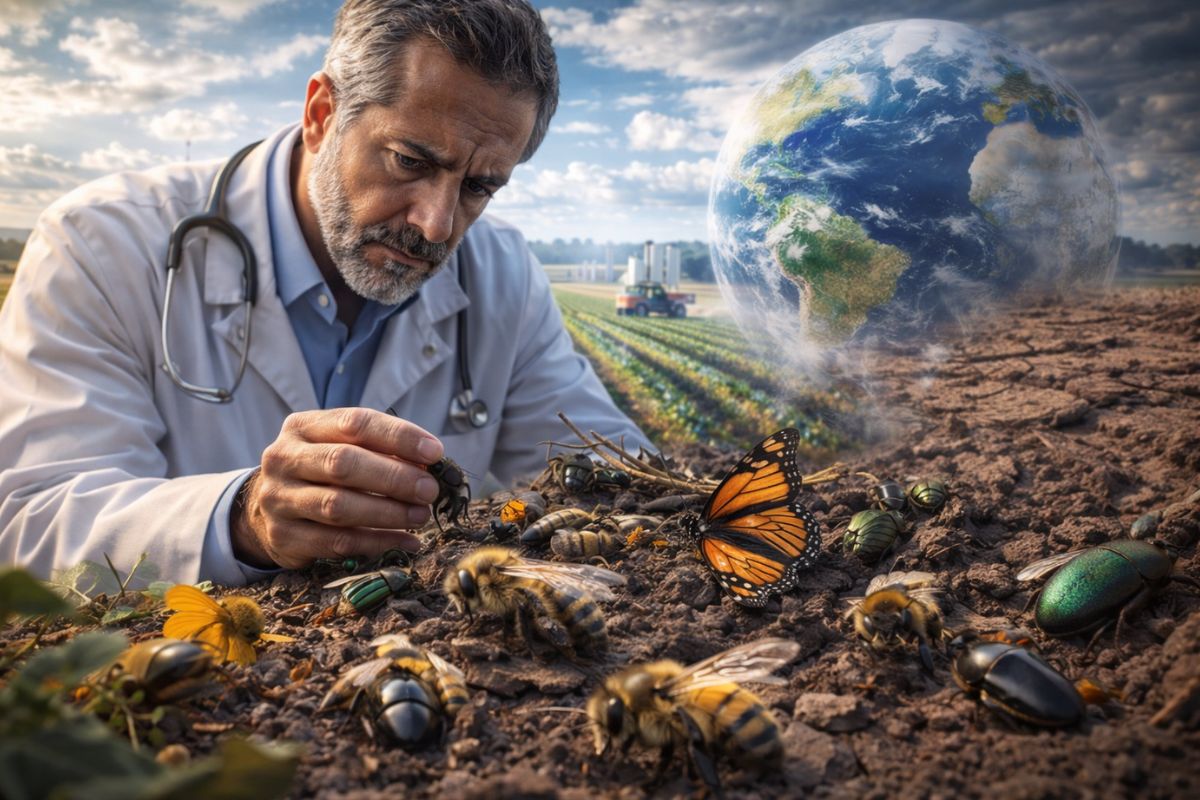
A Houston Alert Gained Global Attention for Addressing the Disappearance of Insects as a Clinical Symptom of the Planet. Dr. Joseph Varon Cites Bees, Butterflies, and Beetles That Are Becoming Less Common and Links Silence to Risks for Food, Nutrients, and Health, with Studies Predicting That by 2030 a Quarter Will Be at Risk.
The term “silent insects” entered the debate after a doctor from Houston, Dr. Joseph Varon, described a pattern he finds alarming: the accelerated disappearance of insects in vast regions of the world. His comparison comes from medicine and stems from a simple phrase: “in medicine, silence can be more alarming than noise.”
Varon detailed the alert in The Defender and cited beetles, butterflies, moths, flies, mosquitoes, and bees becoming increasingly less common. For him, this is not a moderate decline or a localized geographical change, but a rapid disappearance that could pressure food, nutrients, and human health in the coming decades.
Silence as a Clinical Signal of the Planet

To justify the alert, Dr. Joseph Varon uses a direct analogy: in hospital routines, when a patient abruptly stops expressing discomfort, or when a monitor “ceases” activity, the outcome may be a sign of system failure.
-
A bright yellow mushroom imported from Asia escaped from a cultivation farm in the United States in 2010 and is now aggressively spreading across 25 states, destroying entire communities of native fungi in American forests.

-
Buried under China, a colossal machine weighing 20,000 tons began operating as the largest neutrino detector on the planet and, in just 59 days, surpassed results that science took half a century to achieve.

-
Iran enters the center of a climate alert after the war emitted 5.6 million tons of CO2 in two weeks, surpassing the annual pollution of entire countries.

-
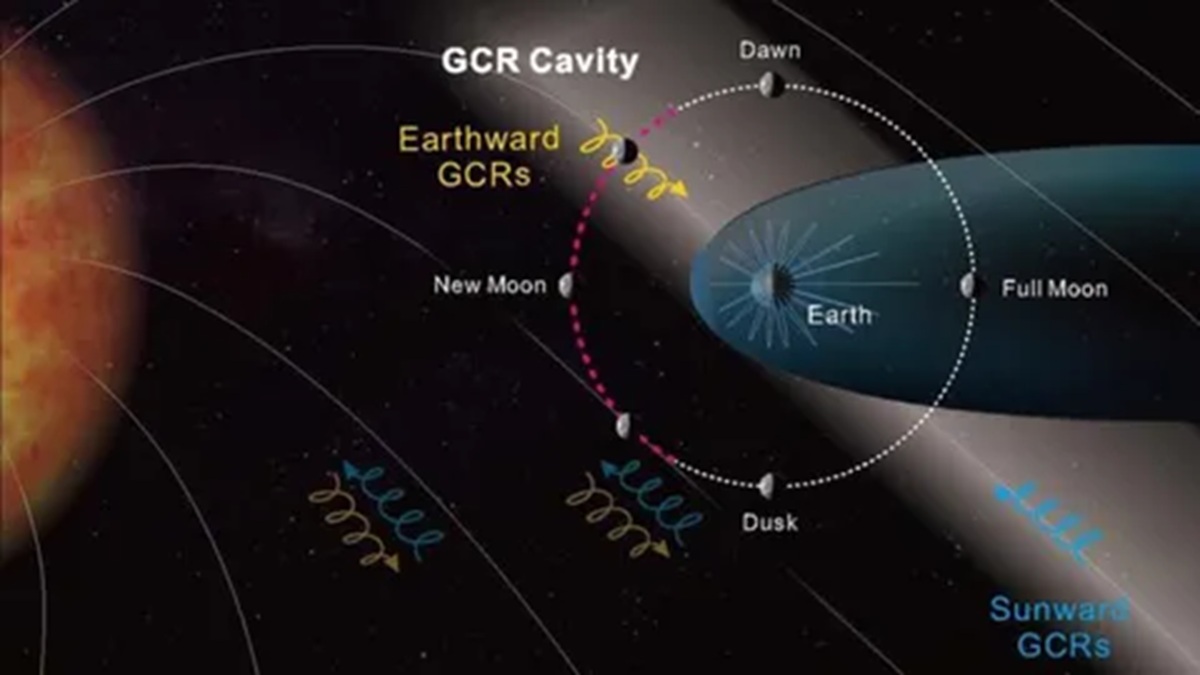
Lunar exploration may change after a Chinese probe finds a “cavity” of radiation that reduces the impact on astronauts by up to 20% at certain times on the Moon.

He transfers this logic to ecology by stating that the current silence should not be confused with stability.
The central point for the doctor is rhythm. He describes a scenario in which insects are disappearing and insists that it does not resemble a slow adjustment in nature.
In his formulation, “the current silence should not be interpreted as stability. It is a warning,” precisely because the disappearance occurs on a large scale and at high speed.
This reading changes the framing of the conversation. Instead of just discussing whether people “miss” bees, butterflies, or beetles, the alert proposes looking at silence as a symptom.
When a symptom is ignored for long enough, it ceases to be strange and becomes normal, and that is where the risk sets in.
Who Comes into the Alert and Why Beetles, Butterflies, and Bees Become Thermometers

The list cited by Varon is broad, including beetles, butterflies, moths, flies, mosquitoes, and bees. Nonetheless, three names have become shorthand in the public debate: beetles, butterflies, and bees.
The familiarity of these insects helps translate a complex ecological problem into a signal perceived in everyday life, without requiring that individuals recognize hundreds of species.
In the doctor’s argument, the focus is not on a single species but on “entire functional groups.” This term summarizes the idea that when a set of insects disappears, the function it performed in the daily ecosystem disappears as well.
Hence, beetles, butterflies, and bees serve as thermometers: they are a visible part of a change that may be greater than the list suggests.
There is also an element of risk communication. By talking about insects, Varon attempts to bridge the gap between science and daily life, using examples that anyone can understand.
It’s a way to say that the disappearance of bees, butterflies, and beetles is not limited to distant forests: it can reappear on the plate, in production costs, and in health.
What Changes on the Plate When Insects Disappear
Varon presents an immediate scenario: if insects were to disappear completely, the first sensation would be the scarcity of fruits and vegetables.
He extends the reasoning to nuts and legumes and makes it clear that the problem would not be just “having less food,” but losing variety and regularity in supply.
The next layer is less visible and more profound. According to the alert, many nutrients, vitamins, minerals, and antioxidants would cease to exist in the same diversity, which could lead to more health issues for the general population.
The doctor mentions the possibility of a weakened immune system and an increased risk of chronic diseases as an indirect consequence of the decline in nutritional quality.
He also draws attention to a cascading effect on the organization of production. Without insects, food systems collapse not only quantitatively but qualitatively: the diversity of nutrients decreases, resilience disappears, and dependency on industrial inputs increases.
When quality declines, the costs are felt across multiple fronts, from supermarkets to the healthcare system.
Where Health Enters and Why a Doctor Is Leading the Conversation
By connecting ecology and clinical practice, Varon provides a relatable example: recurrent respiratory infections associated with changes in pollen levels, in the context of shifts in insect populations.
The idea is that human health and ecological health go hand in hand, even when the link is not immediately perceived by those living in urban areas.
This point is significant because it shifts the debate from “environmental curiosity” to indirect health risk. The disappearance of insects, in the doctor’s framing, is not just a topic for biologists.
It can alter exposure conditions, diet quality, and bodily responses, with outcomes that accumulate over time and affect individuals from different backgrounds.
For this reason, he advocates for a change in practice: integrating environmental health assessments into health work, expanding the connection between ecological health and human health.
The proposal is simple in form and heavy in implication: if the silence of insects is a warning, ignoring the warning reduces the capacity for preventive response.
The Horizon of 2030 and the Coming Decades Under Pressure
Varon’s alert is supported by studies suggesting that, by 2030, a quarter of insects worldwide may be at risk of extinction.
By bringing this milestone forward, he seeks to take the topic out of the abstract realm and place it on the short-term decision-making clock, as 2030 is not a distant future for public policy and health planning.
The doctor also insists on a detail of language that changes perception: it is not “migration,” it is rapid disappearance; it is not “moderate decline,” it is disappearance in vast regions.
This choice of terms has a clear objective: to make it evident that beetles, butterflies, and bees may be merely what stands out first, not everything that explains the problem.
In his summary, silence is not stability; it is a warning. And, without insects, food systems collapse both quantitatively and qualitatively: nutritional diversity declines, resilience disappears, and dependency on industrial inputs increases.
In this framing, beetles, butterflies, and bees act as visible signs of a larger transformation, with direct implications for health.
If the conversation about insects were to reach your dinner table, what change do you think you would feel first, price, variety, or quality? And, in your area, have you noticed fewer bees, butterflies, or beetles in recent years, or has nothing changed for you?







-

-

-

3 pessoas reagiram a isso.