





 English
  Francês
  Alemão
  Italiano
  Japonês
  Norueguês
  Portuguese
  Spanish
  3 min of reading


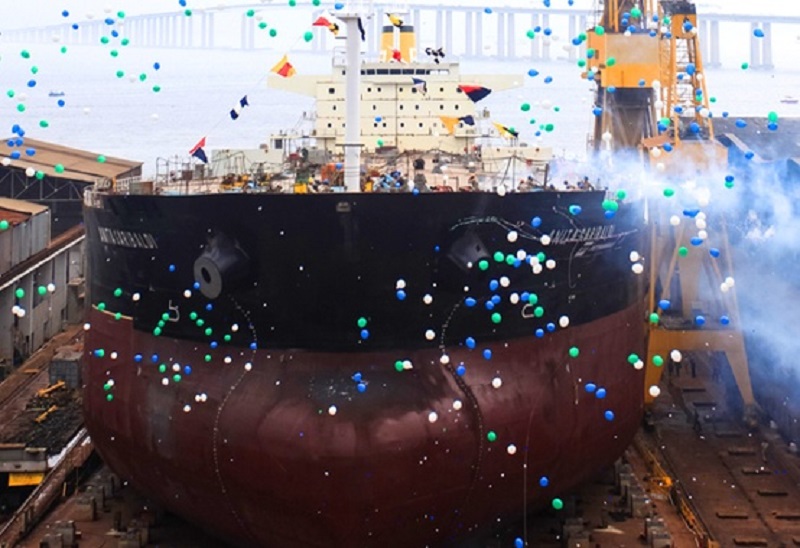
Measure Submitted for Approval by President Jair Bolsonaro Claims to Give a Lifeline to Shipyards, But Does Not Please Shipyards or Sinaval
The cabotage MP, known as BR do Mar, which will be announced in October, according to the Ministry of Infrastructure, has faced resistance from Sinaval (National Union of the Shipbuilding and Offshore Industry) and the shipyards.
According to the government, the Provisional Measure (MP) aims to develop cabotage by relaxing fees, such as the exemption from import duties for seven years, allowing companies to offset what they would pay with repairs, dockings, and maintenance.
Pedro Neiva, an attorney specializing in infrastructure from the Kincaid Mendes Vianna firm, stated that “With this import movement, the government wants to compensate (the shipyards) with a greater stimulus for maintenance, with the shipyards somewhat straying from the main purpose, which is construction; it’s something new, an adaptation. It’s an interesting solution”, he said.
-
Government unlocks R$ 554 million for a highway that has been requested for decades and accelerates the duplication of BR.
-
Without bricks, without cement, and without endless construction: the cardboard house that is assembled in modules and can be moved.

-
Billions of barrels on the equatorial margin could lead Amapá to double its oil production in Brazil — the state aims to enter the route of companies in the Campos Basin, attract investments, and boost jobs and businesses in the oil and gas sector.

-
Without bricks, without cement, and without endless construction: the cardboard house that is assembled in modules and can be moved.

Divergences
The lawyer’s view did not find support in the Union representing the shipyards, Sinaval, which wants changes made to the measure when it goes to Congress.
According to Sérgio Bacci, vice-president of Sinaval, this proposal to use national shipyards solely for vessel repairs cannot be taken seriously due to the small fleet operating along the Brazilian coast, which consists of only 20 vessels.
“If each ship (of the 20) takes a week in dry dock, in a year, one shipyard can handle them all. And the other 41 shipyards? What do I do with them?”, said the Sinaval representative.
Sinaval claims that it has already had four meetings canceled (and made new requests) with Minister Tarcísio Freitas to discuss the matter and advocate for an industrial policy for the sector, but to date, no meeting with Minister Tarcísio Freitas is scheduled.
The shipbuilding industry faces crises approximately every 20 years, since 1950, and it worsened now with this last and prolonged one, which started in 2014, when corruption cases involving Petrobras and shipyard partners were exposed by Lava Jato.
The proposal of the MP to reserve financing of up to R$ 1 billion from the FMM (Merchant Marine Fund) for the construction of ships in Brazilian shipyards is also expected to give a lifeline to the national industry, but it is not enough to convince shipowners to build ships in national shipyards.
For maritime agencies, one of the measures is favorable to resume business and may stimulate orders; the MP provides that no ICMS be charged on the fuel of ships, the bunker.
Currently, Petrobras pays the tax while foreign vessels do not have to pay it since the bunker is treated as an export product. Many points still need to be discussed, and there is little time until the MP reaches Congress, meaning many issues will need to be quickly addressed.
Read Also! The State of Rio de Janeiro Is the Record Holder for Royalties in Brazil!






Seja o primeiro a reagir!