





 Portuguese
  English
  Spanish
  3 min of reading
  0 comments


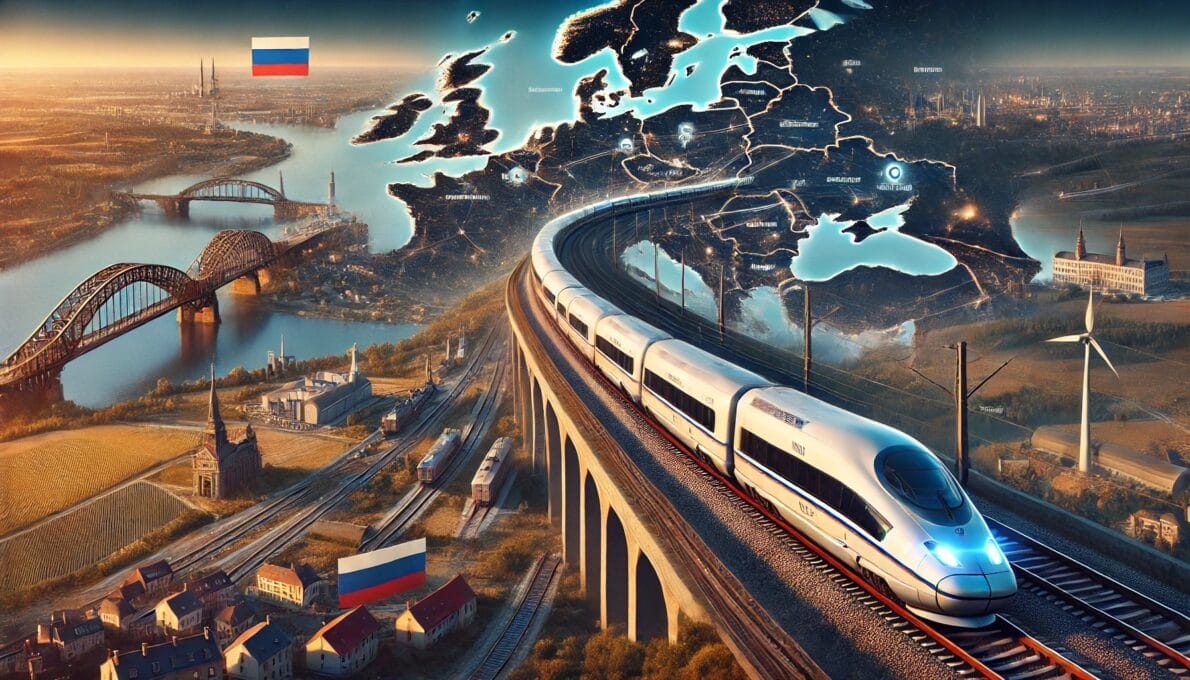
Discover Rail Baltica, A Mega Railway Project Promising To Cross 3 European Countries. Europe’s Mega Project Will Cost US$ 8 Billion And Span 800 Km.
Discover the ongoing mega railway project in Europe that is causing unease for Russia. The undertaking is being constructed to meet a huge demand on the NATO-controlled continent. With an impressive high-speed network, the mega project will total 8 billion dollars and span over 800 km, crossing three countries that have not had a modern railway since the fall of the Soviet Union.
Europe Is Investing In Megaprojects Around The World
The trans-European transport network is an ambitious initiative of the European Union. Created to integrate the continent through modern transportation infrastructure, the network aims to connect countries and regions more efficiently, improving the flow of goods and people while reducing environmental impact. Among the most notable initiatives is the fixed link Fehmarnbelt, which will connect Germany and Denmark via an 18 km underwater tunnel, shortening travel time between the two countries.

Another highlight is the mega railway project Lyon-Turin, a railway tunnel that will traverse the Alps, facilitating cargo transport between France and Italy.
-
Historic bankruptcy of Centauro shocks the market, and the century-old company puts more than 500,000 products, machines, and complete infrastructure up for online auction.

-
If the USA were to go to war with Brazil, Washington’s greatest fear would not be the attack itself, but facing a vast territory, prolonged resistance, and a costly, chaotic, and unpredictable occupation.

-
In 2013, Nicaragua sold the concession for a canal to rival Panama to a Chinese billionaire who lost 85% of his fortune, disappeared, and was declared bankrupt. Now the project resurfaces with a new route, a new Chinese partner, and a cost of $64.5 billion.
-
New shoe factory in Ceará is expected to create 400 jobs and strengthen the local economy.
Additionally, the Brenner Base Tunnel, which extends under the Alps between Austria and Italy, is set to be the longest railway tunnel in the world when completed, but the European Union’s ambition goes beyond the center of the continent.
Mega Railway Project Promises To Be 100% Sustainable
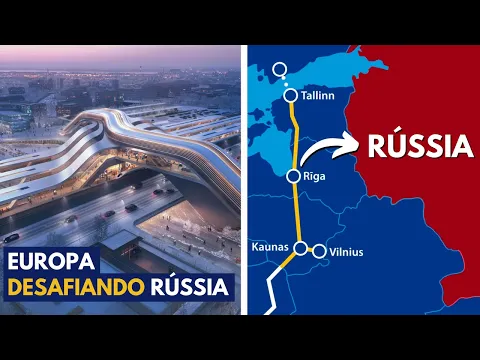
In Eastern Europe, other initiatives are emerging, such as the Rail Baltica mega project, which has one of its main goals of improving regional connectivity. By connecting the capitals of the three Baltic countries, Estonia, Latvia, and Lithuania, the mega railway project will create a high-speed route that integrates this region with the rest of Western Europe, both for passenger and freight transport.
The expectation is that this European mega project will become an economic growth engine, boosting trade and tourism while fostering new development opportunities in the surrounding regions. The introduction of passenger trains with speeds of up to 240 km/h and freight trains operating at 120 km/h marks a significant milestone for transport in the region.
In addition to regional connectivity, the mega railway project also places great emphasis on promoting more sustainable transport, as the entire Rail Baltica route will be electrified, representing a significant advancement in reducing CO2 emissions.
The Largest Project Developed In 100 Years
The transition from road and air transport to railway powered by clean energy will result in a considerable drop in air pollution. It is estimated that this change will reduce pollutant gas emissions by more than 18% along the corridor, a positive impact for both the environment and the European Union’s climate goals.
The European mega project is also a key piece of the North Sea-Baltic Corridor, one of the priority routes of the trans-European transport network. This corridor connects major economic centers like Antwerp in Belgium to Helsinki in Finland, crossing the heart of Central Europe.
The mega railway project is the largest infrastructure investment in the Baltic region in 100 years and is vital for correcting a historical imbalance during the Soviet era. The railway network was primarily designed to link the region from East to West towards Russia. This configuration limited the connectivity of the Baltic countries with the rest of Europe. With the construction of Rail Baltica, this barrier will be eliminated, fully integrating the region into the European rail network.








Seja o primeiro a reagir!