





 Portuguese
  English
  Spanish
  4 min of reading
  0 comments


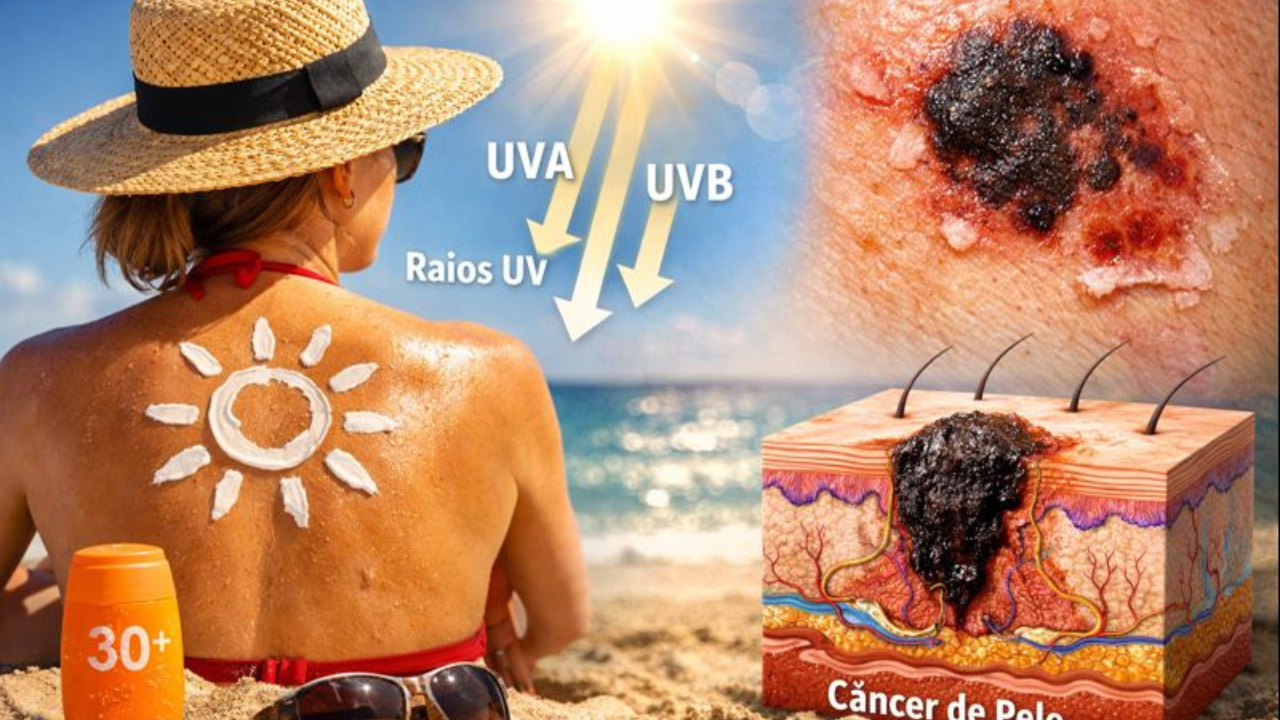
Skin Cancer Is The Most Common In Brazil. Melanoma, Sun Exposure, And Ultraviolet Radiation Require Attention And Dermatological Prevention.
With the arrival of summer and the increase in outdoor activities, skin cancer comes back to the spotlight in Brazil.
The disease, primarily caused by excessive sun exposure without protection, is already the most common type of cancer in the country and requires heightened attention during this period.
According to data from the National Cancer Institute (Inca), the country is expected to register about 220,000 new annual cases of non-melanoma skin cancer, in addition to approximately 9,000 diagnoses of melanoma, the less common but more aggressive form.
-
A “silent skill” is allowing Brazilians to earn up to R$ 22,000 per month without a degree and become indispensable for companies that rely on millions of data to survive.

-
Researchers at the Toyota Research Institute found that if a human uses robotic arms to flip a pancake 300 times in an afternoon, the robot learns to do it on its own the next morning, and this is currently the most promising method to solve the biggest bottleneck in modern robotics.

-
Goodbye iron: a common item in households is starting to lose space to technology that smooths clothes in minutes without an ironing board and with less energy consumption.

-
Antarctica reveals an unusual clue high in the Hudson Mountains, and what appeared to be just an isolated rock began to expose a secret hidden under the ice for ages.


The problem affects all regions, but there is a higher incidence in the South and Southeast, where the population is more exposed to risk factors.
Although highly prevalent, skin cancer is still often underestimated. Many Brazilians take time to seek medical attention because they believe it is a simple disease.
However, specialists warn that this perception contributes to late diagnoses, more complex treatments, and a greater risk of sequelae.
Sun Exposure And Ultraviolet Radiation: A Silent And Cumulative Risk
The main cause of skin cancer is ultraviolet radiation, emitted by the sun and also by artificial sources, such as tanning beds.
The damage caused by radiation does not appear immediately. On the contrary, it accumulates over the years and can manifest decades later.
“The sun causes mutations in the DNA of skin cells throughout life. In most people, the effects appear from 50, 60, or 70 years,” explains João Duprat, leader of the Skin Tumor Reference Center at A.C.Camargo Cancer Center.
According to the doctor, repeated sunburns during childhood and adolescence significantly increase future risk. “The skin retains the memory of the sun,” he summarizes.
Who Is At Greater Risk Of Developing Skin Cancer
In addition to sun exposure, genetic factors and individual characteristics also influence the onset of the disease.
People with fair skin, light eyes, and light hair are at greater risk for the more common types of skin cancer.
In the case of melanoma, about 10% of cases are hereditary, associated with genetic mutations and family history.
Having many moles, especially more than 50, or nevi with irregular shapes also increases risk.
Other relevant factors include an aging population, immunosuppression, occupational sun exposure, such as that of outdoor workers, and HPV infection, associated with some squamous cell carcinomas.
Not All Skin Cancer Is The Same
Experts emphasize that there are important differences between the main types of the disease.
Basal cell carcinoma is the most frequent and grows slowly, rarely causing metastasis, but it can cause deformities if untreated.
Squamous cell carcinoma is more aggressive and can spread to other organs.
Melanoma, although it represents only 1% to 3% of skin tumors, is responsible for the majority of deaths.
It typically appears as a mole that changes color, size, or shape. “Melanoma is usually a mole that changes.
Carcinomas appear as wounds that do not heal for more than a month,” Duprat explains.
Warning Signs And The Importance Of Early Diagnosis
Wounds that do not heal, lesions that bleed easily, and moles that change appearance are among the most ignored signs.
Many patients only seek help when the disease is already advanced. “The idea that skin cancer doesn’t kill still causes a lot of problems.
It can kill, can metastasize, and can cause significant sequelae,” warns the specialist.
When identified early, skin cancer has high chances of cure, usually with simple procedures.
In advanced stages, however, treatment may involve larger surgeries, radiation therapy, or immunotherapy.
“Early diagnosis reduces the impact of treatment and improves the quality of life,” says Jadivan Leite de Oliveira, oncological surgeon and member of the Brazilian Society of Oncological Surgery.
Dermatological Prevention Is Still The Best Strategy
Given the rise in cases, dermatological prevention continues to be the most effective way to combat skin cancer.
Experts recommend avoiding sun exposure between 10 AM and 4 PM, using sunscreen daily, reapplying the product every two hours, and adopting hats, clothing, and glasses with UV protection.
“The biggest mistake is treating sun protection as something just for summer. It needs to be done year-round,” emphasizes Jadivan Leite de Oliveira.
Thus, simple habits can make a difference and significantly reduce the impact of skin cancer on the Brazilian population.







Seja o primeiro a reagir!