





 Portuguese
  English
  Spanish
  4 min of reading
  0 comments


During a common walk, an American boy made an unexpected scientific discovery that rekindled interest in behaviors between wasps and ants. The interaction between these species reveals a complex collaboration and inspires scientists to revisit old studies.
A discovery made by an American boy just 8 years old shed new light on a biological mystery that has intrigued scientists for over a century.
Hugo Dean, a resident of Pennsylvania, in the United States, was simply observing the environment during a common walk when he noticed something curious: ants carrying small structures that seemed out of place in the natural setting.
This moment of attention turned into a milestone for entomology and rekindled discussions about complex interactions between species.
-
Friends have been building a small “town” for 30 years to grow old together, with compact houses, a common area, nature surrounding it, and a collective life project designed for friendship, coexistence, and simplicity.

-
This small town in Germany created its own currency 24 years ago, today it circulates millions per year, is accepted in over 300 stores, and the German government allowed all of this to happen under one condition.

-
Curitiba is shrinking and is expected to lose 97,000 residents by 2050, while inland cities in Paraná such as Sarandi, Araucária, and Toledo are experiencing accelerated growth that is changing the entire state’s map.

-
Tourists were poisoned on Everest in a million-dollar fraud scheme involving helicopters that diverted over $19 million and shocked international authorities.


It was the innocent and attentive gaze of Hugo that led to the identification of a little-understood behavior between wasps, ants, and oaks.
The scene he witnessed was immediately shared with his father, Andrew Deans, a professor of entomology at the University of Pennsylvania.
Upon analyzing the mysterious structures, Deans realized they were galls — plant formations that arise when certain insects, such as some wasp species, interact with plants.
Galls, Ants, and a Surprising Collaboration
Galls are structures created by wasps to protect their larvae, which develop inside these plant capsules.
However, what caught the scientists’ attention was a novel component in this relationship: a specific type of gall had a kind of “hood” rich in fatty acids.
This seemingly small detail was what attracted the attention of the ants.
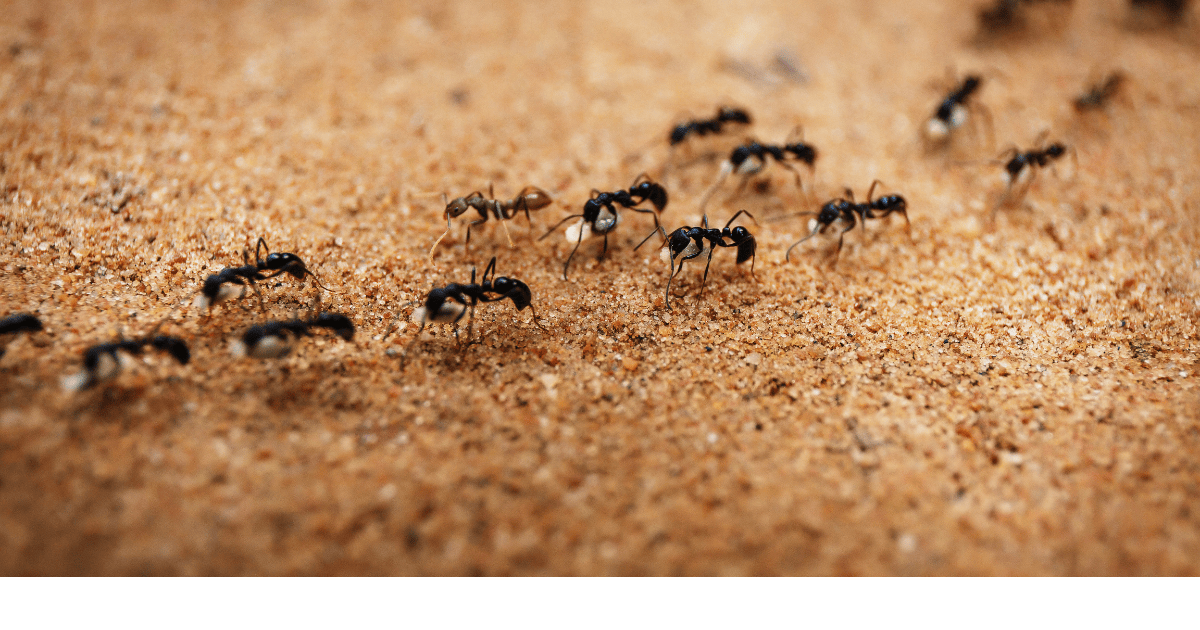
Ants, drawn to these substances, carried the hood back to their anthills, where they consumed it.
In this process, unknowingly, they protected the wasp larvae by keeping the galls in safe environments, away from predators and adverse environmental conditions.
This type of involuntary collaboration represents a rare and clever example of behavioral manipulation between species, something that continues to be a source of admiration and research among entomologists.
Chemical Manipulation: A Refined Evolutionary Strategy
According to the experts involved in the analysis, wasps have developed a way to “convince” ants to help them using chemical compounds that mimic natural pheromones.
With this tactic, they manage to recruit ants as true babysitters for their larvae, without offering anything in return other than the chemical attractant.
“It is a sophisticated evolutionary strategy,” the researchers assert, comparing the behavior to a finely tuned game of chemical manipulation developed over millions of years.
These compounds are produced with enough precision for ants to react instinctively, without realizing they are acting against their own evolutionary interests.
This level of evolutionary complexity raises important questions about interspecies communication and how these mechanisms were developed.
What came first: the ability of the wasp to produce attractive compounds or the predisposition of the ants to react to such signals?
Childhood Discovery Rekindles Scientific Interest
Hugo Dean’s contribution, though accidental, reinforces the importance of observation in everyday life as a scientific tool.
According to Andrew Deans, his father, “science is also made with curiosity, patience, and attention to detail”, attributes often underestimated in the age of technology and large-scale data analysis.
The episode was published in international scientific journals and discussed at specialized conferences.
Researchers point out that the interaction between wasps, oaks, and ants may date back millions of years, with fossil evidence indicating the presence of similar galls since the Eocene period.
Despite its antiquity, the behavior now observed adds a new layer of complexity to ecological relationships. This shows that, even in well-studied ecosystems, there is still much to be revealed when it comes to microinteractions between seemingly simple organisms.
Impact on Science and Environmental Education
The discovery also reinforces the role of children and environmental education in scientific advancement.
Moments like this demonstrate that science is not restricted to laboratories or universities, but can arise from everyday experiences, especially when curiosity is fostered from an early age.
Moreover, the case highlighted how small human actions, like a simple walk, can contribute to expanding scientific knowledge.
This serves as inspiration for families, schools, and educators seeking to promote interest in the natural sciences.
The story of Hugo Dean is more than a curious case: it has become a symbol of how great discoveries can have unexpected origins.
It also contributed to scientists reconsidering certain aspects of the relationship between insects and plants, including the subtle impacts that can shape the behavior of entire species.
New Questions, New Pathways
The discovery generated a series of new questions.
How did these chemical substances evolve in wasps? Do other insects use similar strategies to manipulate ants?
There are indications that similar mechanisms may occur in other types of galls or with other ant species, opening up new lines of investigation.
Furthermore, the interaction between ants and galls can be used as a model to study collective behavior, swarm intelligence, and chemical ecology, areas that have been gaining prominence in modern biology.
The case reinforces how much there is still to learn about the complex webs that connect living beings in natural ecosystems, and how the study of these relationships can generate relevant insights for fields such as agriculture, environmental conservation, and even insect-inspired robotics.
And you, have you stopped to observe the small details of nature around you? Who knows, the next great scientific discovery might be just a few steps from your backyard?









Seja o primeiro a reagir!