





 Portuguese
  English
  Spanish
  4 min of reading
  0 comments


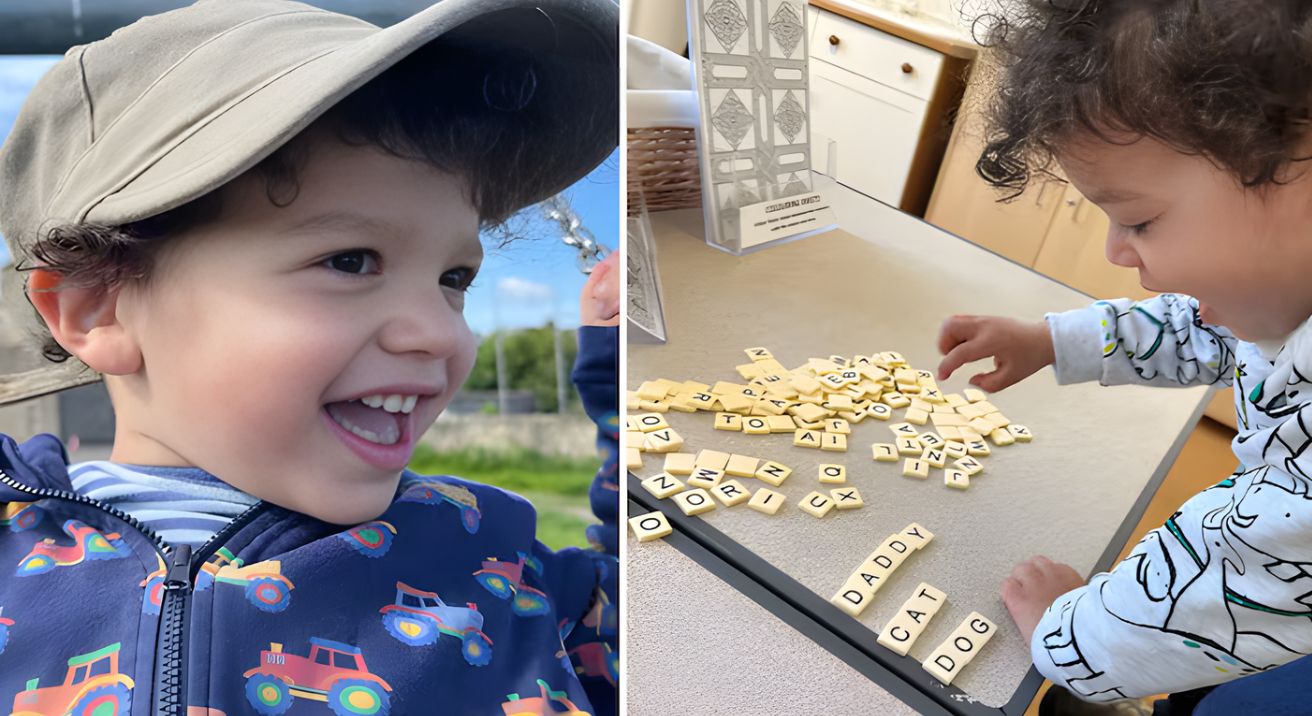
British Boy Joins Mensa At 2 Years And 182 Days, Becomes The Youngest Member In History And Reignites Global Debate On Early Giftedness And Pressure On Childhood.
In 2024, a British boy made history by being accepted into Mensa at just 2 years and 182 days, becoming the youngest member ever admitted to the traditional international society that brings together people with IQs in the top 2% of the population. His name is Joseph Harris-Birtill, from the United Kingdom, and the case gained attention in international media for challenging expected standards of childhood development.
Mensa International is an organization founded in 1946 that accepts members who score at or above the 98th percentile on recognized intelligence tests. The organization does not require a formal minimum age, but the admission of very young children is extremely rare due to the technical difficulties of cognitive assessment at that age. Joseph surpassed the previous record by being officially admitted before turning three years old.
Who Is Joseph Harris-Birtill And How Did The Admission Occur
Joseph was born in the United Kingdom and, according to reports released by his family and Mensa itself, began to demonstrate signs of advanced cognitive development as early as his first year of life. He reportedly learned to read at an early age and showed interest in numbers, languages, and complex patterns before what is considered typical age.
-
Friends have been building a small “town” for 30 years to grow old together, with compact houses, a common area, nature surrounding it, and a collective life project designed for friendship, coexistence, and simplicity.

-
This small town in Germany created its own currency 24 years ago, today it circulates millions per year, is accepted in over 300 stores, and the German government allowed all of this to happen under one condition.

-
Curitiba is shrinking and is expected to lose 97,000 residents by 2050, while inland cities in Paraná such as Sarandi, Araucária, and Toledo are experiencing accelerated growth that is changing the entire state’s map.

-
Tourists were poisoned on Everest in a million-dollar fraud scheme involving helicopters that diverted over $19 million and shocked international authorities.




Admission to Mensa requires verification through intelligence tests administered by qualified professionals. For very young children, specific instruments for child cognitive assessment are used, with methodology adapted for their age.
After formal evaluation, Joseph achieved a score sufficient to place him among the top 2% of the tested population, meeting the central criterion of the organization.
The British Mensa officially confirmed the boy’s entry, recognizing him as the youngest member ever accepted.
What It Means To Join Mensa
Being a member of Mensa does not necessarily imply genius in all areas but indicates exceptional performance on standardized logical reasoning and cognitive ability tests.
The organization serves as an international community focused on intellectual exchange, support for gifted individuals, and promotion of academic debates. In many cases, the admission of young children aims to provide appropriate educational and social support for early talents.
In the United Kingdom, Mensa has a specific group for young members, fostering academic development and interaction among peers with similar profiles.
Joseph’s entry into this context raises questions about how to identify and support children with accelerated development.
Giftedness And Child Development
Experts in child psychology emphasize that giftedness involves more than just an IQ number. The concept includes creativity, socio-emotional skills, academic performance, and the ability to solve complex problems.
Gifted children often exhibit asymmetrical development. They may demonstrate advanced cognitive skills while still developing emotional maturity consistent with their chronological age.
Early identification can allow for appropriate educational adaptation, preventing frustration, school boredom, or social isolation.
On the other hand, experts warn that excessive media exposure can create undue pressure on very young children. Joseph’s case has reignited this debate in the United Kingdom and in international educational forums.
International Repercussions And Public Debate
The news of Joseph’s admission resonated in British and international media, especially due to involving an age considered extremely early for formal intelligence testing.
The public reaction divided opinions. Part of the public celebrated the achievement as an example of extraordinary human potential. Another part questioned the limits of cognitive assessment in such young children.
IQ tests administered in early childhood have greater margins of variation than those conducted in school age. Nonetheless, the score achieved by Joseph was deemed valid according to Mensa’s adopted technical criteria.
The case also reignited discussions about family stimulation. Children with early access to reading, varied language, and intellectually rich environments tend to show faster progress in certain skills.
Intellectual Growth In The Digital Age
The current generation is growing up in a highly stimulating digital environment. Exposure to books, educational apps, and multiple languages can accelerate linguistic and cognitive development.
However, experts stress that healthy development requires a balance between intellectual stimulation, play, social interaction, and rest.

Joseph’s admission to Mensa does not automatically guarantee an extraordinary academic trajectory. Support throughout childhood will be crucial in consolidating or not the skills demonstrated early on. Mensa itself advises families to prioritize emotional well-being and tailored education, avoiding excessive expectations.
A Record That Challenges Statistics
At just 2 years and 182 days, Joseph Harris-Birtill entered Mensa’s history as the youngest member ever accepted. This achievement places him among an extremely restricted group of individuals evaluated with cognitive performance above 98% of the tested population.
Although isolated IQ numbers do not define all human potential, the record symbolizes the expansion of traditional limits of intellectual assessment.
The case reinforces a growing trend: increasingly younger talents are being identified thanks to modern assessment tools and greater attention to child development.
Between admiration and questioning, Joseph’s story highlights that understanding of intelligence and childhood continues to evolve. And as new generations grow up in more stimulating and connected environments, records like this are likely to become more frequent, broadening the global debate on giftedness, education, and the limits of human potential.










-

-

-

-

-

28 pessoas reagiram a isso.