





 English
  Francês
  Alemão
  Italiano
  Japonês
  Norueguês
  Portuguese
  Spanish
 4 min of reading
  1 comment


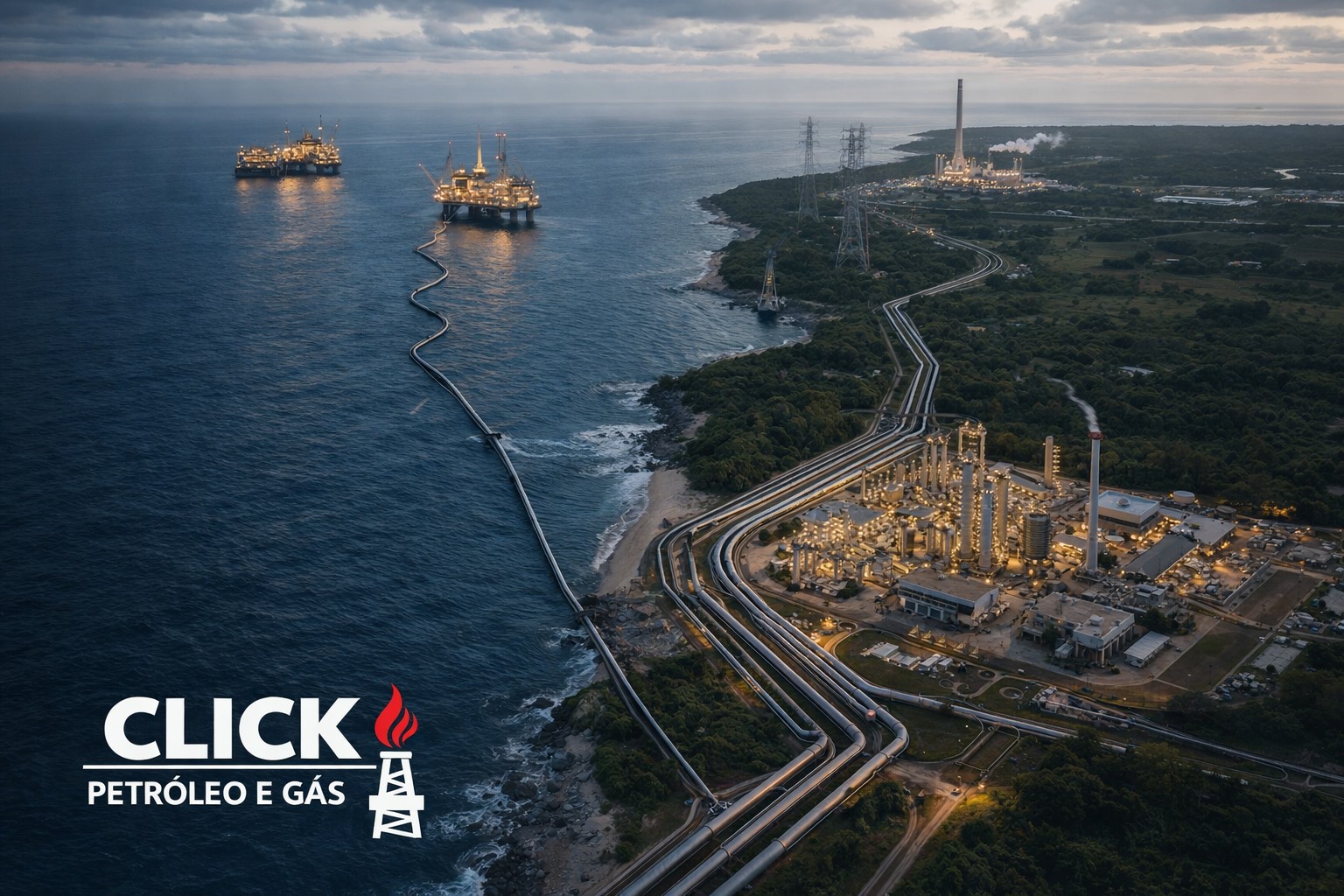


Expansion of Production, New Regulation, and Infrastructure Investments Place Natural Gas at the Center of Brazil’s Energy Matrix
The natural gas market in Brazil is experiencing a period of expansion and structural transformation, driven by the growth of pre-salt production, market opening, and the need for energy integration among different sources. This scenario will be one of the main topics discussed at the Macaé Energy 2026, an event that will take place from March 17 to 19, 2026, at the Centro de Convenções Jornalista Roberto Marinho in Macaé, bringing together executives, specialists, and authorities from the energy sector.
In recent years, natural gas has taken on a strategic position in Brazil’s energy matrix. According to data released by the Energy Research Company (EPE) in the 2024 National Energy Balance, natural gas accounts for approximately 13% of the country’s energy consumption, with consistent growth driven by the expansion of offshore production and increased industrial and thermoelectric demand.
The trend is for this participation to increase over the next decade, especially with the advancement of oil and gas exploration and production projects in the pre-salt of the Santos Basin and also in the Campos Basin, regions that concentrate a large part of Brazil’s reserves.
-
The largest South American oil company, Petrobras, is preparing for a historic leap in production with new FPSO platforms and the expansion of refining — projects that could add up to 900,000 barrels per day and strengthen Brazil’s energy security.
-
Billions of barrels in the Equatorial Margin could double Amapá’s oil production in Brazil and attract companies from the Campos Basin.

-
Mature Fields Take Center Stage and Are Expected to Generate New Opportunities in the Oil and Gas Sector
-
Offshore And New Investment Opportunities Will Be At The Center Of Discussions At Macaé Energy 2026


Natural Gas Production Grows with Pre-Salt Advancement
The growth of the natural gas market is directly linked to the expansion of offshore production. According to the National Agency of Petroleum, Natural Gas and Biofuels (ANP), Brazilian production reached about 150 million cubic meters per day in 2024, with approximately 75% of this volume coming from the pre-salt.
A significant portion of this production is associated with Petrobras‘ operations in giant fields such as Búzios, Mero, Tupi, and Sépia, located in the Santos Basin.
Petrobras anticipates further increasing this production in the coming years. According to the 2024-2028 Strategic Plan, released by the company in November 2023, the state-owned company plans to invest approximately US$ 102 billion by 2028, with about US$ 69 billion allocated for oil and natural gas exploration and production.
This production growth creates opportunities to expand the supply of gas in the domestic market, especially for the industrial, energy, and petrochemical sectors.
New Gas Law Opened the Brazilian Market
One of the most relevant changes in the sector occurred in 2021, with the approval of Law No. 14,134, known as the New Gas Law.
The legislation established the foundations for a new market model in Brazil, encouraging greater competition, transparency, and access to natural gas transportation and distribution infrastructure.
Among the main objectives of the new regulation are:
• increase competitiveness in the sector
• reduce the cost of natural gas for industry
• incentivize new investments in infrastructure
• stimulate the entry of new players into the market
According to the Ministry of Mines and Energy (MME), the opening of the gas market could attract over R$ 100 billion in investments over the next decade, especially in gas pipeline, liquefied natural gas (LNG) terminal, and processing unit projects.
Infrastructure Still the Main Challenge in the Sector
Despite regulatory advancements and production growth, experts point out that transportation and distribution infrastructure remains one of the main bottlenecks in the natural gas market in Brazil.
Currently, the country has about 9,400 kilometers of transportation pipelines, according to data from the National Agency of Petroleum (ANP). For comparison, the United States has over 500,000 kilometers of pipelines, demonstrating the potential for expanding Brazil’s infrastructure.
Gas transportation and processing projects have been considered essential for increasing supply in the domestic market. Among the main recent projects is Rota 3, inaugurated by Petrobras in 2024, which connects pre-salt production from the Santos Basin to the Itaboraí Natural Gas Processing Complex (RJ).
This infrastructure allows for the processing of about 21 million cubic meters of gas per day, enhancing distribution capacity to the Brazilian market.
Natural Gas Gains Importance in the Energy Transition
Another factor that has increased the relevance of natural gas is its role in the so-called energy transition.
Experts consider natural gas a strategic source as it emits about 50% less carbon dioxide than coal in energy generation, according to data from the International Energy Agency (IEA).
For this reason, natural gas has been used as a transition fuel in various countries, helping to integrate intermittent renewable sources, such as solar and wind energy, into electrical systems.
In Brazil, natural gas has been increasingly used in thermoelectric plants, especially to ensure stability in the national electric system during periods of low hydropower generation.
Topic Will Be Discussed by Experts at Macaé Energy 2026
The advancement of the natural gas market and its structural challenges will be among the topics discussed during Macaé Energy 2026, which will bring together representatives from the energy industry, regulatory authorities, and executives from sector companies.
Among the expected participants are representatives from Petrobras, Equinor, Energy Research Company (EPE), National Agency of Petroleum (ANP), and the Brazilian Institute of Petroleum and Gas (IBP).
The discussions are expected to address topics such as gas production expansion, new investments in infrastructure, market competitiveness, and opportunities for the supply chain.
With the growth of offshore production, advancements in regulation, and increasing energy demand, natural gas is likely to play an increasingly strategic role in Brazil’s energy matrix over the coming decades, becoming one of the pillars of energy integration and industrial development in the country.
To register for the event, visit the Macaé Energy page here.









Multo bom