Portuguese
  Spanish



The IEA Is Forecasting a Moment of Growth in Demand and Consequently High Crude Oil Prices in 2023. Trends for the Market This Year Still Include Sustainability Projects Focused on Fuel Exploration.
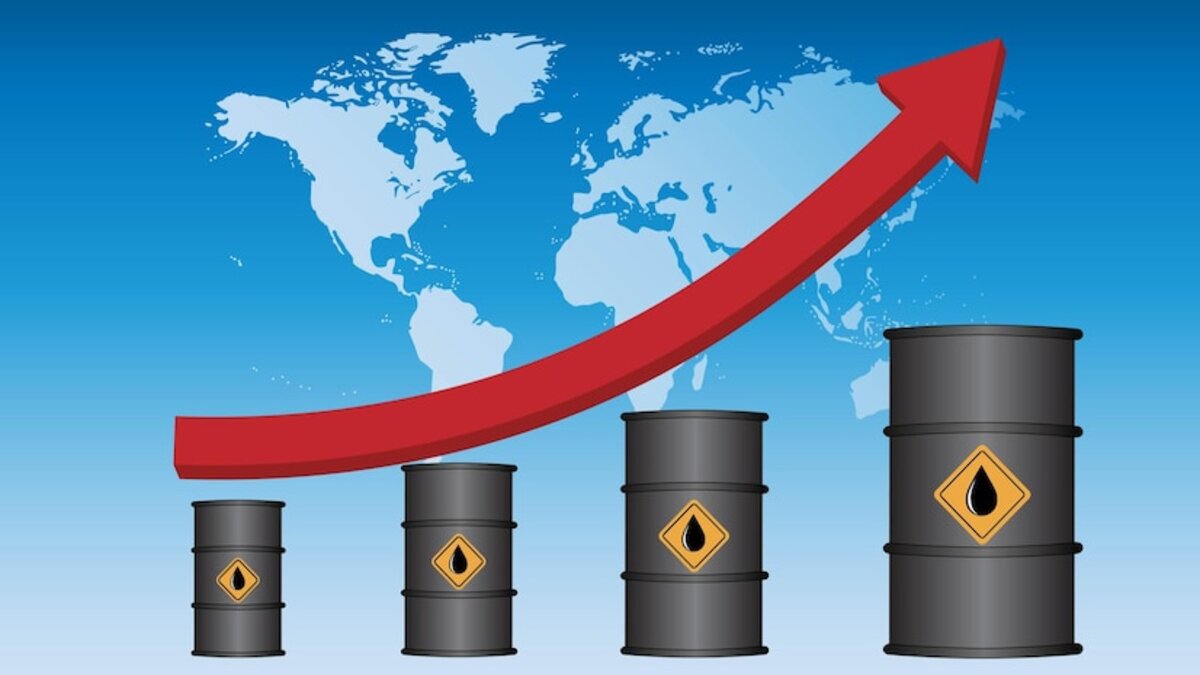
The International Energy Agency (IEA) has strong projections for the oil and natural gas sector in 2023 for this Tuesday, (31/01). The trends for the year are a rise in crude oil prices and new sustainability research and development projects in the segment. The agency points to strong growth in oil demand, thus causing a rise in prices across the global market.
IEA Predicts a Year of Rising Crude Oil Prices and Sustainability Trends in the Oil and Gas Sector for 2023
After a year of strong instability in the oil and gas segment, supply crises, and international geopolitical conflicts, projections for 2023 indicate a radical change in the landscape.
The IEA is projecting a wave of growth in crude oil production in countries of the Organization of the Petroleum Exporting Countries (OPEC).
-
Abandoned Building in Brazil to Become Biotechnology Unit with $10 Million Investment, Bridging Science, Industry, and Public Health

-
Company Offering “Stones to Diamonds” Scheme Sells Ruined Italian Homes to Brazilians for 1 Euro, Disappears with Promised Renovations, Leaving Buyers in Debt to Italian Tax Authorities Until 2028 Without Property

-
Plastic Packaging Drives Santa Catarina Industry to 230% Growth, Aiming for R$ 500 Million by 2030 Amid Sector Crisis, with New Gearless Line Expanding in Southern Brazil to Compete in South America

-
Flamengo Star Invests in Brazilian Coastal Luxury Real Estate as Itapema Surpasses Balneário Camboriú in High-End Market Growth


As a result of this movement, there may be a rise in fuel prices in international quotes.
This happens because the international market operates based on the law of supply and demand. Thus, when there is a demand greater than usual, prices tend to rise.
According to the IEA, even with the prospect of global economic weakening, the demand from countries for crude oil will grow.
The main justifications for this movement are lower temperatures during the European winter and the economic reopening of China, considered the largest consumer market in the oil and natural gas sector.
The scenario for 2023 will shape itself in a moment of instability caused in 2022, when there was a reduction in values and production by the Organization of the Petroleum Exporting Countries (OPEC).
Projected Scenario for 2023 Will Favor Investors in the Oil and Gas Sector but May Impact Fuel Consumption
According to the IEA’s projections, a possible rise in crude oil prices may lead to an increase in the potential for investments in the sector.
In this scenario, there is an expectation of appreciation of the shares of companies in the sector. On the Stock Exchange (B3), companies such as Petrobras (PETR3), PetroRio (PRIO3), Petroleum (RRRP3), PetroReconcavo (RECV3), Enauta (ENAT3), and Dommo (DMMO3) are listed.
Despite this, the lives of fuel consumers may be negatively impacted by the rise in crude oil prices, as pointed out by the IEA.
This is because the increase in prices may be passed on to the national market, thus causing a rise in petroleum-derived fuels, such as gasoline, for example.
Furthermore, as most products and services depend on a road transportation logistics, there is the possibility of widespread price increases.
In 2022, according to the Brazilian Institute of Geography and Statistics (IBGE), Brazil closed the Broad Consumer Price Index (IPCA) at 5.79%.
However, throughout the year, the percentage reached double digits. Thus, the economic scenario in the oil and natural gas market has significantly impacted consumption in the country.
What we currently see is a scenario of rising prices for various fuels throughout Brazil.
On the other hand, discussions about sustainability, led by the United Nations (UN), gain strength in the oil and gas scenario.
Thus, the IEA’s projections point to an oil market increasingly linked not only to fuel prices but also to environmental commitments in production.