





 Portuguese
  English
  Spanish
  4 min of reading
  0 comments


Mercado Livre and Shopee Accelerate the Construction of Large Logistics Warehouses Aiming to Improve Delivery Logistics and Strengthen Their Positions in the E-Commerce Market in Brazil. The Battle for Dominance in E-Commerce in the Country Promises Significant Impacts for Both Consumers and the Job Market.
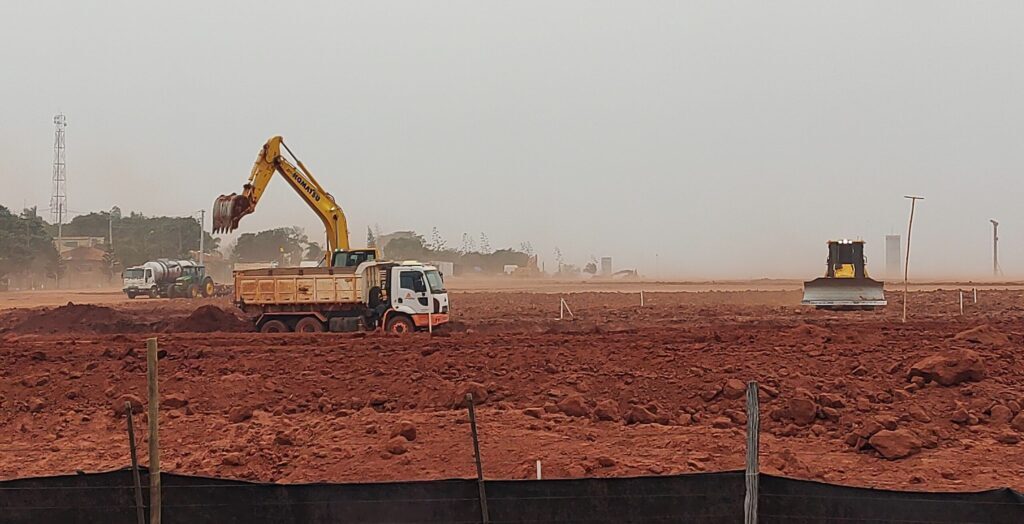
In a move that could change the landscape of e-commerce in Brazil, Mercado Livre and Shopee are constructing gigantic logistics warehouses in the North Zone of Marília, in the interior of São Paulo.
The construction, located in an area adjacent to the Santo Barion Exhibition Center, along SP-333, aims to increase the delivery capacity of both companies, ensuring greater agility and efficiency in operations.
According to information from Agora no Interior newspaper, the works began approximately 60 days ago and are already proceeding at an accelerated pace, with completion expected by the end of 2024 or early 2025.
-
Unemployment rises again to 5.8% at the beginning of 2026, raising alarms about the end of temporary positions and its impact on the Brazilian job market.

-
Document organization can cut invisible costs in small businesses, a simple step that prevents waste, rework, and losses in daily operations.

-
Future profession with immediate earnings: Specialist reveals how a solar energy technician earns R$ 8,000 per month by taking advantage of the explosion in demand across the entire country.

-
Chinese giant worth nearly R$ 4 billion that manufactures cables for electric cars, solar energy, and robotics wants to open a factory in SC.
The space, which will occupy more than 30,000 square meters, is being prepared to operate as a central warehouse, from where goods will be dispatched with the “receive within 24 hours” system, benefiting not only Marília but also neighboring cities.
Efficient Logistics and Job Creation
As reported by a worker who preferred not to be identified, the new logistics warehouse will have the capacity to store thousands of items, allowing for faster deliveries made by the platforms. “They will hire many employees to meet demand and meet delivery deadlines,” commented the worker.
This move, which includes the intense traffic of trucks and heavy equipment at the construction site, is already impacting the local community.
Nearby residents believe that the presence of the warehouse will increase property values in the area and promote the creation of new jobs. A resident of a nearby condominium highlighted to the cited newspaper: “With the construction of houses and apartments, in addition to the new logistics warehouse, this area is likely to grow and gain value.”
Mercado Livre: The Latin American Giant
In early July 2024, Mercado Livre solidified its position as the most valuable company in Latin America, with a market value estimated at US$ 90 billion (around R$ 486 billion).
This historic milestone, reported by specialist Einar Rivero, co-founder of Elos Ayta Consulting, places the company ahead of Petrobras, which previously led the ranking with US$ 83 billion (approximately R$ 448 billion).
With an impressive growth of 31.7% compared to the previous year, Mercado Livre has established itself as the undisputed leader in e-commerce and in the digital financial sector in the region.
The company, which started in Argentina as “Mercado Libre” in 1999 and recently celebrated its 25th anniversary, operates in 18 countries and has the fintech Mercado Pago, whose revenue of US$ 5.1 billion (R$ 27 billion) exceeded analysts’ expectations, especially in the Brazilian operation.
Shopee: The Rise of a Fierce Competitor
Shopee, for its part, is not falling behind in the battle for e-commerce leadership in Brazil. The Singapore-origin company is heavily investing in building new logistics centers and hiring thousands of employees by 2025, as reported by Agora no Interior.
The strategy is clear: increase its market share in Brazil and eventually surpass Mercado Livre. The company already has 11 logistics warehouses in the country and plans to further expand this structure in the coming months.
One of Shopee’s main advantages is that 90% of the items sold in Brazil are nationalized, which exempts them from the recent “little shirt tax,” a tax measure by the Federal Government. With this competitive advantage, Shopee plans to invest millions of dollars to solidify its position in the market.
The battle between Mercado Livre and Shopee for dominance in e-commerce in Brazil is just beginning. With both giants heavily investing in logistics and their operations, Brazilian consumers can expect an increasing supply of products and faster deliveries.
A Promising Future for E-Commerce?
In light of these movements, an inevitable question arises: how will this intense competition between Mercado Livre and Shopee impact consumers and the job market in Brazil? Leave your comment below and join the debate on the future of e-commerce in the country.








Seja o primeiro a reagir!